Mkpoikana Udoma
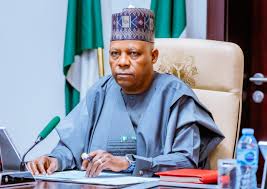
Port Harcourt — Vice President Kashim Shettima has described the Electricity Act 2023 as one of the Tinubu administration’s most consequential economic reforms, saying it has opened Nigeria’s power sector to private investment by empowering states to generate, transmit and distribute electricity.
Speaking while declaring open the Jigawa State Investment Summit 2026 in Dutse, Shettima said the landmark legislation is reshaping Nigeria’s electricity landscape and creating fresh opportunities for investors to participate in power infrastructure development across the country.
The Vice President said the Electricity Act forms part of broader structural reforms aimed at improving the ease of doing business, strengthening investor confidence and accelerating sustainable economic growth.
Explaining the significance of the legislation, Shettima said: “The Electricity Act 2023 stands as a consequential reform, devolving real power to the states to license, generate and distribute electricity, and inviting investors to build the power infrastructure our industries and homes so urgently need.”
He noted that the Federal Government has shifted from restrictive regulation to a partnership-driven approach that encourages private sector participation across strategic sectors of the economy.
“From power to agriculture, from solid minerals to the digital economy, we have replaced gatekeeping with partnership,” he said.
According to the Vice President, the Federal Government has complemented the electricity reform with measures to improve Nigeria’s investment climate, including the implementation of the Presidential Enabling Business Environment Council, PEBEC, reforms, the Business Facilitation Act and the liberalisation of the foreign exchange market.
He said these reforms have simplified business registration processes, improved regulatory transparency and restored investor confidence, with international rating agencies beginning to upgrade Nigeria’s sovereign credit outlook after more than a decade.
Shettima stressed that while the Federal Government has laid the foundation through reforms, states must leverage the opportunities created by the Electricity Act to attract investment into power generation and distribution.
Also speaking at the summit, Deputy Chief of Staff to the President (Office of the Vice President), Senator Ibrahim Hassan Hadeija, urged the Jigawa State Government to prioritise electricity infrastructure, warning that sustainable investment would remain difficult without reliable power.
“Without stable power it would be very difficult to attract any meaningful investment,” Hadeija said, noting that Jigawa already has a three-megawatt Independent Power Project in Dutse with 16 kilometres of transmission and distribution infrastructure.
Governor Umar Namadi said Jigawa’s development strategy places energy alongside agriculture, infrastructure, digital economy and private sector development as priority sectors for investment, adding that the state is committed to creating an enabling environment for investors.
Shettima assured investors that the Federal Government would continue working with state governments to eliminate bureaucratic bottlenecks and ensure the successful implementation of reforms designed to unlock Nigeria’s economic potential.