Precious Anga
Lagos — Morocco is set to strengthen its position in the global electric-vehicle supply chain as Volkswagen Group, its battery subsidiary PowerCo and Chinese battery manufacturer Gotion High-Tech move to develop a battery-materials facility in Kenitra as part of a €3.22 billion, $3.7 billion, investment programme spanning North Africa and Europe.
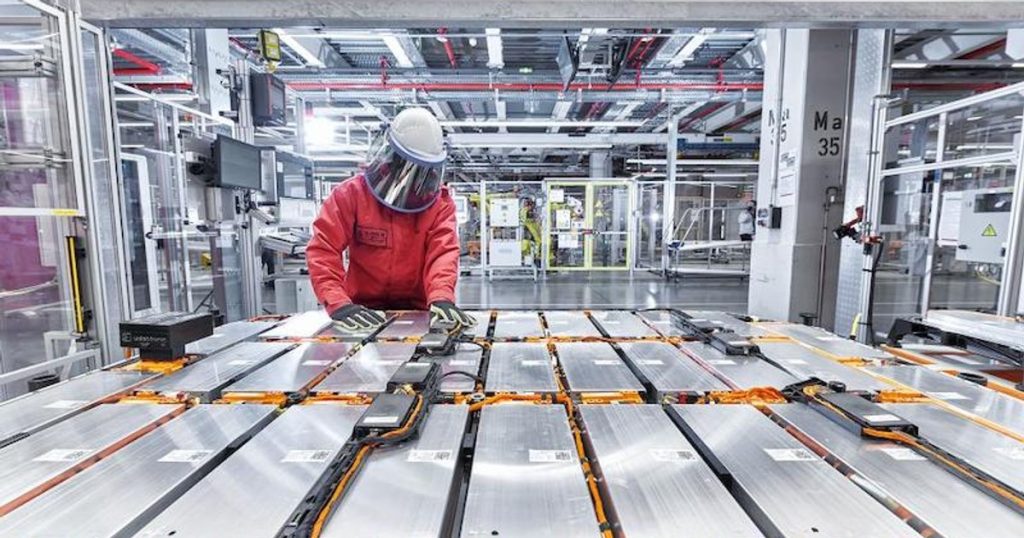
The development will place Morocco further upstream in Europe’s electric-vehicle battery value chain, with the planned facility producing lithium-iron-phosphate, LFP, cathode material for battery cells manufactured at facilities in Spain and Slovakia.
The Kenitra joint venture is expected to attract about €480 million, $530 million, in investment and produce up to 100,000 tonnes of LFP cathode material annually.
Under the partnership, Gotion will hold a 51 per cent stake, while PowerCo will own 49 per cent. Most of the facility’s output is expected to supply the partners’ battery-cell operations in Spain and Slovakia.
The investment forms part of a wider industrial strategy linking production across Morocco and Europe. The partners’ planned battery facilities in Spain and Slovakia will have a combined annual production capacity of 37.5 gigawatt-hours, GWh.
Volkswagen’s Valencia facility in Spain is planned to account for 29.1 GWh, while the plant in Šurany, Slovakia, is expected to have an annual capacity of 8.4 GWh.
The structure creates a cross-Mediterranean supply chain in which Morocco supplies cathode materials, European facilities manufacture battery cells and Volkswagen’s vehicle operations provide a major downstream market.
The development also builds on Morocco’s broader renewable-energy and industrial strategy. The country has invested significantly in clean-energy development, including the Noor Ouarzazate complex, while establishing itself as an important automotive manufacturing base.
Its proximity to Europe, renewable-energy ambitions and existing automotive industry have helped Morocco attract investments aimed at connecting African production with European industrial markets.
The latest project could further expand that role by moving Morocco beyond vehicle and component manufacturing into the production of materials required for electric-vehicle batteries.
LFP batteries are expected to become increasingly important in the European market. Volkswagen estimates that their share of the European battery market could rise from about 10 per cent currently to between 40 and 60 per cent by 2030.
Europe currently has limited LFP production capacity, making the development of additional regional supply chains strategically important for battery manufacturing.
For Volkswagen and Gotion, the partnership also represents an effort to build a more regionalised battery supply chain while diversifying the sourcing of key cathode materials.
The agreement builds on an existing relationship between Volkswagen and Gotion that dates back to 2020. Volkswagen remains a significant shareholder in the Chinese battery manufacturer, although it has agreed to sell a 5.3 per cent stake.
For Morocco, the investment signals a further shift towards higher-value industrial production and deeper integration with Europe’s emerging electric-vehicle economy, while reinforcing the country’s role as a manufacturing link between African resources and European markets.