Precious Anga
Lagos — As 85 million Nigerians remain without reliable grid electricity, growing calls for citizens to simply buy solar panels overlook a basic reality: no major economy has built a dependable electricity system by leaving power entirely to market forces.
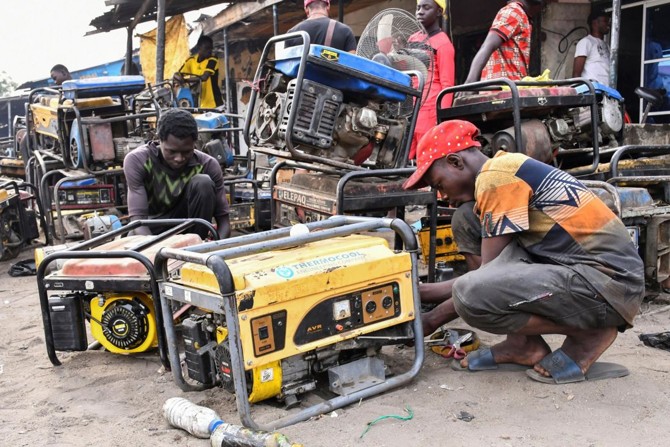
For millions of Nigerians, electricity has become a personal responsibility rather than a public service. Homes and businesses increasingly rely on diesel generators, petrol generators, solar panels, inverters and batteries to keep the lights on, while the national grid struggles to deliver consistent supply.
This growing dependence on self-generation has fuelled a narrative that electricity should be treated like any other consumer product one that individuals should purchase according to their means, with minimal government intervention. Those who can afford solar installations often argue that others should simply do the same.
However, evidence from global electricity markets tells a different story.
No major economy, whether the United States, China, Germany, France, Japan or the United Kingdom, has developed a reliable national electricity system by relying solely on unregulated private investment. Instead, governments have consistently played central roles in planning, regulating, financing and protecting electricity infrastructure because power is regarded as a strategic public necessity rather than an ordinary commercial commodity.
The debate has gained renewed attention in Nigeria following comments by the Managing Director of the Rural Electrification Agency, REA, Dr Abba Aliyu, who disclosed that more than 85 million Nigerians about 40 per cent of the country’s population still lack reliable access to grid electricity.
Speaking during the signing of a Joint Development Agreement between the REA and Ecotech Development Nigeria Limited for the establishment of a solar panel and battery manufacturing facility in Abuja, Aliyu said the country’s electricity deficit remains one of its biggest development challenges despite ongoing investments in renewable energy.
“Over 85 million Nigerians, close to 40 per cent of our population, still lack reliable access to grid electricity. REA exists to close that gap,” Aliyu said.
His remarks underscore a broader economic question that extends beyond Nigeria: Who should bear responsibility for providing electricity the individual or the state?
Electricity behaves differently from ordinary markets
Unlike most consumer goods, electricity cannot simply be produced wherever demand exists. Building power stations, high-voltage transmission lines and nationwide distribution networks requires billions of dollars in long-term investment that may take decades to recover.
Economists describe transmission and distribution networks as natural monopolies because constructing multiple competing electricity grids serving the same communities would be economically inefficient.
The World Bank notes that electricity infrastructure requires coordinated planning, regulatory oversight and long-term investment because the market alone often fails to deliver universal access, particularly in developing economies.
This explains why governments regulate electricity far more heavily than industries such as retail, telecommunications or manufacturing.
Even countries that have liberalised parts of their electricity sectors continue to maintain strong public oversight.
In the United Kingdom, electricity generation is largely undertaken by private companies, yet the transmission system operates under strict regulation, while the government provides long-term contracts and price guarantees for major energy projects.
France continues to rely heavily on state-backed nuclear generation through EDF, while Germany has spent hundreds of billions of euros supporting renewable energy deployment through subsidies and guaranteed tariffs.
The United States is often presented as a free-market economy, yet electricity remains one of its most regulated industries. Federal and state regulators oversee wholesale markets, approve transmission investments, regulate retail tariffs in many jurisdictions and provide incentives for renewable energy, nuclear generation and grid resilience.
China, now the world’s largest producer of electricity, has built its power sector through decades of coordinated government planning, massive public investment and state-backed enterprises. Its electricity expansion has been central to the country’s industrialisation and economic growth.
These examples point to one conclusion: competitive markets may improve efficiency in electricity generation, but reliable national power systems depend on strong public institutions, regulation and long-term infrastructure planning.
Markets alone rarely guarantee reliable power
The global energy crisis that followed geopolitical tensions in recent years reinforced this reality.
As gas prices surged and electricity costs climbed across Europe and other regions, governments intervened on an unprecedented scale.
According to the International Energy Agency, IEA, countries introduced emergency price caps, consumer subsidies, tax reductions, direct financial support and market interventions to shield households and businesses from soaring energy costs.
Rather than allowing wholesale electricity markets to determine final prices, governments absorbed significant portions of the financial burden to prevent economic disruption.
Similarly, the International Monetary Fund estimates that explicit fossil fuel subsidies worldwide reached approximately $725 billion in 2024, while broader implicit support—including environmental and social costs—runs into several trillion dollars annually.
These figures challenge the common assumption that advanced economies operate electricity markets without government involvement.
Instead, virtually every major economy subsidises, regulates or financially supports parts of its energy sector because electricity underpins healthcare, manufacturing, education, communications and national security.
Without reliable electricity, factories reduce production, hospitals struggle to provide critical services, schools lose teaching hours and businesses face significantly higher operating costs.
Electricity therefore creates economic benefits that extend well beyond individual consumers, making it fundamentally different from conventional private goods.
Infrastructure that shapes economic growth
Development economists increasingly classify electricity alongside roads, railways, ports and broadband infrastructure because its value extends across every productive sector of the economy.
Reliable electricity improves industrial productivity, attracts investment, enhances digital connectivity and supports healthcare delivery.
Conversely, inadequate power supply raises production costs, discourages manufacturing, reduces competitiveness and slows economic growth.
This explains why governments across Asia invested heavily in electricity infrastructure during periods of rapid industrialisation.
China’s remarkable manufacturing expansion, for example, was supported by decades of large-scale investment in generation capacity, transmission networks and industrial power infrastructure.
India has similarly expanded public investment and regulatory reforms to improve electricity access, while countries across Europe continue investing heavily in grid modernisation to accommodate renewable energy.
These experiences demonstrate that electricity development is rarely driven by private capital alone.
Instead, governments establish policy certainty, regulate markets, guarantee long-term returns where necessary and invest directly in infrastructure that private investors may consider too risky or insufficiently profitable.
Nigeria now finds itself confronting the same challenge under far more difficult economic circumstances.
Despite possessing abundant natural gas reserves, significant hydroelectric potential and some of Africa’s highest solar irradiation levels, millions of Nigerians continue to depend on expensive self-generation because public electricity infrastructure has failed to keep pace with demand.
That failure has created one of Africa’s fastest-growing markets for rooftop solar systems a development that offers enormous opportunities but also exposes deep inequalities in access to reliable energy.