 Precious Anga
Lagos — Nigeria has secured fresh clean energy investments worth $155 million, reinforcing its position as Africa’s fastest-growing off-grid renewable energy market, as the Rural Electrification Agency, REA, intensifies efforts to attract international capital and strengthen cross-border collaboration on energy access.
The investments, comprising an $80 million debt facility for off-grid solar expansion and a $75 million strategic partnership with UK-backed clean energy company MOPO, underscore growing investor confidence in Nigeria’s renewable energy sector amid ongoing electricity market reforms.
The Managing Director of the REA, Abba Aliyu, disclosed the development in a statement on Friday, saying the country is increasingly becoming the preferred destination for distributed renewable energy investments in Sub-Saharan Africa.
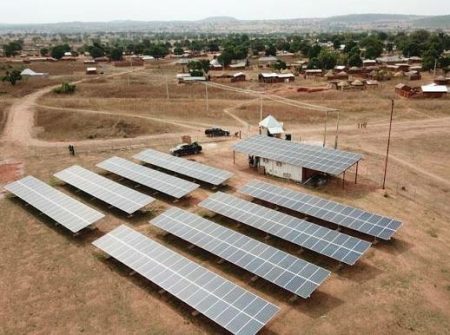
Aliyu said the newly secured financing will accelerate the deployment of off-grid solar home systems and electricity solutions for households and businesses, while the partnership with MOPO will support the rollout of smart battery technology aimed at improving access to reliable electricity in underserved communities.
According to him, the investments reflect Nigeria’s emergence as the continent’s most attractive off-grid energy market, citing the Sub-Saharan Africa Clean Energy Market Outlook 2026 published by BloombergNEF, which ranked Nigeria as Africa’s largest and fastest-growing market for distributed solar and small-scale renewable energy.
“The recently published Sub-Saharan Africa Clean Energy Market Outlook 2026 by BloombergNEF highlights Nigeria as the continent’s largest and fastest-growing market for distributed solar and small-scale renewable energy, having attracted an $80 million debt facility dedicated to expanding off-grid solar home systems and business power solutions across Nigeria,” Aliyu said.
He added that MOPO’s $75 million investment agreement with the REA would introduce a new smart battery programme designed to improve electricity access and strengthen energy resilience for off-grid consumers.
Beyond the two major investments, Aliyu revealed that WeLight, an international mini-grid developer with operations across Madagascar and Mali, has also announced plans to enter Nigeria’s off-grid electricity market.
The company currently operates nearly 190 mini-grids, providing electricity to more than 800,000 people across Africa, and its planned expansion into Nigeria is expected to deepen private sector participation in rural electrification.
According to Aliyu, the influx of international developers and financiers demonstrates a significant shift in global perception of Nigeria’s renewable energy landscape.
“These massive capital injections demonstrate that international financial institutions and global developers no longer view Nigeria as a risky bet, but as the most viable and scalable off-grid energy market on the continent,” he stated.
He noted that Nigeria’s progress extends beyond attracting investment, saying the country is increasingly serving as a knowledge hub for renewable energy development across Africa.
The REA recently hosted technical delegations from Mozambique and the Zanzibar Utilities Regulatory Authority, ZURA, to share Nigeria’s experience in developing sustainable off-grid electricity projects, while another delegation from Sierra Leone is expected to visit next week.
Aliyu said the exchange programmes reflect growing recognition of Nigeria’s rural electrification model and provide opportunities for African countries to learn from both the successes and operational challenges encountered during the country’s renewable energy expansion.
He explained that discussions with ZURA covered issues ranging from project financing and grid stability to system operations, implementation strategies and long-term sustainability.
“Hosting a delegation from the Zanzibar Utilities Regulatory Authority reaffirmed just how far we have come, proving that beyond executing landmark projects within our borders, REA is maturing into a continental nexus where the future of African energy is actively being shaped,” he said.
According to him, the sessions were conducted with complete openness, allowing participants to examine both the achievements and practical lessons from Nigeria’s off-grid electrification journey.
Aliyu argued that stronger collaboration among African countries would accelerate progress towards universal electricity access across the continent.
“One truth stood out Africa will achieve universal energy access far faster through radical collaboration than by working in silos,” he added.
He described the expected visit by officials from Sierra Leone as another milestone in the REA’s continental engagement strategy, noting that additional exchange missions are already being planned.
“We are witnessing a defining moment where African nations choose shared progress over isolated effort because when one of us succeeds, the entire continent moves forward,” Aliyu said.
The latest investments are expected to support Nigeria’s efforts to bridge the country’s electricity access gap, expand clean energy deployment in rural communities and stimulate private sector participation in renewable energy infrastructure, while strengthening the country’s ambition to become Africa’s leading destination for off-grid energy development.