– Opening pushed to June 2027
Lagos — The latest postponement adds to a long history of missed deadlines for Uganda’s oil industry, with first oil originally expected around 2018 before successive targets were pushed back to 2020, 2025, 2026 and now 2027. Earlier plans had put the first export cargo from EACOP in October 2026, but government officials now say the 1,443-kilometre pipeline will only be ready to receive crude by mid-December, while first commercial oil production has been pushed to before the end of June 2027.
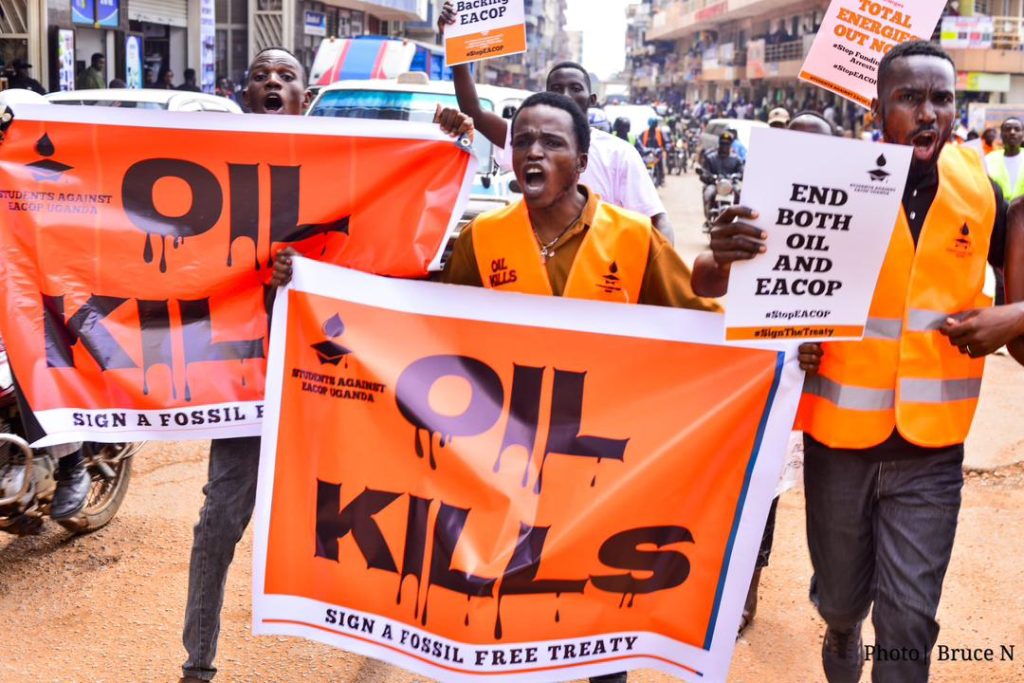
For the communities affected by EACOP and campaigners who have challenged the project’s social, environmental and climate impacts, the delay provides another reminder that the project’s future is not predetermined.
While EACOP and political backers have been celebrating the near completion, even branding the expected oil as “Pearl Sweet”, the reality is that getting to commercial production means more than just laying pipe. The oil fields, central processing facilities, the pipeline itself, pumping infrastructure, and export terminal all need to be competently tested and commissioned before Uganda can export any crude.
Reports show delays with specialised equipment and critical systems are why they’ve been missing first-oil targets. The Petroleum Authority of Uganda blamed disruptions in equipment deliveries from the Middle East war, including parts for metering, electrical instrumentation, and telecom systems.
This delay isn’t just an administrative shift; it exposes systemic project risks including:
- Rushed testing – meaning, higher environmental risk: Developers scrambling to meet the new 2027 target will rush pre-commissioning tests at Central Processing Facilities. That threatens fragile ecosystems around Lake Albert and Murchison Falls with toxic spills, flaring, and wastewater release.
- Economic mirage: While oil majors shift deadlines, vulnerable communities still suffer from uncompensated land displacement, lost livelihoods, and climate crisis.
Zaki Mamadoo, StopEACOP Campaign Coordinator said “the project developers and their allies would have us believe that because construction is nearing completion, EACOP is a done deal, but this delay reminds us that nothing about this project is inevitable. A pipeline can be built and still be fought, financing can still be challenged, those responsible for its harms can still be brought to account, and communities, out of an even sharper necessity, will continue to organise in defence of their land, livelihoods and future. We have every intention of seeing that fight through to the very end.”
Rukiya Khamis, East Africa Programme Manager at 350.org disclosed that “the latest delay is another reminder that East Africa’s energy future does not have to be tied to expensive, extractive mega-projects like EACOP. If we are serious about building a resilient region, we need to rethink what energy progress looks like. Small, distributed solar, hydro and wind can tackle energy poverty on the ground today, alongside investment in stronger transmission and distribution networks, battery storage and policies that enable affordable, locally-owned clean energy.
“True energy security is not measured by how much oil a country can export. It is measured by whether people have reliable, affordable, clean energy in their homes and communities. Our leaders should put people and the planet before fossil fuel profits and foreign export projects.”
Recheal Tugume, a community leader from Hoima, Uganda noted that “for communities that have spent years resisting EACOP, this delay matters. But we’re not celebrating a missed deadline and walking away. As this project nears commissioning and operation, accountability becomes key. The question is no longer simply whether the pipeline can be built, but whether the entire system can be operated safely, whether environmental and social commitments to affected communities will be honored, and who will be held responsible when they’re not.”