Precious Anga
Lagos — The Federal Government has begun construction of a new National Control Centre for the Nigerian Independent System Operator in Osogbo, Osun State, as part of efforts to strengthen the monitoring, management and security of Nigeria’s electricity grid.
The new facility is being developed to replace the existing control centre, which is 64 years old and no longer meets the demands of operating Nigeria’s increasingly interconnected power system.
The groundbreaking ceremony was performed on Wednesday by Vice-President Kashim Shettima, represented by his Special Adviser on Legal and Compliance Matters, Alhaji Bashir Maidugu. The Minister of Power, Joseph Tegbe, was also present.
According to the Federal Government, the project is designed to address weaknesses in grid operations and provide the infrastructure required to improve the reliability of electricity supply.
“The Federal Government has begun construction of a new ultra-modern National Control Centre for the Nigerian Independent System Operator in Osogbo, Osun State, replacing a 64-year-old facility that no longer meets the demands of running Nigeria’s grid,” the government said.
Speaking through his representative, Shettima said reliable electricity remained central to economic growth, industrial productivity and social development, noting that manufacturers, small businesses, hospitals and schools all depend on dependable power supply.
He described the control centre as a critical component of grid reliability, stressing that Nigeria could not continue to operate a modern electricity system with outdated equipment and systems.
The new centre will feature modern Supervisory Control and Data Acquisition systems, large-format control displays, communications infrastructure, data systems and enhanced security arrangements.
Shettima said the facility would strengthen Nigeria’s ability to maintain domestic grid security while participating effectively in an interconnected regional electricity system.
He also pointed to the growing role of renewable energy in Nigeria’s electricity mix, noting that the integration of solar and wind generation would require stronger system-management capabilities because of their different operating characteristics.
“A modern System Operator must therefore possess the tools and expertise to integrate new sources of generation while maintaining system security. The new NCC will provide part of that capability,” Shettima said.
He added that regional electricity integration could support more efficient use of generation resources and greater electricity trade, but would also place greater responsibility on national system operators.
Tegbe said the existing control centre could no longer meet the current demands of NISO’s responsibilities, outlining the new facility’s operational and technical features.
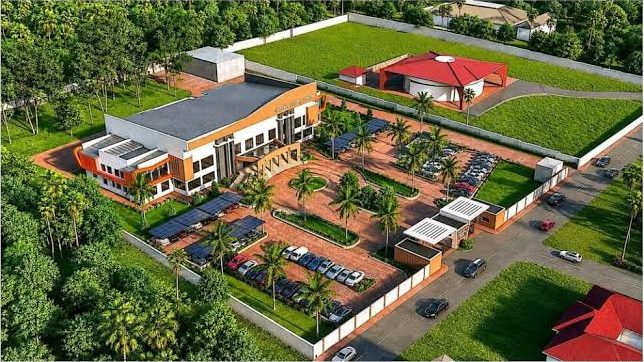
“The main building will comprise a basement, ground floor and first floor, accommodating operational, technical and support functions. A dedicated powerhouse will support continuous operation of critical systems,” the minister said.
The project will also include a security and screening building, external works and underground electrical and fibre-optic connections designed to support reliable power supply and communications.
Tegbe said the facility would provide the environment required for modern grid monitoring and control, with SCADA systems and large-format displays giving operators clearer and timely information on grid conditions.
Improved monitoring and analytics are expected to help operators identify developing faults, support preventive maintenance, optimise available generation and transmission capacity, and respond more quickly to disturbances.
“Once equipped, tested and commissioned, the centre will strengthen coordination across the electricity industry. Operators will be better placed to respond to disturbances before they spread and coordinate restoration when interruptions occur,” Tegbe said.
The minister added that the centre would support the safe integration of renewable energy resources and Nigeria’s operational coordination within the West African Power Pool.
NISO Managing Director and Chief Executive Officer, Abdu Bello Mohammed, said the project would strengthen the operator’s ability to monitor the national grid, coordinate system operations and make faster, better-informed decisions during disturbances.
The National Control Centre is central to monitoring electricity flows and coordinating operations across Nigeria’s power system, making the modernisation of its infrastructure important to the management of generation, transmission, system frequency and grid disturbances.