Precious Anga
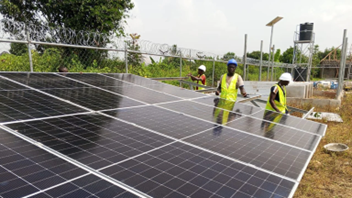
Lagos — More than 12,000 households and micro, small and medium-sized enterprises, MSMEs, in Benue and Nasarawa states are set to gain access to electricity as five solar mini-grids with battery storage are developed across the two states.
The projects are being financed through a senior debt facility provided by the Renewable Energy Performance Platform 2, REPP 2, a private debt fund managed by Camco, to Nigerian renewable energy company Prado Power.
The five mini-grids will have a combined solar photovoltaic capacity of 1.84 megawatts-peak, MWp, and 5.2 megawatt-hours, MWh, of battery storage.
The projects are expected to provide first-time electricity connections to communities currently without access to grid power, while also reducing reliance on diesel generators for electricity supply.
Prado Power, an Abuja-based renewable energy company focused on off-grid energy projects, is developing the mini-grids as part of its expansion of decentralised renewable energy infrastructure in Nigeria.
The battery storage systems will complement the solar generation capacity by storing electricity for use when solar output is unavailable, helping to provide a more consistent power supply to connected households and businesses.
Alfred Kudjordji, investment manager at Camco, said the financing demonstrated the fund’s commitment to supporting decentralised energy projects across Africa.
“Financing Prado Power’s mini-grid expansion demonstrates Camco’s commitment to investing in the businesses building Africa’s decentralised energy future. By combining clean energy access with productive agricultural use, this project delivers exactly the kind of integrated, climate-positive impact that REPP 2 was designed to support,” Kudjordji said.
REPP 2 invests in distributed and small-scale renewable energy projects across sub-Saharan Africa. Its investors include the Green Climate Fund, Norfund, FMO, BIO, Ceniarth and OeEB.
The five projects will expand electricity access in off-grid communities while providing an alternative to diesel-based generation for households and businesses. Their deployment also adds solar generation and battery storage capacity to Nigeria’s growing decentralised energy market.