 Mkpoikana Udoma
Port Harcourt — African climate justice advocates at the ongoing COP30 in Belem, Brazil, have denounced the newly launched $125 billion Tropical Forest Forever Facility, TFFF, warning that the initiative is a “dangerous financial scheme” that commodifies African forests while offering no real climate support to vulnerable nations.
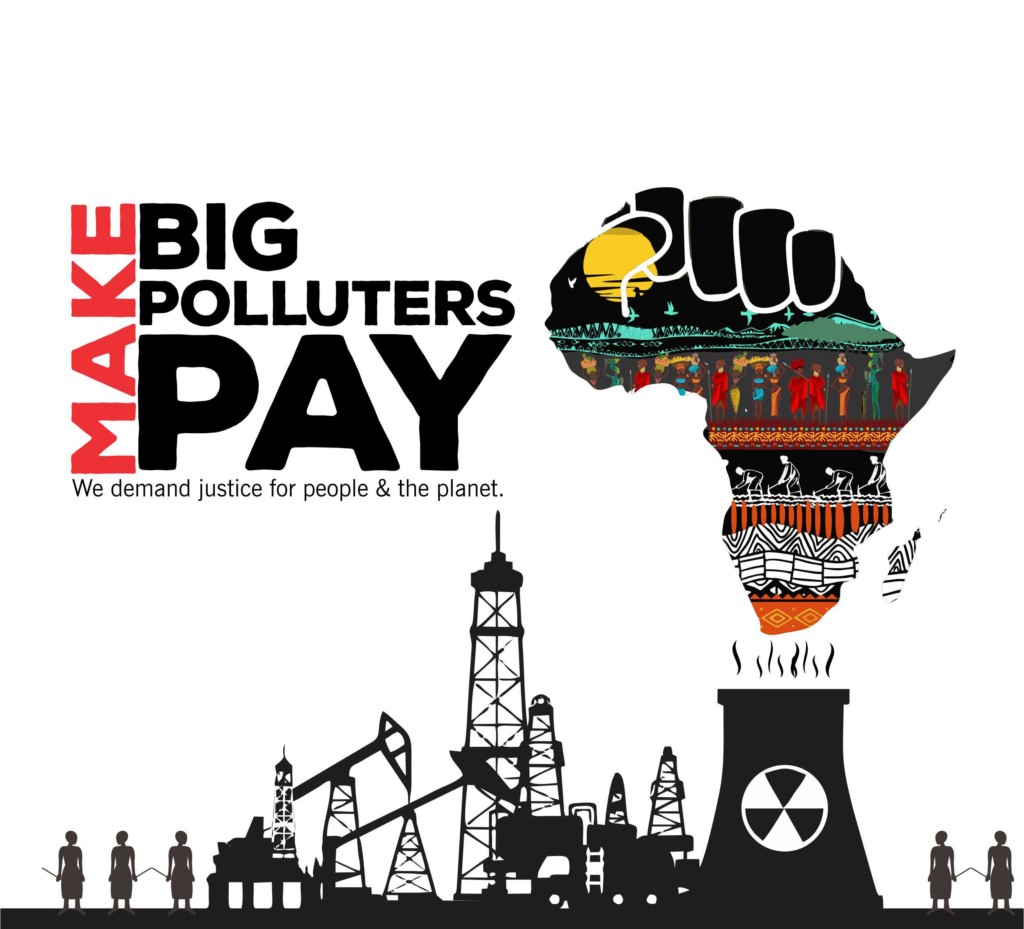
The Africa Make Big Polluters Pay, MBPP, Coalition, made up of more than 32 organisations including CAPPA, Gender CC Southern Africa, and the Global Forest Coalition, said the fund, promoted by Brazil as a blended-finance mechanism to pay countries for forest protection, is built on false promises.
“The excitement that has trailed the launch of the TFFF is misplaced,” the coalition said in a statement. “Rather than safeguarding forests, it commodifies living ecosystems, undermines Indigenous and community-led stewardship, and erodes the principles of climate justice it claims to uphold.”
The group stressed that the TFFF treats forests as “tradable assets” to be controlled by international financial actors, describing the model as a threat to Africa’s sovereignty over its own biodiversity.
“Instead of empowering African nations, the Facility risks tightening financial dependence and eroding local sovereignty over forest resources,” the coalition warned.
Countries being courted into the scheme include Nigeria, Angola, Benin, Cameroon, Côte d’Ivoire, Equatorial Guinea, Ghana, Liberia, Mozambique, Rwanda, Sierra Leone, Togo, and Uganda.
The MBPP said the Facility is structured to prioritise investor returns above community needs, noting that countries would receive only about $4 per hectare of protected forest, an amount the coalition dismissed as “tokenistic” compared to the true ecological and economic value of tropical forests.
“What it offers is not real climate finance, but new layers of external bureaucracy and financial engineering,” the group said.
Describing the Facility’s structure as “a blatant privatisation of forest finance, rooted in speculation rather than sustainability,” the coalition said payments to countries depend on the performance of the fund’s investment portfolio, meaning frontline forest communities would bear the risks, not the financiers.
The coalition pointed out that redirecting even 1 percent of the global $2.7 trillion annual military budget would generate $27 billion yearly, “over six times what the TFFF’s risky, market-based model promises.”
“This comparison exposes the TFFF for what it truly is: a profit-making instrument disguised as climate action,” it added.
The MBPP also faulted the appointment of the World Bank as trustee of the new fund, describing the move as “regressive” and exclusionary.
“Experience has shown that World Bank–led climate finance centralises power, delays funding, and silences frontline communities, making the TFFF another bureaucratic obstacle rather than a climate solution,” the coalition said.
Akinbode Oluwafemi, Executive Director of CAPPA, said the World Bank must not be allowed to commercialise Africa’s forests.
“Accountability in climate finance starts with rejecting corporate capture. The World Bank must not be allowed to turn forest protection into another business model,” he said.
Mokoena Ndivile of Gender CC Southern Africa warned that placing the Facility under the World Bank risks further marginalising forest-dependent communities.
“Forest preservation is not a privilege; it is a right tied to the survival, dignity, and livelihoods of communities, especially women. Handing control of the TFFF to the World Bank risks turning this right into another instrument of financial control, and we will not accept that,” she stated.
Kwami Kpondzo of the Global Forest Coalition added that the model “would marginalise knowledge of Indigenous peoples and local communities, prioritise corporate profit over community needs, thereby weakening local ownership and stewardship of forest resources.”
The coalition concluded that the TFFF’s governance framework is weak, exclusionary, and disconnected from the Global South.
“The TFFF offers no path to justice, only an illusion of progress,” the group said. “True climate action will not come from financial schemes or distant institutions, but from the communities that have always protected the forests with their lives.”
The MBPP called on world leaders to reject the fund and instead support transparent, community-led climate finance systems rooted in justice and local control.