Oghenekevwe Ovbije
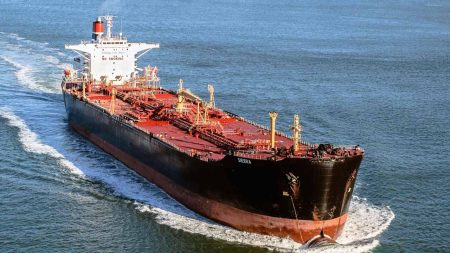
Lagos — The latest escalation around Iran and the Strait of Hormuz has once again exposed a hard truth about global energy security: it is not defined only by reserves in the ground, but by how quickly and safely producers can respond when supply routes are disrupted. The Strait of Hormuz remains the world’s most critical oil chokepoint. Roughly 20 million barrels per day moved through it in 2024, representing about one-fifth of global petroleum liquids consumption, while a sizable portion of global LNG trade also passed through the same corridor.
When instability hits this channel, the consequences extend far beyond the Gulf. The current crisis has reinforced that market disruption is no longer just about geology. It is about logistics, mobility, and response time. As conflict intensifies, shipping risks rise, infrastructure comes under pressure, and volumes can be shut in or delayed even where reservoirs remain productive. In such moments, the question is not simply whether oil exists. The question is whether producers elsewhere can bring additional barrels to market fast enough to stabilize supply.
That is why production flexibility has become just as important as production capacity. In this environment, fields and wells that can increase output rapidly and safely become strategic assets. Among artificial lift technologies, Electrical Submersible Pumps (ESPs) are especially important because of their ability to support high-volume production and offer a degree of controllability through variable speed operation. For years, ESPs have been regarded primarily as production-enabling tools in mature wells, high-rate assets, and water-drive reservoirs. That view is now too limited, in a volatile market, ESP-equipped oil and gas wells offer something more valuable than steady-state-lifting power they offer controllability. When paired with variable speed drives and proper surveillance, ESP systems can help operators raise production within defined operating limits without waiting for new drilling campaigns or long-cycle field developments. That ability matters when global supply shocks demand immediate barrels, not future barrels.
A producer may have significant reserves in place, but unless the well system can safely lift and process additional fluids, those reserves do not translate into responsive supply. Spare hydrocarbons are different from deliverable production. The gap between theoretical capacity and actual responsiveness is where artificial lift enters the strategic conversation. ESPs give operators a degree of production control that naturally flowing wells often cannot provide. By adjusting pump speed, operators can influence drawdown and raise output within a safe performance window. Across a portfolio of oil and gas wells, this can create a form of short-cycle flexibility that becomes highly valuable during periods of price spikes or geopolitical disruption. In practical terms, oil and gas wells equipped with ESP systems may serve as responsive production buffers rather than just stable base producers.
But that flexibility is limited, and that is where engineering discipline becomes decisive. Operators cannot simply increase frequency across a fleet of ESP wells and expect trouble-free incremental output. Higher pump speeds raise motor loading and heat generation. In gas-prone wells, aggressive drawdown can increase gas interference or trigger gas lock, reducing efficiency and threatening production stability. In unconsolidated formations, higher drawdown may worsen sand production and accelerate equipment wear. At the surface, processing capacity can become a constraint as separators, flowlines, and export systems struggle to manage higher fluid volumes. This means production flexibility must be approached as a full-system capability, not just a downhole adjustment. A responsive barrel is only truly available when reservoir behavior, pump performance, well integrity, and surface facilities are all aligned. If even one part of that chain is weak, the operator may gain short-lived output but lose reliability, run life, and economic value. In such cases, a price opportunity can quickly turn into a maintenance problem.
That is why digital optimization is becoming central to the future of artificial lift. The best response to a volatile oil market is not reckless acceleration; it is controlled orchestration. Real-time monitoring of pressure, temperature, vibration, amperage, gas fraction, and surface throughput allows operators to identify how far a well can be safely pushed before performance deteriorates. Predictive diagnostics and digital twin models can further support better decisions by estimating operational risk before the system is stressed. This is where the industry needs to rethink the role of ESPs. For too long, artificial lift optimization has been framed mainly around reliability, uptime, and cost reduction. Those remain important goals, but they are no longer the whole story. In a world shaped by geopolitical uncertainty, artificial lift strategy must also be about responsiveness. The strategic question is no longer only how to keep a well running efficiently. It is also how to position certain wells to respond rapidly, safely, and sustainably when the market suddenly needs more supply.
That shift has major implications for producers outside the Gulf. In the United States, and Latin America, many mature assets already operate with extensive artificial lift infrastructure. These assets may not be labeled “swing supply” in the traditional geopolitical sense, but technically, some of them can provide responsive barrels if their lift systems are robust, their production data is reliable, and their surface facilities can absorb additional throughput. In that sense, ESP-equipped brownfield assets can play a quiet but meaningful role in global supply stabilization. For African producers, this is an especially important conversation. At a time when many countries are under pressure to maximize the value of existing assets, the focus should not be only on production targets. It should also be on how flexible capacity current infrastructure can deliver under high-price conditions without compromising long-term asset integrity. Producers who can demonstrate safe and responsive output will be better positioned in a market increasingly shaped by volatility and supply fragmentation.
The most valuable asset is not always the largest reservoir or even the one with the lowest lifting cost. It may be the field that can respond fastest without damaging itself in the process. That requires deep production systems understanding, disciplined artificial lift management, and the ability to balance short-term output opportunities against long-term equipment reliability. The instability around Iran and the Strait of Hormuz has made one thing clear: energy security now depends as much on operational agility as on geological endowment. The industry should therefore stop viewing ESPs as merely mechanical lifting devices. In today’s market, they are part of the strategic infrastructure that supports supply resilience. When global flows are disrupted, the wells that matter most are not simply the ones with oil left to produce. They are the ones that can safely produce more when the world suddenly needs them.