London — Recent results on automated driving show substantial benefits by reducing fatal accidents and raising travel quality. A small decrease in CO2 emissions is also expected. A minor disadvantage is a small increase in travel time through rerouting. VTT played a key role in the impact assessments.
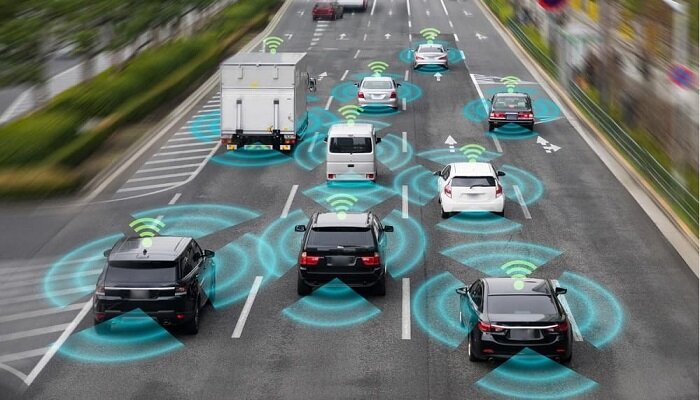
The impacts of automated driving of passenger cars were studied in an EU Flagship project. The results were based on data simulations that were set using data collected with real automated vehicles in real traffic on motorways, urban and rural areas, and on proving grounds. Automated driving was assumed to be available on urban streets and motorways in good driving conditions – not yet everywhere or in all conditions.
“To our knowledge, this is the most comprehensive impact assessment so far for the future use of automated vehicles in European traffic. For VTT, working with the European OEMs and other stakeholders developing automated driving was a great opportunity to be part of shaping the future of transport,” says Satu Innamaa, Principal Scientist at VTT.
According to the results, 20% of fatal accidents on motorways today would be avoided if 30% of passenger cars in the traffic flow were automated. In urban settings, the corresponding reduction in accidents would be 22%. The number of accidents with severe and slight injuries would decrease even more. A minor negative impact would be an increase of 0–4% in travel times due to changes in target speed and rerouting, but technical solutions were found to reduce this increase.
“Overall, the benefits of automated driving are expected to outweigh societal costs and potential negative consequences by a great margin. From a socio-economic perspective, the safety impact and increased travel comfort form the main monetary benefits, whereas the increase in travel time brings monetary disadvantage,” says Satu Innamaa.
Automated driving is likely to increase travel quality and produce significant impacts on mobility. By enabling users to engage in non-driving-related activities, enhanced travel quality can lead to more frequent and longer trips.
Manifold impacts on the transport system
The project addressed EU-level impacts covering the entire traffic flow, i.e. automated and non-automated light and heavy vehicles, across all driving scenarios. The results on traffic efficiency and environment revealed that, with automated vehicles in the traffic flow, the average tractive energy use per vehicle-kilometre travelled decreases under most conditions. The impacts on CO2 emissions at the network level were small (between –1% and 0%).
“While automated vehicles tend to be electric, the project was agnostic to the motor type. It was important to limit the scope of research strictly to the impact of the changes in driving behaviour caused by automation – and not to mix it with impact of the electrification of the fleet,” Innamaa explains the impact on CO2 emissions.
In addition to the reduction in current traffic accidents due to the introduction of automated driving, it may lead to new types of accidents. The study estimated these to account for 0.3% on motorways at a 30% penetration rate, resulting from situations where the automated vehicle cannot continue driving and needs to slow down or even stop before the human driver takes over control. Thus, this share of new accidents is estimated to be very small in comparison to the reduction in current accidents that automated driving will bring.
Key impacts of automated driving (assuming a 30% adoption of passenger cars):
- Fatal accidents reduced by 20% on motorways, and by 22% in urban traffic
- Average travel-time increased by 0–4% for all vehicles in traffic
- Tractive energy use per vehicle-kilometre decreased
- Small decrease in CO2 emissions
- Increased travel comfort
EU Flagship project
The €60 million project was coordinated by Volkswagen AG, but most leading car manufacturers with production in Europe, as well as other relevant stakeholders, were represented in the consortium. VTT was responsible for multiple work packages, including the project’s methodology and the impact assessment. The four-year project was completed in November 2025.
“It was inspiring to work with a consortium, testing real automated cars that are being developed for the market, and to explore the diverse impacts of automated driving on the transport system. The project was extremely interesting but also very challenging. We had to consider a multitude of aspects when developing the methodology and then bring all the pieces together to execute the evaluation. Leading a multinational team across organisational boundaries brought its own added dimension,” says Satu Innamaa.
Key facts of the Hi-Drive project
- Duration 53 months, starting from 1 July 2021
- Total budget €60 million, EC funding €30 million
- Coordinator Volkswagen AG
- Included 53 organisations
- www.hi-drive.eu
- https://www.linkedin.com/
company/hi-drive/
The Hi-Drive project was an Innovation Action, co-funded by the European Union under the Horizon 2020 programme with the grant agreement number 101006664.