Precious Anga
Lagos — Ogun State stands on the threshold of a defining moment. With oil exploration gathering pace in the Dahomey Basin, particularly around Eba Island in Ogun Waterside Local Government Area, the state is edging closer to joining Nigeria’s league of oil-producing states.
For a region already recognised as one of the country’s industrial and manufacturing hubs, commercial crude oil production presents fresh opportunities for economic growth, job creation and increased government revenue. Yet it also raises a critical question: can Ogun avoid repeating the costly mistakes that have defined more than six decades of oil exploration in the Niger Delta?
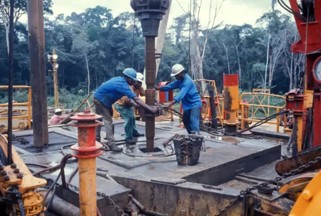
The Federal Government’s decision to grant Ogun Frontier Exploration Status has accelerated activities in the basin. Under the supervision of the Nigerian National Petroleum Company Limited (NNPCL), environmental impact assessments, geotechnical investigations, bathymetric surveys, civil works and the mobilisation of drilling equipment have been completed at the Eba well, which was abandoned decades ago.
Preparations are now underway for drilling and eventual commercial production. Governor Dapo Abiodun has repeatedly expressed confidence that Ogun will become an oil-producing state during his administration, describing the crude discovered in the area as premium quality and assuring residents that exploration enjoys broad community support.
Geologically, the outlook is encouraging. The Dahomey Basin, stretching from Ghana through Togo and Benin Republic into southwestern Nigeria, is regarded as one of West Africa’s promising frontier basins, with studies estimating billions of barrels of oil equivalent across the broader region.
If commercial quantities are confirmed, Ogun could help diversify Nigeria’s hydrocarbon production beyond the Niger Delta, supporting national efforts to boost crude output and energy security.
However, history offers a sobering warning. Since oil was first discovered in commercial quantities in Oloibiri in 1956, the Niger Delta has generated hundreds of billions of dollars in revenue for Nigeria, yet many host communities remain trapped in poverty, environmental degradation and conflict.
More than 9,000 oil spill incidents have been recorded over the past decade alone, contaminating rivers, farmland and groundwater. The United Nations Environment Programme (UNEP) documented severe pollution in Ogoniland, finding dangerous levels of hydrocarbon contamination that could take decades to remediate.
Gas flaring has also left a legacy of acid rain, respiratory illnesses and widespread ecological damage, while years of neglect fuelled militancy, pipeline vandalism and insecurity that continue to affect oil production today.
These experiences underscore why Ogun cannot afford to treat oil production as merely an economic opportunity. Environmental protection must become the foundation of every decision from the outset. Independent environmental impact assessments should not end with project approvals but continue throughout production.
Regulators must enforce strict spill prevention measures, require operators to deploy modern leak detection technology and insist on rapid remediation whenever incidents occur. Gas flaring, which has become synonymous with the Niger Delta, should be minimised through gas gathering, processing and commercial utilisation rather than routine burning.
Equally important is ensuring that host communities become genuine beneficiaries rather than spectators. The Petroleum Industry Act (PIA) 2021 provides an opportunity through the Host Communities Development Trusts, which require operators to contribute three per cent of their annual operating expenditure to community development.
If implemented transparently, these trusts can finance roads, schools, healthcare facilities, water projects, youth empowerment and skills development while strengthening trust between operators and local residents.
Poor governance and weak accountability have undermined similar interventions elsewhere; Ogun has the opportunity to demonstrate that community development funds can be managed openly and effectively.
Governance will be another decisive factor. The ongoing boundary dispute between Ogun and Ondo states over Eba Island highlights the importance of resolving jurisdictional issues before production begins.
Prolonged uncertainty over ownership could create tensions capable of discouraging investment and destabilising host communities. Federal institutions, particularly the National Boundary Commission, will need to provide clear legal certainty while ensuring all affected communities are adequately consulted.
Security should also focus on partnership rather than confrontation. The Niger Delta demonstrated that communities excluded from the benefits of oil development often become vulnerable to illegal refining, pipeline vandalism and militancy.
Early engagement, local employment opportunities, respect for community rights and continuous dialogue are likely to deliver more sustainable security than relying solely on military protection of oil infrastructure.
Perhaps Ogun’s greatest advantage is that it is not starting from scratch. The state is entering the oil industry at a time when Nigeria already has stronger petroleum legislation, greater environmental awareness and decades of lessons from the Niger Delta. It also possesses a diversified economy driven by manufacturing, agriculture and commerce, reducing the risk of excessive dependence on petroleum revenues.
Preserving that economic diversity while investing oil proceeds in infrastructure, education and industrial development could help Ogun avoid the resource curse that has affected many oil-producing regions.
If commercial production begins as expected, Ogun’s success will not ultimately be measured by the number of barrels it produces but by whether oil improves the quality of life for its people without destroying the environment that sustains them.
The state has a rare opportunity to prove that petroleum wealth and sustainable development can coexist. Getting it right from day one would not only transform Ogun’s future but could also provide Nigeria with a new model for responsible oil development.