Mkpoikana Udoma
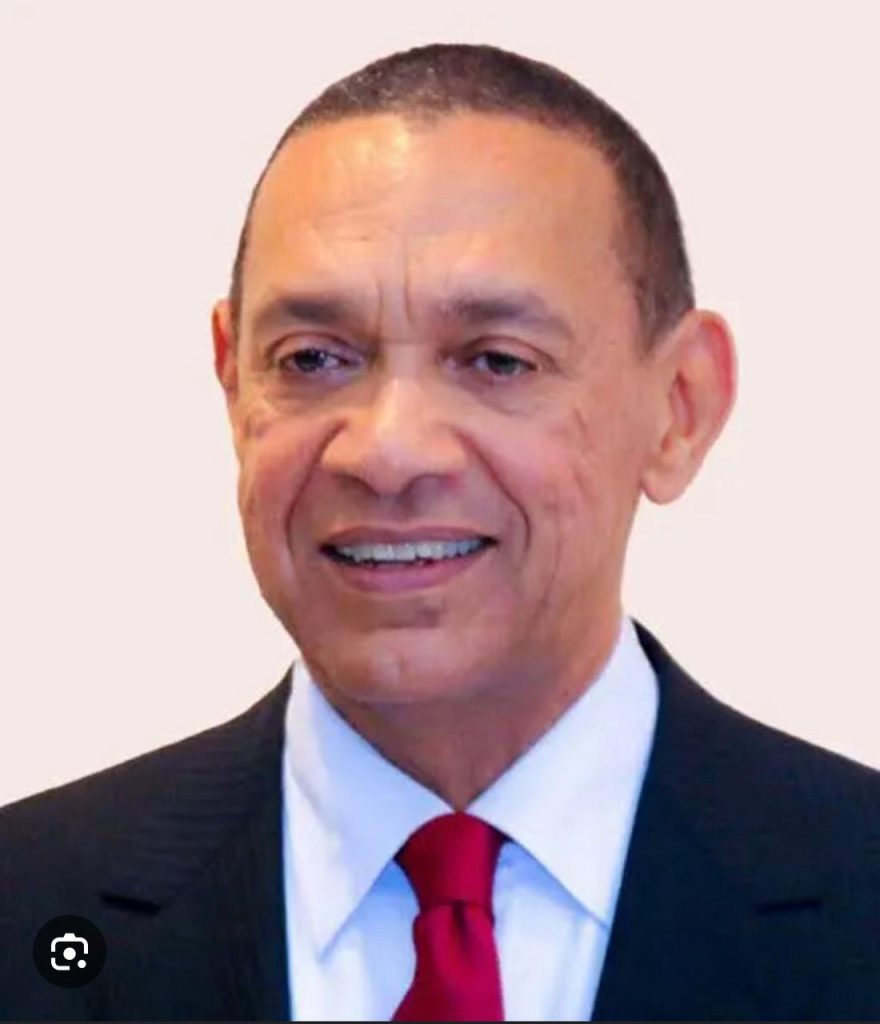
Port Harcourt — Former Senator Ben Murray-Bruce has called on President Bola Tinubu to overhaul Nigeria’s electricity market, declaring that the 2013 power privatisation has failed and advocating decentralised, community-based power systems to tackle the country’s persistent electricity crisis.
Murray-Bruce made the call in an open letter to the President, titled “Start the Dance on Electricity: The Privatization Failed. The Owners Are Billing Darkness,” where he argued that Nigeria could no longer continue relying on the existing model.
“The 2013 privatisation was not a reform. It was a transfer of custody,” he said.
According to him, the investors who acquired the generation and distribution companies lacked the financial capacity required to transform the sector.
“The men and women who bought the GenCos and the DisCos had enough money to purchase the assets. They did not have enough money to run them,” he said.
Murray-Bruce’s criticism comes against the backdrop of weak generation and persistent grid instability. He cited figures from the Nigerian Electricity Regulatory Commission showing that only 4,286 megawatts of Nigeria’s 13,625MW installed generation capacity was available for dispatch in April.
He also cited a fall in grid generation to 1,132MW on August 22, from above 4,000MW earlier that day, with 12 generating stations reportedly producing nothing.
“That is not an industry, Your Excellency. That is a rumour of an industry,” he said.
The former senator also criticised the distribution segment, pointing to the large number of electricity customers without meters despite substantial revenue collection by the DisCos.
“A meter is a machine that tells the truth. An estimated bill is a machine that does not,” he said.
“An industry that cannot generate power has discovered it can still generate revenue by billing darkness.”
Murray-Bruce argued that Nigeria should shift from its highly centralised electricity model towards distributed power generation, with communities, estates and local businesses developing their own electricity systems.
“Every village, every estate, every community in Nigeria should have its own PHCN,” he proposed.
Using Dolphin Estate in Lagos as an example, he suggested that communities could secure bank financing to develop metered solar generation, with state governments providing guarantees and consumers paying regulated tariffs.
“Give them a guaranteed loan and a customer base and stand out of the way,” he said.
He further proposed a clearer division of responsibilities between the federal, state and local governments, with states taking greater responsibility for powering public facilities and communities developing local electricity solutions.
Murray-Bruce said Nigeria was already spending enormous sums coping with unreliable electricity, arguing that the resources could instead finance more efficient power systems.
“We are already paying for power. We are simply paying for the most expensive, dirtiest and least reliable version of it ever devised,” he said.
He also pointed to the Electricity Act 2023, which transferred electricity regulation in certain areas to states, arguing that the legal framework for decentralised electricity markets already exists.
“What is missing is not law. It is nerve,” he said.
Citing Aba as an example, Murray-Bruce said the city demonstrated that alternative electricity models could work, noting the role of Geometric Power’s generation and distribution network in supplying electricity to the area.
“One city solved it. Not with a policy paper. With a plant and a meter,” he said.
He urged the Federal Government to use the current electricity crisis as an opportunity to fundamentally reset the sector rather than continue with what he described as a failed privatisation model.
“Forget PHCN. Forget the men who bought what they could not run. There is nothing left to discuss. Let us move forward,” Murray-Bruce said.