Precious Anga
Lagos — The United Nations has launched a new initiative to accelerate investment in electricity grids across Africa and Southeast Asia, targeting inadequate infrastructure that is slowing clean-energy deployment, electricity access and industrial growth.
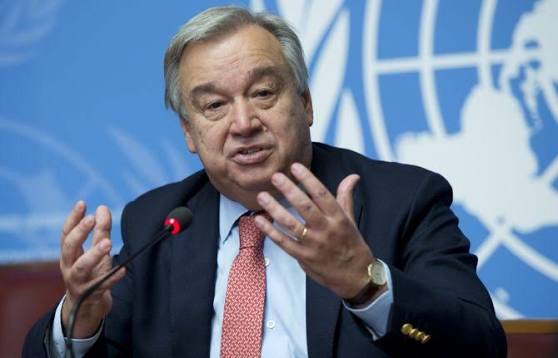
UN Secretary-General António Guterres launched the Global Grids Accelerator on Wednesday on the sidelines of the UN Climate Summit in New York, with the initiative designed to turn national and regional grid expansion plans into investment-ready projects.
The initiative will bring together UN agencies, development banks, investors, utilities and technical experts to help governments develop viable projects and mobilise the financing and expertise required to expand and modernise electricity networks.
Guterres described electricity grids as “the arteries of the energy transition”, stressing their importance in expanding energy access, strengthening energy security and supporting economic growth in developing countries.
The UN said the initiative will not establish a new financing institution or provide additional funding directly. Instead, it will act as a platform for coordinating existing expertise, finance and institutional support around grid priorities identified by governments.
The grid challenge is becoming more significant as renewable power capacity expands faster than electricity infrastructure. The International Energy Agency estimates that more than 2,500GW of renewable-energy projects worldwide are currently waiting for grid connections, while global grid capacity will need substantial expansion and refurbishment to meet rising electricity demand.
For Africa, the accelerator will support national grid expansion and regional interconnections aimed at increasing access to reliable and affordable electricity. It will also build on existing efforts such as Mission 300, which targets connecting 300 million Africans to electricity by 2030.
The focus is particularly relevant to Africa’s energy transition because inadequate transmission and distribution networks can leave new generation capacity underutilised while limiting the ability of industries and households to access additional electricity. Stronger grids, by contrast, can connect renewable resources to demand centres, improve energy security and support new industries and jobs.
The IEA estimates that more than 80 million kilometres of electricity grids will need to be added or refurbished globally by 2040, roughly equivalent to the size of the existing worldwide grid network. It also estimates that annual grid investment needs to rise by about 50 per cent by 2030 to keep pace with electricity demand.
The Global Grids Accelerator will also support the ASEAN Power Grid in Southeast Asia, where stronger interconnections are intended to facilitate cross-border electricity trading, improve energy security and accommodate growing power demand. UNDP Administrator Alexander de Croo said making grid projects investable must become a priority because they require significant upfront capital but can provide stable long-term returns.