– Strengthen cross-border payments
Oritsegbubemi Omatseyin
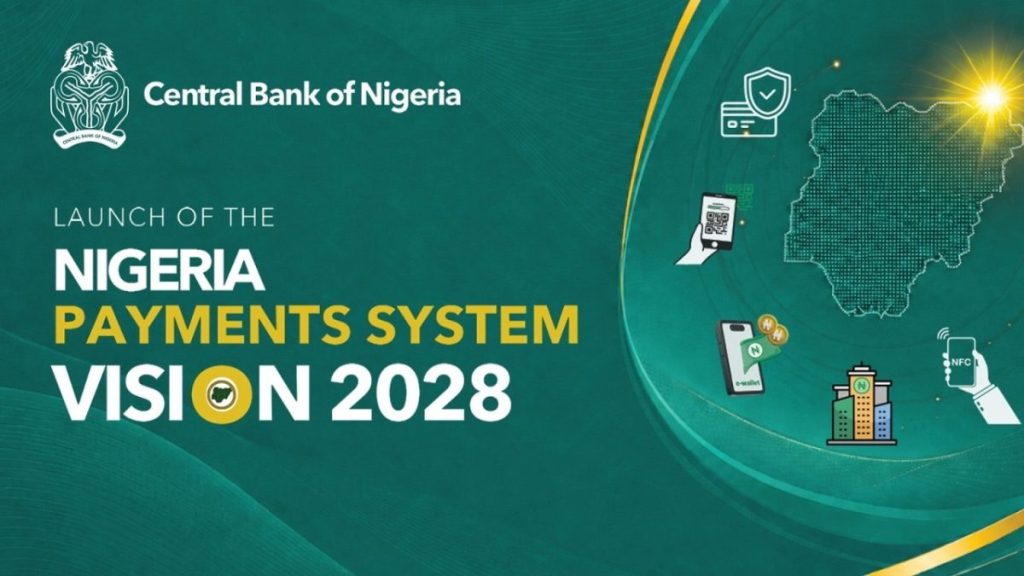
Lagos — The Central Bank of Nigeria, CBN, has unveiled the Nigeria Payments Systems Vision 2028, noting that the vision aims to deepen infrastructure, expand inclusion, accelerate innovation, strengthen cybersecurity, and enhance Nigeria’s integration with regional and global payment systems.
The initiative was launched on Monday in Abuja.
Speaking at the launch, Olayemi Cardoso, governor of the CBN, said the framework builds on reforms implemented over the years and is designed to support Nigeria’s increasingly digital economy.
“Today, we don’t just unveil a payments strategy; we unveil a vision for how Nigerians will transact, trade, save, invest, and fully participate in a digital economy,” Cardoso said.
Describing PSV 2028 as “a Nigerian project” rather than a government initiative, Governor Cardoso reaffirmed the CBN’s commitment to providing the leadership and enabling environment needed to transform the nation’s payments ecosystem.
He emphasised the importance of balancing innovation with stability, strengthening oversight while encouraging competition, and fostering collaboration across the ecosystem.
According to the Governor, payment systems have evolved beyond the transfer of funds to become platforms for innovation, instruments of inclusion, and critical infrastructure for economic growth. PSV 2028 is designed to build a secure, resilient, inclusive, and globally competitive payments ecosystem that supports trade, investor confidence, and broader economic reforms.
A key focus of the vision is impact. Cardoso stressed that success must be measured by execution and its contribution to GDP growth, poverty reduction, and improved livelihoods. He expressed confidence that financial inclusion will reach 95% by 2028, ensuring that more market women, farmers, entrepreneurs, and young people participate in the formal financial system because, as he noted, “the goal is inclusion, not exclusion.”
The Governor also projected a future where trust drives adoption of digital payments, with reduced fraud, stronger consumer confidence, and a gradual transition away from cash dependence. He reiterated that Nigeria already holds a leadership position in Africa’s payments landscape and possesses the talent, scale, and entrepreneurial capacity to translate that advantage into long-term economic competitiveness.
Looking ahead, Cardoso shared an ambitious vision that by 2028, Nigerian youth will build the next global fintech unicorn from cities across the country, leveraging Nigerian talent and innovation to solve local and global challenges.
“The success of PSV 2028 will not be measured by the quality of this document. It will be measured by execution; by our ability to expand opportunity, strengthen trust, lower barriers to participation, and build a payments ecosystem that serves every Nigerian,” Cardoso said.
Muhammad Sani Abdullahi, Deputy Governor for economic policy at the CBN, said the vision is anchored on five strategic priorities: payment infrastructure, financial inclusion, innovation, cross-border payments, and cybersecurity and risk management.
Abdullahi said the framework embraces technologies such as open banking, artificial intelligence and digital assets, while positioning Nigeria as a major hub for regional payments and financial integration.
“PSV 2028 is more than a policy document; it is a call to collective action in shaping the infrastructure of Nigeria’s economic future,” he said.
On his part, Aminu Maida, executive vice-chairman of the Nigerian Communications Commission (NCC), said collaboration would be essential in tackling emerging threats such as digital fraud and cybersecurity risks.
Maida said the payments vision aligns with the federal government’s ambition of building a $1 trillion economy and highlighted ongoing efforts to expand broadband infrastructure through the planned 90,000-kilometre fibre network project.
“We need to move away from saying we have a million transactions. We need to start talking about GDP growth because that is what all our work is about towards that $1 trillion economy vision,” he said.
Emomotimi Agama, Director-General of the Securities and Exchange Commission, SEC, said efficient payment systems are critical to the operation of the capital market and called for stronger collaboration among regulators.
“Without payments, there cannot be delivery of securities. For us in the capital market, it is delivery versus payment,” Agama said.