Mkpoikana Udoma
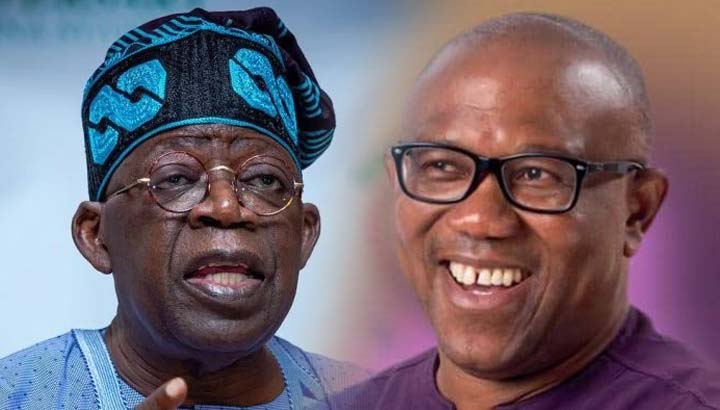
Port Harcourt — Presidential candidate of the National Democratic Party, Mr. Peter Obi, has questioned the Federal Government’s rising debt profile despite what he described as an exponential increase in revenue under President Bola Tinubu’s administration, demanding greater transparency in the management of public finances.
Obi said it was troubling that while government revenue reportedly rose from N16.8 trillion in 2022 to N35 trillion in 2025, Nigeria’s debt burden also surged dramatically, with little improvement in the living conditions of citizens.
In a statement, the former Anambra State governor described the borrowing pattern of the current administration as “excessive and imprudent,” noting that Nigeria’s total public debt has climbed to about N200 trillion.
“In celebrating three years of his administration, President Bola Tinubu included, among his achievements, an increase in revenue from N16.8 trillion in 2022 to N35 trillion in 2025, an increase of over 100 percent,” Obi said.
“Shockingly, while Nigerians expected a reduction in borrowing with the exponential increase in revenue, the opposite is the case. In just three years, President Bola Tinubu’s government seems to be obsessed with excessive and imprudent borrowing, with our total debt currently about N200 trillion, a deeply disturbing increase of over N100 trillion.”
The former presidential candidate argued that beyond the growth in government revenue, Nigeria had also benefited from higher-than-expected earnings driven by global and regional geopolitical developments, making the continued reliance on debt even more concerning.
“In addition to the exponential increases in both revenue and debt, it is also important to note that Nigeria has earned far more than the budget revenue targets due to global and regional geoeconomic and political tensions,” he stated.
Obi maintained that despite increased revenues and borrowings, key economic and social indicators have deteriorated since 2023, raising questions about the effectiveness of government spending.
According to him, multidimensional poverty has risen sharply, while unemployment and economic hardship have worsened across the country.
“Alarmingly, even with the astronomical increase in both revenue and debt, almost all key socio-economic and governance indicators are worse than in 2023. Multidimensional poverty has increased from 87 million people in 2023 to over 140 million people in 2025.”
He further claimed that Nigeria’s GDP per capita had declined from $1,597 in 2023 to $1,223 in 2025, reflecting the broader challenges facing the economy despite government claims of progress.
“Rapidly increasing unemployment and a decline in GDP per capita from $1,597 in 2023 to $1,223 in 2025, and the list goes on. Just more and more hardship for Nigerians,” Obi said.
The former governor challenged the Federal Government to provide a detailed account of how increased revenues and borrowed funds have been utilized over the last three years.
“The question Nigerians and even the international community are asking is, ‘Where did all the money go?’” he queried.
“Nigerians deserve a detailed and transparent explanation of what happened to our economy and financial resources since 2023, and a stop to the imprudent, unaccountable, and opaque management of our common patrimony.”
Obi concluded by reiterating his call for responsible economic management, insisting that Nigeria’s resources should be deployed in a manner that delivers measurable improvements in citizens’ welfare and productive growth.