Mkpoikana Udoma
Port Harcourt — In a fresh push to deepen local content and strengthen Nigeria’s human capital base for the oil and gas industry, Chevron Nigeria Limited, CNL, and the Nigerian Content Development and Monitoring Board, NCDMB, have commenced a 12-month intensive training and certification programme for 10 young Nigerian graduates in Rope Access Technology, RAT.
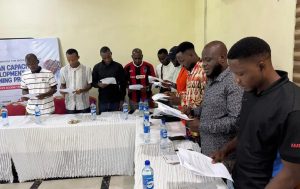
The training, which has began in Warri, Delta State, is part of Chevron’s Human Capital Development, HCD, initiative under the supervision of NCDMB, aimed at equipping Nigerian youths with globally competitive technical skills for onshore and offshore operations.
Rope Access Technology is a highly specialized field that allows safe and efficient work at height or in confined locations using ropes and harnesses, which has become essential in offshore maintenance, inspection, and construction.
According to organizers, the 12-month programme will expose participants to five modules of technical and non-technical sessions, including classroom instruction, field practice, entrepreneurship, and offshore exposure for real-world readiness.
The training also features mentorship, safety management, and industrial application modules, designed to prepare participants not only for employment in oil and gas operations but also for self-employment in related sectors such as maritime, fabrication, and facility maintenance.”
Speaking at the flag-off ceremony, NCDMB’s Manager of Human Capital Development, Mrs. Tarilate Teide-Bribena, congratulated the trainees for emerging successful in the rigorous selection process and urged them to take full advantage of the opportunity.
“We’re proud of you for scaling through the competitive screening exercise,” she said. “At the end of 12 months, we’ll be releasing competence into the industry.”
Teide-Bribena reiterated NCDMB’s unwavering commitment to building local capacity through industry-aligned, skill-focused training programmes.
“The Board remains committed to advancing local capacity through practical training that responds to the industry’s evolving needs. Discipline, focus, and dedication will set you apart as ambassadors of this programme,” she told the participants.
The NCDMB official also commended Chevron for being a consistent and reliable partner in human capital development.
“Chevron has consistently shown that they are ready to partner with the Board toward achieving our vision of developing indigenous capacities across the oil and gas value chain,” she added.
Also, Chevron Nigeria’s Nigerian Content Advisor, Mr. Iroegbu Obiora, described the rope access training as unique and transformational, stressing that the skills to be acquired would position the participants as highly sought-after professionals in the energy and construction sectors.
“This is not a conventional training programme,” Obiora stated. “The skills you’re about to learn will make you stand out wherever you go. Rope access technology is globally recognized, and your certification will open doors beyond the oil and gas industry.”
He urged the trainees to conduct themselves with integrity and professionalism throughout the course, emphasizing that their attitude will define their success.
“Be of good behaviour, stay focused, and make the best of this opportunity. You’re not only representing yourselves but also Chevron, NCDMB, and Nigeria’s drive for self-reliance,” he advised.
Obiora also applauded the NCDMB for its strong role in capacity development and pledged Chevron’s continued partnership with the Board.
“We appreciate NCDMB for the remarkable impact it continues to make in building Nigerian capacity, and we look forward to sustaining this partnership,” he said.
The programme’s early phases focus on foundational safety and technical orientation, before advancing to intensive rope access instruction, field workshops, and offshore practicals.
Participants will gain firsthand exposure to offshore operations to ensure competence in real-world scenarios. The training, which combines theory, field exercises, and entrepreneurship, also encourages trainees to explore self-employment opportunities in the broader industrial maintenance ecosystem.
Rope access, widely used across the global energy sector, is recognized as one of the safest and most efficient methods for working at heights, particularly on offshore platforms, refineries, and large industrial plants.
For the 10 young Nigerians selected, the next 12 months promise not just a certification, but a transformative experience that could shape their professional future, and contribute to the nation’s vision of an energy industry driven by skilled local talent.