Mkpoikana Udoma
Port Harcourt — As Nigeria’s solid minerals sector gains renewed traction amid government diversification drives, the Economic and Financial Crimes Commission, EFCC, is turning its gaze on the country’s booming but loosely regulated precious metals trade, an industry increasingly linked to money laundering, terrorism financing, and illegal mining networks involving foreign actors.
Once overshadowed by oil, Nigeria’s solid minerals sector has emerged as a cornerstone of the federal government’s diversification agenda. With over 44 mineral types spread across the country from gold, lithium, coal, limestone, iron ore, coliform, the sector holds vast potential to drive non-oil revenues, job creation, and industrialization.
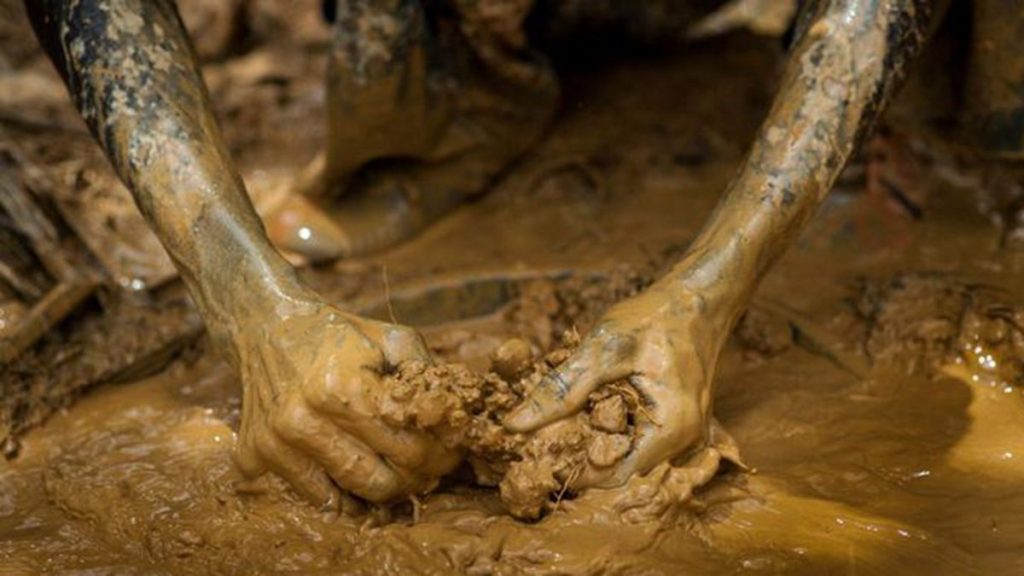
However, this promise is being undermined by endless illegal mining, which has become both a security and economic nightmare. Despite reforms and the establishment of the Mining Cadastre Office, illegal operations thrive, particularly in Zamfara, Niger, Kaduna, and Sokoto States. In northern Nigeria gold, tantalite, lithium, and columbite are extracted and smuggled through porous borders, often aided by corrupt government and security officials.
According to government estimates, Nigeria loses more than $9 billion annually to illegal mining and mineral smuggling, funds that could have revitalized rural economies and boosted national reserves.
Foreign Hands in Nigeria’s Shadow Mines
Investigations by security agencies and civil society groups reveal that illegal mining is no longer the exclusive preserve of local syndicates. Increasingly, foreign nationals, notably from China and other Asian countries, are deeply enmeshed in the trade, financing and supervising illicit operations in mineral-rich communities.
These foreign operators, sometimes working through Nigerian proxies, exploit the regulatory vacuum to acquire mineral-rich lands, using shell companies to conceal ownership. Their activities often bypass environmental standards and tax obligations, while minerals are exported under false declarations.
In 2023, multiple arrests across Niger, Osun, and Zamfara States confirmed the presence of Chinese nationals in illegal mining camps, many of whom were accused of offering locals cash incentives to access lands and smuggle unprocessed gold to Asia and the Middle East.
Security analysts warn that proceeds from such illicit trade are laundered through informal money transfer systems and cryptocurrency channels, enabling transnational criminal groups to move funds discreetly across borders.
Gold, Conflict, and the Shadow Economy
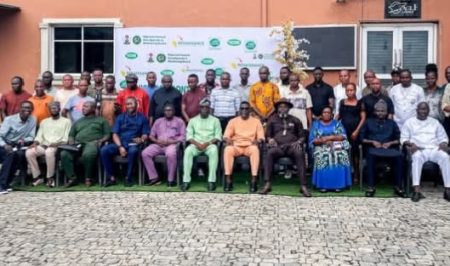
In Sokoto, the EFCC’s Special Control Unit Against Money Laundering, SCUML, in partnership with the German Agency for International Cooperation, GIZ, had to convened a workshop for dealers in metals and precious stones to strengthen compliance with anti-money laundering, AML, and counter-terrorism financing, CFT, frameworks.
The Sokoto Zonal Coordinator of SCUML, Assistant Commander of the EFCC, Ahmadu Bello, warned that the trade in gold and gemstones has increasingly become a magnet for criminal exploitation.
“Dealers in Precious Metals and Stones have a unique risk profile with regard to money laundering and terrorism financing because they trade in transferable items of high value,” Bello said.
“Illegal gold mining has been identified as one of the underlying drivers of conflict in the North, especially in Zamfara and Niger States.”
According to Bello, the proceeds from these illicit mining networks not only deprive the government of critical revenue but also fuel violent non-state actors, helping insurgents and bandits purchase arms and sustain operations in Nigeria’s troubled northern belt.
Minerals and Money Laundering: A Hidden Frontier
For years, Nigeria’s anti-money laundering focus centered largely on financial institutions. But experts now warn that non-financial sectors, particularly precious metals, have become the new frontier of illicit finance.
“The use of gold and gemstones to disguise illicit funds has become a growing concern,” Bello explained. “They are compact, valuable, and easily tradable across borders, perfect for concealing criminal proceeds.”
He outlined “red flags” and risk indicators for dealers, stressing the importance of customer due diligence, transaction monitoring, and timely reporting of suspicious activities to SCUML.
Terrorism Financing and the Mineral Trail
Security reports have long linked illegal gold mining to terrorism in northern Nigeria. In Zamfara, for instance, intelligence sources indicate that armed groups control key mining areas, collecting levies from artisanal miners in exchange for protection. The gold is then sold through middlemen to foreign buyers, who export it illegally.
According to an intelligence brief cited by security officials, some proceeds from this trade have been traced to terrorist cells operating in the Sahel region, fueling the same insurgencies that destabilize Nigeria’s northern borders.
The United Nations Office on Drugs and Crime, UNODC, and Interpol have similarly warned that the mineral trade in West Africa is increasingly financing organized crime and violent extremism, making it not just an economic issue but a matter of national security.
Weak Enforcement, Strong Networks
Despite Nigeria’s improved legal framework, from the Money Laundering (Prohibition) Act of 2004 to the current Money Laundering (Prevention and Prohibition) Act 2022, enforcement in the mineral sector remains weak. SCUML has registered thousands of Designated Non-Financial Businesses and Professions, DNFBPs, yet compliance levels remain low, particularly in remote mining communities.
Bello admitted these gaps, urging participants at the workshop to “view compliance not as a burden but as a safeguard for their businesses and for the nation.”
GIZ and Global Partnerships for Reform
Germany’s GIZ has played a critical role in strengthening Nigeria’s AML/CFT system through capacity building, technical assistance, and inter-agency coordination. Its collaboration with SCUML highlights international concern over the nexus between natural resources, financial crimes, and insecurity.
“Our focus is to help institutions like SCUML build the capacity to detect and disrupt criminal financial flows from the extractive industries,” a GIZ representative said during the workshop.
The Larger Picture: From Resource Curse to National Security Risk
The current reality reflects a broader pattern, where resource wealth, instead of fostering development, becomes a channel for corruption, environmental degradation, and violence. In Nigeria, the “resource curse” has simply shifted from oil to minerals.
The presence of foreign miners operating illegally, coupled with local complicity and institutional weaknesses, has created a parallel mineral economy that undermines legitimate operators and threatens the country’s economic stability.
The Road Ahead
As Nigeria deepens its shift from oil to minerals, the EFCC’s scrutiny of the gold and gemstone trade signals a strategic evolution, one aligned with global efforts to sanitize the extractive industries.
Whether this new drive will break the entrenched nexus between illegal mining, foreign exploitation, and terrorism financing remains uncertain. Patriotic Nigerians want Nigeria’s mineral wealth to fund national development, not fund crimes.