Mkpoikana Udoma
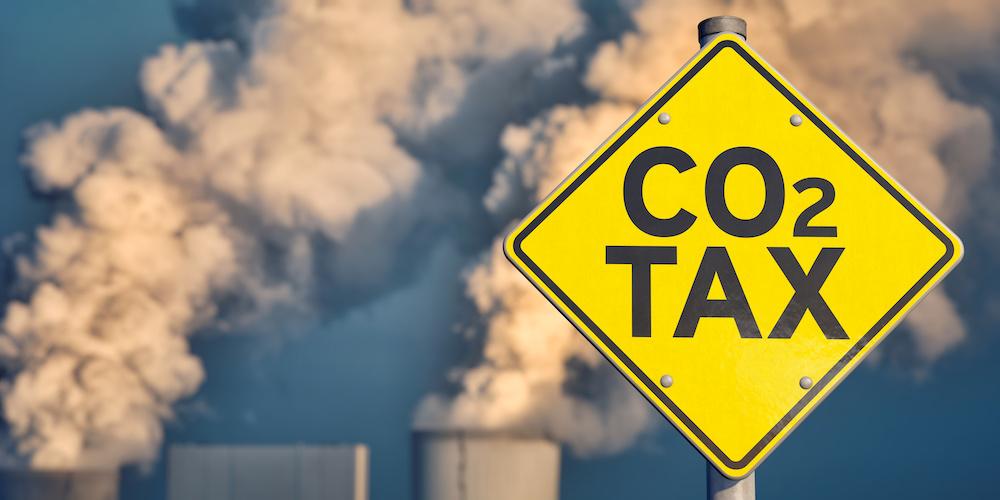
Port Harcourt — Nigeria’s already fragile growth outlook could come under fresh pressure as the European Union’s Carbon Border Adjustment Mechanism, CBAM, takes effect from January 1, 2026, compounded by the Federal Government’s prolonged failure to conclude the Aluminium Smelter Company of Nigeria, ALSCON, transaction, an economist has warned.
Speaking, the Director of Emerging Knowledge, Policy and Partnership at the Institute of Professional Economists and Policy Management, IPEPM, Mr. Friday Udoh, said the EU’s carbon border tax on carbon-intensive goods such as aluminium and steel could significantly weaken Nigeria’s economic growth if urgent corrective actions are not taken.
“The EU’s carbon border tax, calculated on the embedded carbon content of heavy industrial goods, will raise the cost of Nigerian exports and further weaken demand from one of our most important trading partners,” Udoh said.
He explained that while the policy is designed to protect European industries that have largely transitioned to renewable energy, it poses a serious risk to economies like Nigeria that remain dependent on fossil fuel-based production.
According to him, the impact could cut across reduced export earnings, slower investment inflows, job losses and declining living standards.
“This policy could undermine Nigeria’s 2026 GDP growth projection of 4.49 per cent,” Udoh warned. “EU consumers will increasingly reduce consumption of goods produced through fossil fuel routes because of higher costs, and that includes aluminium, steel and even gas-based products.”
Udoh noted that Nigeria’s trade exposure to the EU is substantial, stressing that any adverse shock would have economy-wide consequences.
“In 2024 alone, Nigeria’s exports to the European Union, largely mineral fuels such as crude oil and natural gas, were valued at about N35 trillion,” he said. “By Q3 2025, trade with the EU stood at N8.71 trillion, representing about 38.16 per cent of total trade. This highlights how heavily Nigeria depends on the EU market.”
He estimated that about 80 per cent of Nigeria’s merchandise exports to the EU could be affected by the carbon border tax, especially without a deliberate policy shift towards renewable energy and cleaner industrial production.
“If appropriate policies are not put in place to drive renewable investment, CBAM could slow Nigeria’s manufacturing push and significantly reduce growth,” he added.
Beyond CBAM, Udoh said Nigeria’s inability to conclude the ALSCON handover to BFI Group, BFIG, the preferred bidder, further weakens the country’s capacity to compete under the new global carbon regime.
“At a time when aluminium production is shifting to low-carbon pathways globally, Nigeria has kept ALSCON idle because of unresolved legal and political issues,” he said. “This is an economic setback.”
He questioned President Bola Tinubu’s disposition towards resolving the long-standing dispute involving UC Rusal, the erstwhile operators, and BFIG, urging greater transparency.
“For the sake of truth, accountability and history, the President needs to speak clearly and openly on ALSCON,” Udoh said.
He argued that the Attorney-General and Minister of Justice is fully aware that the London Court of International Arbitration, LCIA, award of October 15, 2014 was flawed, insisting that the Supreme Court’s June 6, 2012 judgment had already nullified UC Rusal’s claims and ordered the immediate takeover and transfer of ALSCON to BFIG.
“The Supreme Court judgment invalidated all arbitration clauses and contractual agreements between the Federal Government and UC Rusal,” Udoh said. “Yet arbitrators relied on misleading submissions that suggested the judgment was executed in favour of UC Rusal, which is far from reality.”
He accused past officials of complicity in what he described as a flawed privatisation process and called for sanctions to restore investor confidence.
“Correcting the wrongs of past privatisations and sanctioning erring officials is critical if Nigeria wants to attract investment at this sensitive moment for the economy,” Udoh added.
He concluded that without decisive action on ALSCON and a clear national response to the EU carbon border tax, Nigeria risks losing export competitiveness, deepening unemployment and further weakening growth prospects.