Mkpoikana Udoma
Port Harcourt — Nigeria’s extractive industry, long criticized for secrecy and weak accountability, is once again under the spotlight as legal experts warn that the country’s sluggish justice system is crippling both local communities and investor confidence.
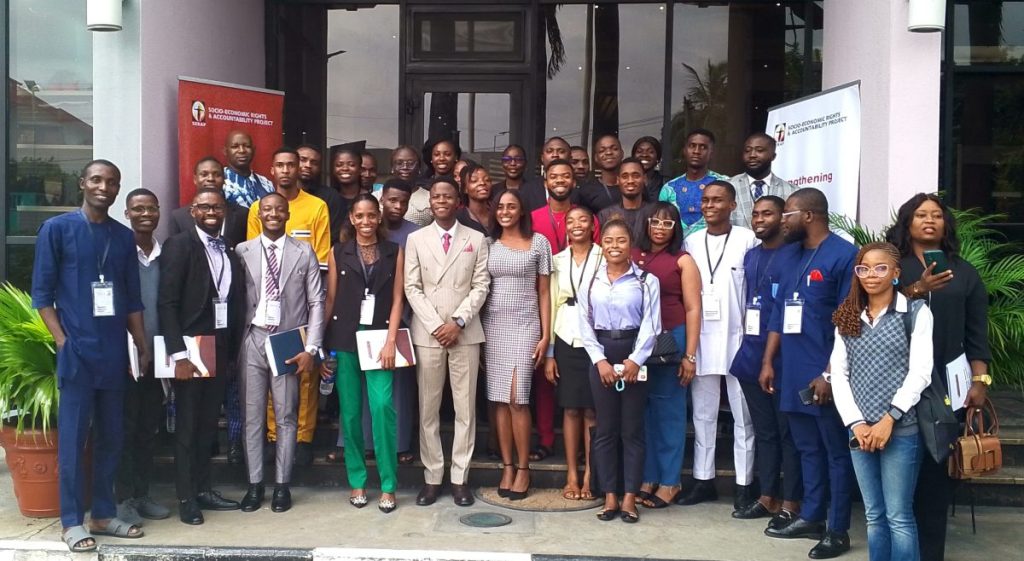
At the Strategic and Public Interest Litigation Lab (Litigalab) organised by the Socio-Economic Rights and Accountability Project, SERAP, in Port Harcourt, human rights lawyer Festus Ogun said young lawyers must confront these systemic challenges through Public Interest Litigation.
“A lawyer must live in the direction of his people. If lawyers do not defend the interest of the Nigerian public using Public Interest Litigation, who else will? We must take the bull by the horn to ensure accountability and transparency in government.
“Change will not come overnight. But it is initiatives like this (Ligitalab) that inspire the cases which in turn will inspire change.”
Ogun described the legal bottlenecks faced by oil-producing communities as emblematic of a broader national crisis.
“The snail pace of justice in the Nigerian judiciary is not limited to extractive sector alone but all kinds of cases. Our country remains a serious risk unless we find the courage to restructure our justice system. Investors no longer have confidence to come to Nigeria to invest because when there is a dispute it takes almost forever before it is determined.”
He pointed to systemic weaknesses that fuel these delays, including lack of independence, outdated procedures, and overstretched judges.
“The first and foremost, there should be true judicial autonomy. He that pays the piper dictates the tone. We still see governors buying cars for judges, making the judiciary dependent on the executive — it shouldn’t be so,” Ogun stressed.
On modernisation, he was blunt: “We cannot be living in a digital world while our judges still write in longhand. It is a disgrace. And when one judge is expected to adjudicate on 40 cases in a single day, delays are inevitable.”
For Kolawole Oluwadare, Deputy Director of SERAP, the core issue is the extractive industry’s culture of lack of accountability.
“The extractive industry should be accountable not only to regulatory authorities, but to Nigerians and the oil-producing communities who are their immediate stakeholders. They need to be responsible in observing their obligations and in their operations.”
Oluwadare explained that SERAP’s goal was to build a new generation of advocates who can use the law as a tool for change.
“The aim of this conversation is to raise the consciousness of young lawyers, students, and accountability club members to use strategic litigation to bring social justice in Nigeria, particularly in the extractive sector in the Niger Delta,” he said.
He added: “What’s the alternative to the rule of law? Yes, the judiciary is slow in dispensing justice and under pressure, but this is the only legitimate pathway to accountability. We want to see young Nigerians take up this challenge and ensure that no one, whether government or oil company, operates above the law.”