Precious Anga
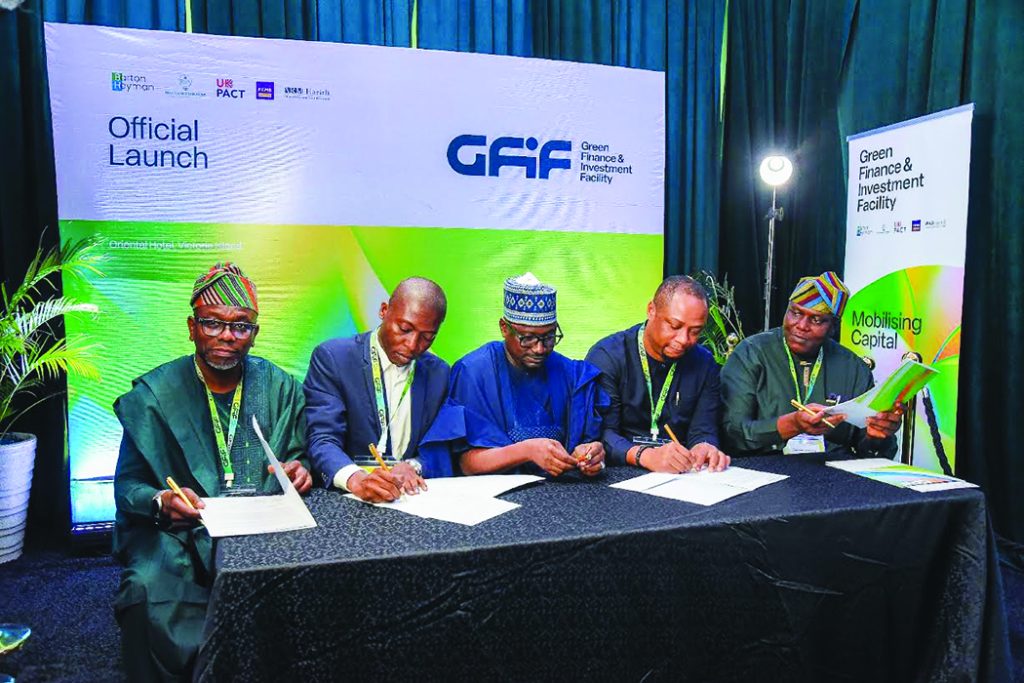
Lagos — Nigeria’s push for cleaner and more reliable electricity supply received a major boost as First City Monument Bank (FCMB) and its partners unveiled a new $188 million renewable energy financing platform targeted at expanding distributed solar infrastructure across the country.
The initiative, known as the Green Finance Investment Facility (GFIF), is expected to support the deployment of 191 megawatts of distributed solar capacity for homes, communities and businesses, while helping to tackle Nigeria’s worsening electricity deficit.
The facility, launched in Lagos, is being driven by Barton Heyman Limited in partnership with the Rural Electrification Agency (REA), UK PACT, FCMB and ARM Harith Infrastructure Investment Limited. The programme is also aligned with the Federal Government-backed Distributed Access through Renewable Energy Scale-Up (DARES) initiative aimed at widening electricity access through decentralised renewable energy systems.
Speaking at the launch, Managing Partner of Barton Heyman Limited, Olumide Lala, said the platform was designed to unlock large-scale private capital for Nigeria’s renewable energy market and accelerate electricity access for millions of Nigerians.
According to him, the project goes beyond financing solar infrastructure and is aimed at supporting economic growth, job creation and industrial productivity.
“The Green Finance Investment Facility is more than a financing arrangement. It represents direct support for over one million Nigerians. This is our first step towards raising $40 billion to finance 20 gigawatts of distributed renewable energy across Nigeria,” Lala said.
Senior Partner at Barton Heyman, Anthony Feyitimi, said reliable electricity remains one of the biggest factors limiting business growth and industrial expansion in Nigeria.
He noted that the financing platform combines sovereign-backed projects, results-based funding and commercial loans in a structure designed to attract both local and international investors into the renewable energy sector.
According to him, every additional megawatt financed under the programme would improve productivity for businesses, strengthen supply chains and increase competitiveness across the economy.
Managing Director of the Rural Electrification Agency, Abba Aliyu, described access to finance as one of the biggest obstacles slowing renewable energy deployment in Nigeria, adding that the initiative would help bridge that gap.
He said the partnership was created to ensure that underserved communities and businesses without reliable grid electricity can gain access to stable power supply through renewable energy systems.
FCMB also disclosed that it had significantly expanded its financing activities within Nigeria’s renewable energy market. Speaking on behalf of the bank, Senior Vice President and Divisional Head of Business Banking, George Ogbonnaya, said FCMB had committed over ₦100 billion in debt financing under the DARES programme.
He revealed that the bank is currently financing more than eight renewable energy developers under the isolated mini-grid programme, while additional projects are being finalised.
According to Ogbonnaya, FCMB has already supported over 42 mini-grid projects nationwide as efforts intensify to connect more than two million households to electricity through alternative energy solutions.
Industry stakeholders at the event said Nigeria’s widening power gap, rising energy costs and weak national grid have continued to increase the need for decentralised energy systems such as solar mini-grids and captive power projects.
They added that initiatives like GFIF could help reduce investment risks, mobilise long-term financing and accelerate clean energy deployment across the country at a time when businesses and households are increasingly turning to alternative power sources to survive.