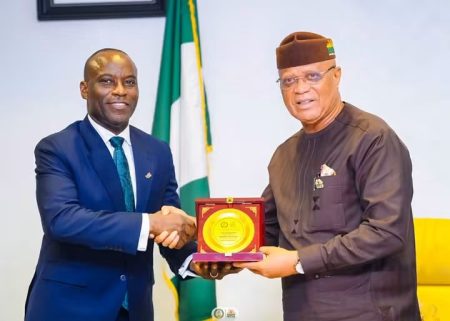
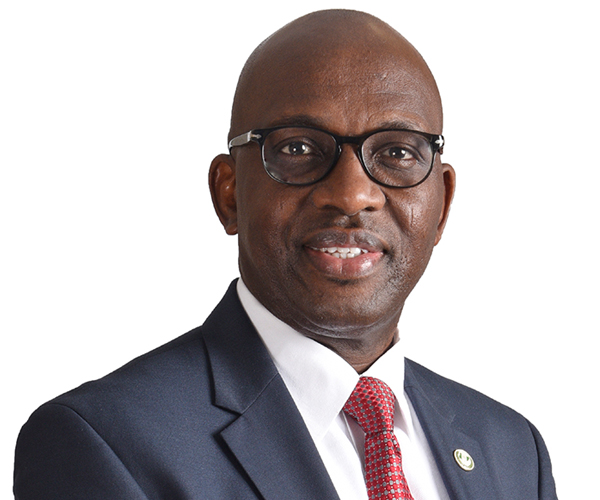
*The Minister of Environment, Mallam Balarabe Abbas (centre), flanked by the Minister of Regional Development, Engr Abubakar Momoh (left) and the HYPREP Project Coordinator, Prof Nenibarini Zabbey (right), at the unveiling of the Ogoni cleanup monument in Bodo, Ogoniland, Rivers State
MKpoikana Udoma
Port Harcourt — The Federal Government has unveiled Phase II of the Ogoni cleanup and mangrove restoration programme, reaffirming its commitment to implementing the recommendations of the United Nations Environment Programme, UNEP.
Minister of Environment, Mallam Balarabe Abbas, unveiled the second phase at Bodo City, Gokana Local Government Area of Rivers State, where the Federal Government launched the Ogoni cleanup 10 years ago.
Speaking at a stakeholders’ engagement to mark the 10th anniversary of the cleanup at the Centre of Excellence being constructed by the Hydrocarbon Pollution and Remediation Project, HYPREP, in Nwiyakara, Khana Local Government Area, Abbas said the project remained a priority of the President Bola Tinubu administration.
He said the government understood the environmental and human costs of decades of oil exploration in Ogoniland but remained focused on restoring the environment and improving livelihoods.
“We understand the pain of the past, but we are also focused on building a better future for the health and well-being of all Ogoni people and creating a healthy environment for them. We want to improve livelihoods and also restore the health of Ogoniland,” Abbas said.
The Minister, who also unveiled a remodelled monument commemorating the cleanup at Bodo, said the monument would serve as a reminder of the Federal Government’s continued commitment to Ogoniland.
“Ten years ago, in this very place, the flag-off of the Ogoni Cleanup was performed. Today, we return to reaffirm that commitment,” he said.
“The Federal Government, under President Bola Ahmed Tinubu, remains fully committed to restoring the Ogoni environment in line with the recommendations of the United Nations Environment Programme.”
Abbas urged Ogoni stakeholders to support HYPREP and engage constructively, warning that disruption and division could delay the benefits of the project.
“The success of HYPREP in Ogoniland depends on your support and collaboration. Therefore, disruption and division will only delay the benefits that this project will deliver to the people,” he said.
The Minister also noted that HYPREP had a lifespan but expressed optimism that the project could secure an extension.
Also, Minister of Regional Development, Engr. Abubakar Momoh, said the restoration of Ogoniland’s mangroves, soil and wider ecosystem represented a significant investment of human and financial resources.
“We have to recognise that restoring the mangrove, restoring the soil and rehabilitating the environment would not have been possible without enormous human effort and investment,” Momoh said.
He urged communities to protect the gains of the cleanup and ensure that facilities provided under the intervention were properly maintained.
“There is no sense in carrying out all these interventions if, after the cleanup, people return to activities that will cause further pollution,” he said.
Earlier, HYPREP Project Coordinator, Prof. Nenibarini Zabbey, said the 10th anniversary provided an opportunity to assess progress and acknowledge the renewed momentum behind the project since 2023.
“Since 2023 we have witnessed a significant aspiration in the implementation of the Ogoni cleanup following the elevation to national priority under the Renewed Hope Agenda,” Zabbey said.
He said HYPREP had recorded progress across its major intervention areas, including environmental remediation, mangrove restoration, provision of potable water, restoration of livelihoods, construction of the Centre of Excellence for Environmental Restoration and the Ogoni Power Project.
Zabbey, however, acknowledged that the project had faced challenges including community disputes, access to project sites, misinformation and sabotage.
“The challenges we have faced as a project have been enormous. We have encountered issues relating to community disputes, access to project sites, misinformation, sabotage, and other difficulties. However, with the support and cooperation of the stakeholders, we have overcome many of the challenges,” he said.