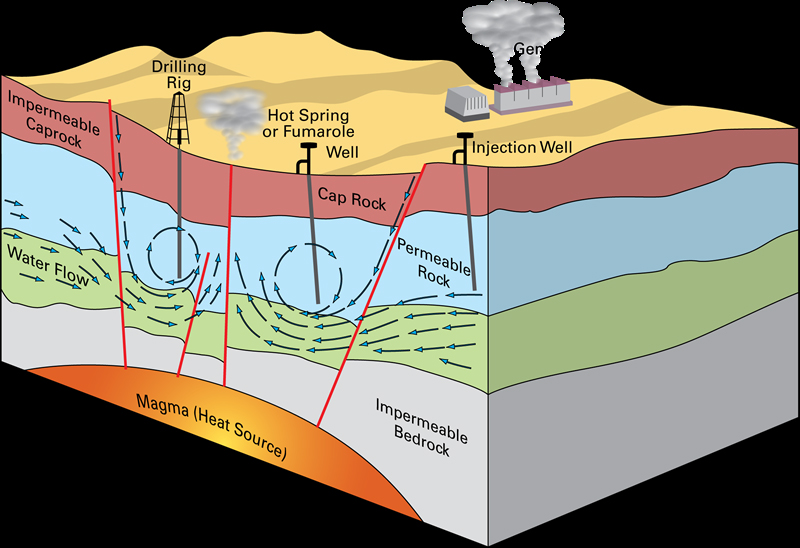
11 April 2015 – A new report released today by the United Nations agricultural agency says that the heat energy generated by the earth’s core can be used for cost efficient, sustainable food production and processing in developing countries.
The Food and Agriculture Organization (FAO) report Uses of Geothermal Energy in Food and Agriculture says that geothermal energy can help prevent the huge post-harvest currently faced by many developing countries, and can be a prime source of heat for greenhouses, soils and water for fish farming.
“It’s an energy source that’s renewable, clean and low-cost once you’ve made the initial investment to harness it,” says Carlos da Silva, Senior Agribusiness Economist in FAO’s Rural Infrastructure and Agro-Industries Division (AGS). “By using a clean energy source, you’re not only addressing cost but also the environmental impacts of food production and processing.”
Heat energy can be used for processing to boost food security and drying foods, pasteurizing milk and sterilizing produce are particularly viable options for developing countries, prolonging shelf lives of nutritious foods like fish and vegetables and making them available year-round, including in times of drought.
Countries in the so-called ‘Ring of Fire’ along the Pacific Plate, such as Mexico, Indonesia, the Philippines and various nations along the Pacific Coast of South America are particularly feasible locations, as are Ethiopia and Kenya in Africa’s Rift Valley, as are Romania and Macedonia in Eastern Europe.
Worldwide, 38 countries currently use geothermal energy for direct application in agricultural production and 24 harness it to generate electricity, with Iceland, Costa Rica, El Salvador, Kenya, New Zealand and the Philippines deriving more than 10 percent of their electricity needs from natural heat sources.
Among developing countries, 23 use geothermal energy, with most apply it to space heating and recreational purposes like bathing, leaving its significant potential for agricultural uses generally untapped.
“Geothermal energy for agriculture can be done even at small-scales and can significantly contribute to income generation, providing employment and improving food and nutrition security in developing countries,” said Divine Njie, AGS Deputy Director, who co-edited the report.
The FAO’s news release points to projects which show that the challenges associated with establishing geothermal energy, such as high start-up costs, are not insurmountable, particularly with Government support.
“The FAO report also shows that there are direct-use opportunities which do not require high-cost exploration and exploitation,” he added.
Examples include a Government-funded project in Algeria which supports the building of fish farms that use hot water from drill holes to heat Tilapia ponds, and a project in Thailand where chillies and garlic, which are highly popular, were dried using waste heat from a geothermal power plant.
*UN News Service