Mkpoikana Udoma
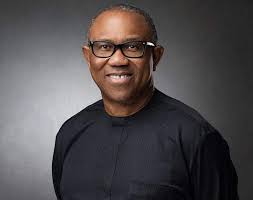
Port Harcourt — The presidential candidate of the National Democratic Party, Mr. Peter Obi, has raised concerns over Nigeria’s rising public debt profile, urging the Federal Government to adopt transparent and accountable borrowing practices that directly translate into measurable economic benefits for citizens.
Obi, in a statement titled “Accountable Borrowing: The South Africa Example,” contrasted Nigeria’s borrowing approach with that of South Africa, which recently secured a $1 billion loan from the New Development Bank for clearly identified infrastructure projects.
According to him, borrowing is not inherently problematic, provided the funds are deployed transparently and tied to productive investments capable of improving citizens’ welfare.
“I have consistently maintained that borrowing, in itself, is not a bad thing. Every nation borrows. The critical issue is not the act of borrowing, but what the borrowed funds are used for and whether citizens can clearly see and measure the impact of such borrowing in their daily lives,” Obi stated.
He commended South Africa for publicly disclosing the purpose of its $1 billion facility, noting that the loan was earmarked for upgrading water supply systems, modernising sanitation infrastructure, improving electricity distribution and strengthening waste management services across major cities.
“This is indeed what accountable borrowing should look like; the purpose is clear, the projects are identifiable, and the expected benefits to citizens are measurable. Such investments directly improve living conditions, enhance productivity, and stimulate economic growth,” he said.
Obi, however, argued that Nigeria’s growing debt burden lacks the same level of transparency, claiming that the deployment of borrowed funds is often unclear to the public.
“In Nigeria, however, the opposite is the case: public debt has risen dramatically under the current administration, and its deployment is shrouded in secrecy from the people who will indeed pay back the loan,” he said.
The former Anambra State governor claimed that Nigeria’s public debt had increased from about N87 trillion in 2023 to nearly N200 trillion, expressing concern that Nigerians have not been provided with sufficient details on how the borrowings are being invested.
“Yet, despite this unprecedented accumulation of debt, Nigerians are often left without a clear and detailed account of how these borrowings are being deployed to improve critical sectors such as education, healthcare, power, security, and infrastructure,” Obi added.
He stressed that every loan obtained by government should be linked to projects capable of generating economic value, creating jobs, reducing poverty and supporting long-term growth.
“Borrowing must never become an end in itself. Every loan obtained in the name of the Nigerian people must be tied to specific, productive investments capable of generating economic value, creating jobs, reducing poverty, and improving the welfare of citizens,” he said.
The former presidential candidate further called for greater fiscal discipline and accountability in the management of public resources, particularly at a time of rising living costs, unemployment and declining purchasing power.
According to him, “Good governance demands transparency and accountability. The government must be able to clearly explain what was borrowed, where it was invested, and what measurable outcomes have been achieved.”
Obi concluded by urging policymakers to ensure that every borrowing decision can be justified by its impact on ordinary Nigerians, warning that failure to do so could leave future generations burdened with debt without corresponding economic benefits.