Precious Anga
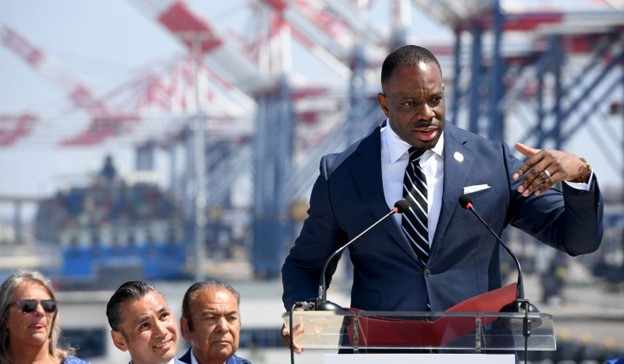
Lagos — California Secretary of Transportation, Toks Omishakin, has endorsed Nigeria’s growing investment in Compressed Natural Gas (CNG), describing it as a practical response to rising fuel costs and global energy challenges.
Omishakin spoke during a visit to Portland Gas Limited’s newly commissioned CNG facility in Lagos, where he called on Nigeria to accelerate the adoption of alternative energy solutions capable of reducing transportation costs and improving energy security.
According to him, the combination of high fuel prices and ongoing geopolitical tensions has strengthened the case for cleaner and more affordable energy sources.
“I think this is exactly what Nigeria needs at this time and moment. With all the geopolitical conflicts going around the world and fuel costs at record high levels, especially for diesel, gas and petroleum, people need alternatives. They need options to be able to power and energise their vehicles,” he said.
The transportation chief noted that natural gas offers significant environmental benefits, describing it as between 70 and 80 per cent cleaner than conventional diesel fuel. He also dismissed concerns over the safety of gas-powered vehicles, stressing that the technology has proven to be reliable and secure.
Drawing from California’s experience, Omishakin explained that the state embraced natural gas-powered transportation nearly two decades ago before advancing into electric vehicle and hydrogen technologies.
“For us in California, we are now embracing electric vehicles more and more. We were at the natural gas stage about 20 years ago as a cleaner option to fossil fuels. Now we are embracing hydrogen and electric vehicles. One area where we have significant expertise is electric vehicle charging infrastructure, and we look forward to sharing ideas together into the future,” he said.
He urged Nigerian authorities to continue pursuing policies that make energy more affordable while diversifying the country’s energy mix for homes and transportation.
“My message to the Nigerian government is to continue to find ways to make fuel affordable and cheaper for people. Nigeria has to continue embracing different sources of energy to power homes and vehicles. Affordability remains a major issue, not just in Nigeria but also in California and the United States,” Omishakin added.
He also commended President Bola Tinubu and Lagos State Governor Babajide Sanwo-Olu for supporting initiatives aimed at expanding transportation and energy infrastructure.
Speaking during the visit, the Chief Executive Officer of Portland Gas Limited, Folajimi Mohammed, said Nigeria must maximise the value of its vast natural gas resources as it pursues energy transition goals.
“We have an abundance of gas in Nigeria. We have about three times more gas than oil. The true measure of having gas is not what is beneath the ground, but what we are actually using,” he said.
Mohammed noted that natural gas would remain a critical component of future energy systems, including electric vehicle infrastructure, since reliable electricity generation would still depend on sustainable energy sources.
He disclosed that the Lagos facility, which commenced operations about two weeks ago, is already dispensing an average of 6,000 standard cubic metres of gas daily and serving about 400 vehicles per day.
“The response has been beautiful. What we need to do is ensure that the rate of vehicle conversion matches the rate of refill availability. Within the last two weeks, we are already serving about 400 cars a day, and that is encouraging more people to convert because they know gas is available for refilling,” he said.
Mohammed added that extensive safety measures have been implemented at the facility, while awareness campaigns and stakeholder engagement are helping to drive public acceptance of CNG as a cleaner and cheaper transportation fuel.
He acknowledged the support of the Federal Government and the Midstream Gas Infrastructure Fund in facilitating the project and expressed confidence that the success of the facility would encourage further investments in CNG infrastructure across the country.
The visit highlights growing momentum behind Nigeria’s push to leverage its abundant natural gas reserves to reduce transportation costs, improve energy security and support the transition to cleaner energy solutions.