Mkpoikana Udoma
Port Harcourt — Journalists across the Niger Delta have been urged to go beyond routine reporting and use their platforms to amplify the lived realities of communities grappling with environmental degradation, gender inequality, and the effects of extractive activities in the region.
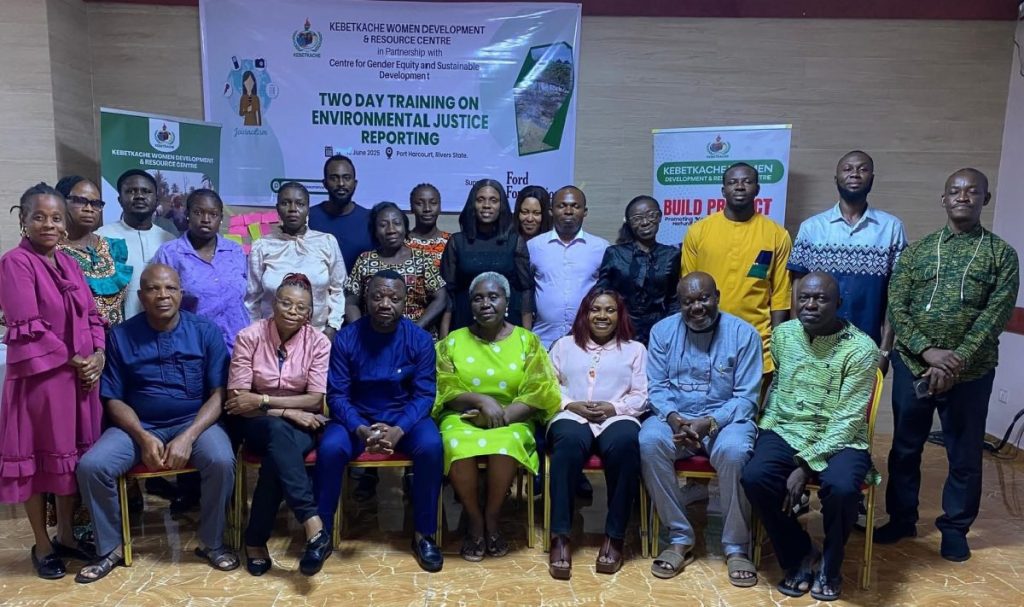
This call was made during a two-day capacity building workshop tagged “Training on Environmental Justice Reporting,” organized by Kebetkache Women Development and Resource Centre in collaboration with the Centre for Gender Equity and Sustainable Development, with support from the Ford Foundation.
Held in Port Harcourt, the training brought together reporters from print, broadcast, and online platforms to deepen their understanding of environmental justice, gender impacts, and oil and gas legislation such as the Petroleum Industry Act and the NOGICD Act.
In her presentation, Dr. Emem Okon, Executive Director of Kebetkache Women Development and Resource Centre, emphasized that gender must be mainstreamed in all aspects of environmental reporting if development is to be truly inclusive and sustainable.
“When you talk about the PIA and Host Community Development Trusts, ask: How many women are on the boards? Were women involved in the needs assessments? What about persons with disabilities?” Dr. Okon asked.
“By including these perspectives, you’re not just reporting. You are shaping development discourse and reminding leaders at all levels that planning must not be gender-neutral,” she added.
Okon noted that the extractive sector in the region often sidelines women and vulnerable groups, which makes the role of journalists even more vital in raising awareness and demanding transparency.
In her lecture on “Gender Mainstreaming and Inclusion” veteran journalist and Executive Director of the Centre for Gender Equity and Sustainable Development, Chief Constance Meju, said it was crucial for journalists to tell community-centered stories that hold leaders accountable and provoke policy change.
Meju noted that women, in particular, bear the brunt of environmental harm, including pollution and flooding, which worsen health outcomes and increase the burden of care.
“The environment is the livelihood of our people. Fishing and farming are our traditional occupations, and both have been destroyed. This is why we have high youth unemployment, rising crime, and growing conflict. Journalists must go to the people, hear their stories, and help decision-makers hear them too.
“When there’s pollution, it’s the women who suffer most. They use the water, they cook the food, they care for the family. A man can escape to dry land in a flood; a woman can’t leave her children behind. That is the plight of Niger Delta women.”
She stressed the need for continuous training of media professionals on how to frame and investigate environmental justice issues. “As journalists, we must go beyond surface reporting. We must understand the technical, economic, and gender aspects of these challenges and speak truth to power.”
In his lecture titled, “Understanding the PIA and NOGICD Act” Engr. Henry Eferegbo, harped on the need for journalists to beam their searchlights on regulatory bodies like NCDMB and NUPRC in ensuring that oil companies do not flout the laws.
Eferegbo particularly lamented that the Community Content Guidelines, CCG, of the NCDMB were not being followed by most oil and gas operators, and charged journalists to live up to their responsibilities in holding the government and government agencies accountable.
Journalists who participated at the workshop described the training as “eye-opening” and lauded Kebetkache for the initiative.
A participant, Susan Serekara-Nwikhana, said, “This training has been so impactful. It has broadened my scope. With what I’ve learned here, I now understand how environmental reporting can contribute to making our communities safer and healthier for everyone.”
Other lecture sessions during the workshop include, “UN Guidelines on Business and Human Rights” anchored by Mr. Stephen Obodokwe; “Reporting Sexual Rights and Gender-Based Violence” by Comrade Tombari Dumka-Kote
The workshop is part of ongoing efforts by civil society to empower journalists with the tools to expose environmental and social injustices in one of Nigeria’s most resource-rich but ecologically devastated regions.