Port Harcourt — The Administrator of Rivers State, Vice Admiral (Rtd) Ibok-Ete Ekwe Ibas, has called for enhanced intelligence-sharing among security agencies to tackle rising maritime crimes in Nigeria’s coastal regions.
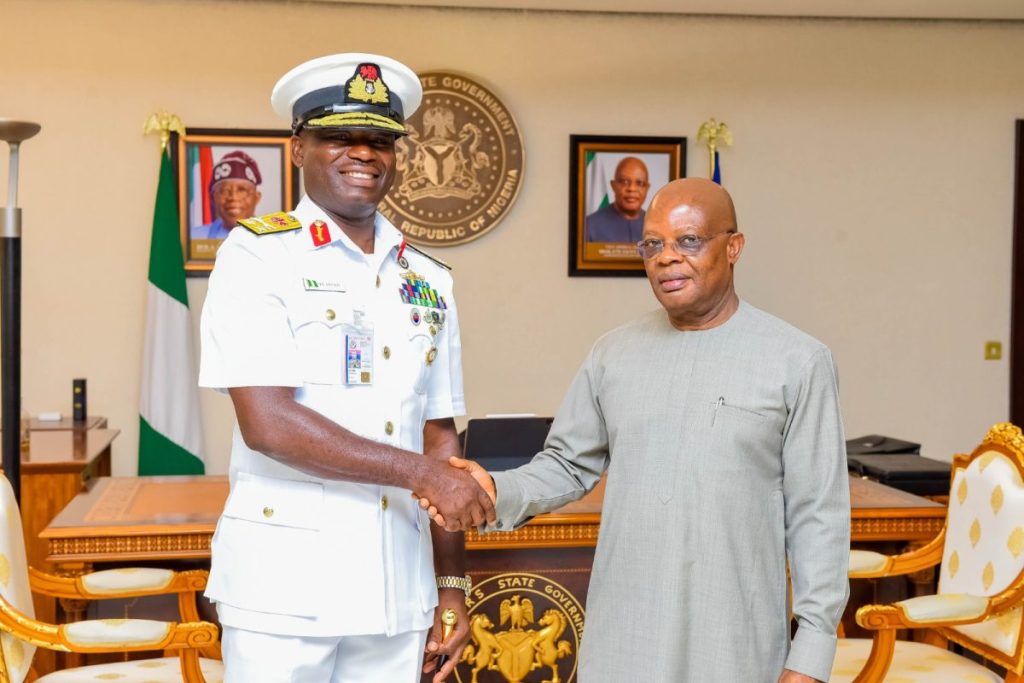
Speaking during a courtesy visit by participants of the Advanced Defense Intelligence Officers Course 15 at the Government House in Port Harcourt, Ibas warned that fragmented intelligence efforts are undermining the fight against piracy, smuggling, and illegal fishing in the Gulf of Guinea.
Vice Admiral Ibas stressed that the lack of synergy among key agencies—including the Nigerian Navy, Marine Police, Nigerian Customs Service, DSS, and NIMASA—has allowed criminal networks to exploit gaps in surveillance and enforcement.
“Our maritime domain is critical to Nigeria’s economy and security, yet we continue to operate in silos,” he said. “Piracy, oil theft, and illegal fishing thrive when intelligence is not shared in real-time. We must break down these barriers to secure our waters effectively.”
To address these challenges, Ibas outlined a multi-pronged approach:
– Real-Time Intelligence Sharing – Strengthening inter-agency data exchange and adopting AI-driven threat analysis.
– Community Involvement – Engaging fishermen, port workers, and coastal communities as frontline intelligence sources.
– Regional Partnerships – Deepening collaboration with Gulf of Guinea nations through joint patrols and intelligence fusion centers.
He commended the Defence Intelligence College’s course theme, “Maximising Intelligence Collaboration for Enhanced Maritime Security,” as a step in the right direction.
As home to critical oil export terminals and one of Nigeria’s busiest ports, Rivers State remains a hotspot for maritime crime. Ibas revealed that the state government is developing a new maritime security strategy, which includes:
– Supporting the Joint Task Force with logistics and local intelligence networks.
– Encouraging whistleblowing and protecting informants.
– Advocating for policy reforms to enable seamless inter-agency cooperation.
“Security is a shared responsibility, but we must move beyond rhetoric and invest in actionable frameworks,” he added.
Rear Admiral Effah Patrick, Commandant of the Defence Intelligence College, said the visit was part of a field study to assess intelligence gaps in maritime security.
“Our officers are here to gather firsthand insights from stakeholders and propose actionable solutions,” he said. “The findings will shape future strategies for Nigeria’s maritime security architecture.”
Vice Admiral Ibas urged immediate action, warning that delays in intelligence coordination could embolden criminal networks.
“The time for isolated efforts is over. We need a unified, technology-driven approach to secure our waters—not just for Nigeria, but for regional stability.”