Precious Anga
Lagos — The transfer of oil assets from International Oil Companies to indigenous operators is placing host communities at the centre of Nigeria’s upstream transition, with environmental liabilities, community funding, employment and corporate accountability emerging as critical issues for the incoming operators.
The concern in many Niger Delta communities is straightforward: an ownership change must not become a mechanism for transferring profitable assets while leaving historical pollution and unresolved community obligations behind.
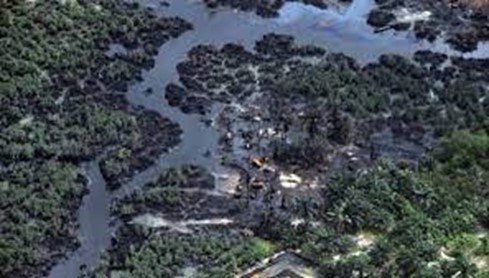
Civil society organisations and community representatives have called for stronger environmental safeguards and clearer liability arrangements, citing oil spills, polluted water, damaged farmland and inadequate remediation.
Previous asset transfers have also been cited by community groups and legislators as a warning that changing an operator does not automatically improve environmental conditions, production, community relations or responsiveness.
The issue has already moved beyond public criticism. IOC divestments have attracted scrutiny from civil society organisations, international human rights mechanisms and communities pursuing legal remedies over environmental damage and divestment processes.
That creates legal and reputational exposure for both sellers and buyers. For incoming operators, community relations are therefore an operational issue, not simply a Corporate Affairs responsibility.
The Petroleum Industry Act provides a specific mechanism through the Host Community Development Trust. Section 235 requires every oil company to establish an HCDT and contribute three per cent of the previous year’s operating costs annually.
The trust must be held in a bank with a BBB credit rating or better, while ownership transfers are not expected to interrupt community development obligations.
By October 2025, HCDTs had grown to ₦373 billion, comprising ₦125 billion and $168.9 million, with 536 active community projects across the country.
For incoming operators, maintaining those obligations will be essential to securing community acceptance and avoiding disruptions to operations.
Local content is another area where the ownership transition could have a measurable impact. The Nigerian Content Development and Monitoring Board is responsible for ensuring that Nigerian companies and workers benefit from oil-sector transactions.
Industry local content increased from five per cent in 2010 to 56 per cent in 2025 under the Nigerian Oil and Gas Industry Content Development Act.
At the fifth Nigerian Oil and Gas Opportunity Fair in Yenagoa, Bayelsa State, in May 2025, NCDMB Executive Secretary Felix Omatsola Ogbe said the opportunities showcased at the event could help rebalance the economy and increase oil and gas production.
Ogbe also said the opportunities could deepen indigenous participation beyond upstream services into midstream and downstream operations.
The workforce is another pressure point during divestments. Once a transaction is announced, uncertainty over job security can trigger union agitation, lower morale and staff departures before completion, with potential consequences for productivity and information security.
Corporate Affairs teams therefore need to be involved before the transaction becomes public. The document recommends placing the Corporate Affairs executive on the divestment steering committee from day one.
It also recommends that companies communicate clearly with employees within 48 hours of a public announcement and engage union leadership before announcement day.
Incoming operators face another communications problem: they can inherit unpaid community agreements, unresolved oil spills and incomplete remediation alongside the assets.
An independent environmental and social audit should therefore be completed before closing, followed by a public liability register identifying obligations that the seller will settle and those transferred to the buyer.
Regulatory communication can become equally complicated. NUPRC due diligence, ministerial consent, Petroleum Industry Act compliance and NCDMB checks can each generate public statements.
The recommended response is a dedicated Regulatory Communications Coordinator who maps expected regulatory events and prepares statements for different scenarios.
A single spokesperson should also handle each divestment, or all concerned parties should issue a common statement. The document cites the Shell-Renaissance transaction in late 2024, when NUPRC, Shell and community lawyers issued conflicting public statements, as an example of the risks created by inconsistent messaging.
The challenge is intensified by Nigeria’s digital media environment. More than 100 million Nigerians use the internet, while X, WhatsApp, Facebook, TikTok and YouTube have become major channels for energy information.
Wrong transaction figures, fake approval letters and fabricated claims about community exclusion can circulate within hours. By the time a formal correction arrives, the false version may already have reached thousands of people.
Energy commentators on YouTube and TikTok can also influence the narrative with claims about transactions they may not fully understand. The recommended response is to identify leading energy content creators, brief them under embargo before announcements and provide simple explanatory material.
Companies are also advised to brief key energy journalists 48 to 72 hours before announcements, establish a dedicated deal fact page containing official documents, approval letters, HCDT figures and community commitments, and produce short videos explaining the implications of each transaction for workers, communities and the environment.
A social-listening system should track conversations in real time and allow companies to respond to false claims on the same day.
For the incoming operators, the communication challenge is ultimately tied to operational credibility. Communities will judge the transition through employment, environmental remediation, development projects, responsiveness and the continuity of production.
The divestment process will therefore require more than a change in ownership documents. It will require clear liability arrangements, uninterrupted HCDT obligations, credible local-content participation and sustained engagement with the communities where the assets operate.