Vincent Toritseju
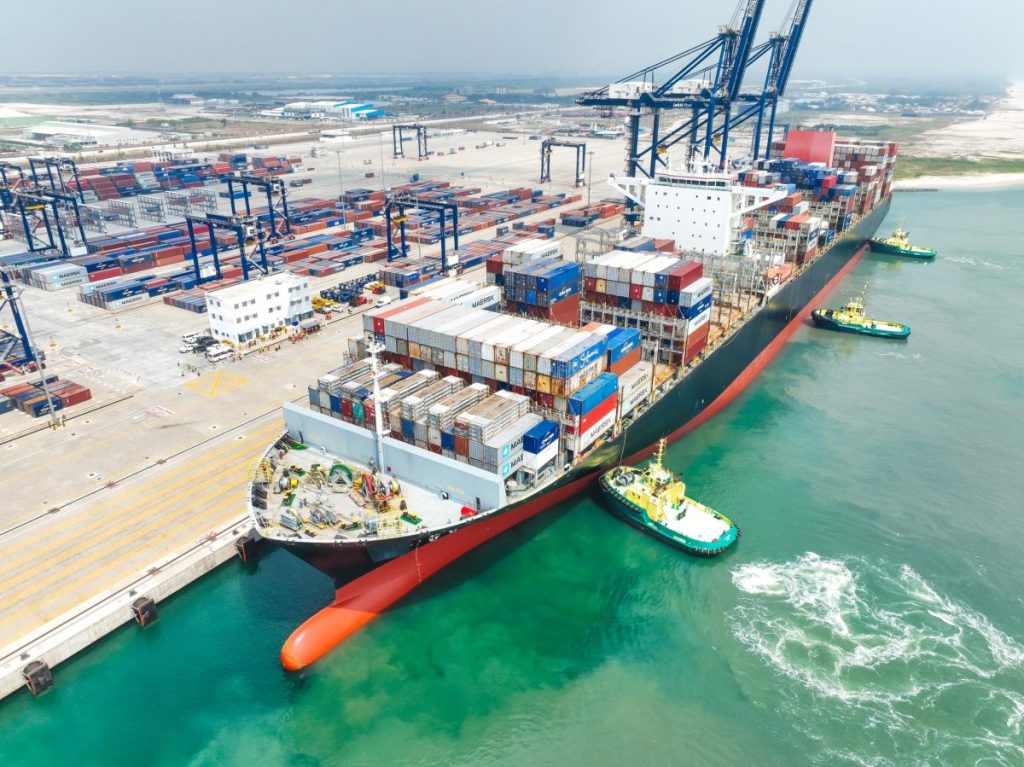
Lagos — Despite an installed capacity of 1.2 million TEUs, Lekki Deepsea Port is currently handling only about 20 percent of its projected cargo throughput. However, the port has initiated efforts to ramp up operations from 54,289 TEUs to 500,000 TEUs by the end of 2025.
Speaking with journalists in Lagos, the Deputy Managing Director of Lekki Deepsea Port, Mr. Daniel Odibe, attributed the shortfall to prevailing economic challenges that have impacted the port’s operations in recent times.
Odibe explained that the removal of fuel subsidies and the depreciation of the Naira against major foreign currencies have led to a decline in imports. However, he noted that cargo volumes are now gradually recovering.
The Lekki Port executive also noted that transshipment activities to ports in neighboring and landlocked countries have similarly increased.
He said: “Lekki Port currently receives between 10-12 vessels every month and Lekki Port transhipment operations has also increased substantially.
“Lekki Port is currently doing international transshipment to Togo, Ghana and Abidjan and some Landlock. We are picking up because the Naira is gradually picking up.
“Volumes fell because of Naira depreciation and removal of subsidy and this caused a setback in our projection. As at 2023 when we started operations, we did 54,289 TEUs and as of June of this year, we have done 222,000 and we are projecting 400,000-500,000 TEUs.”
He disclosed that the vessel turnaround time at Lekki Port currently stands 48 hours as against one hour twenty-five minutes for truck turnaround time while cargo dwell time is 16 days.
In a statement, Managing Director Chief operating officer, Young Xixiong said that Lekki Port will continue to raise the bar to international standards.
Xixiong, who was represented by Mr. Chief Operating Officer of Lekki port, Mr. Wang Qiang said “We continue to push the envelope, set the bar higher to uphold our position as West Africa’s deepest seaport. The result of our unrelenting commitment for world class standards is visible in the gigantic footprints we are putting on the map of maritime trade in Africa, deploying technology, driving operational efficiency, and shaping regional trade.”