Ike Amos
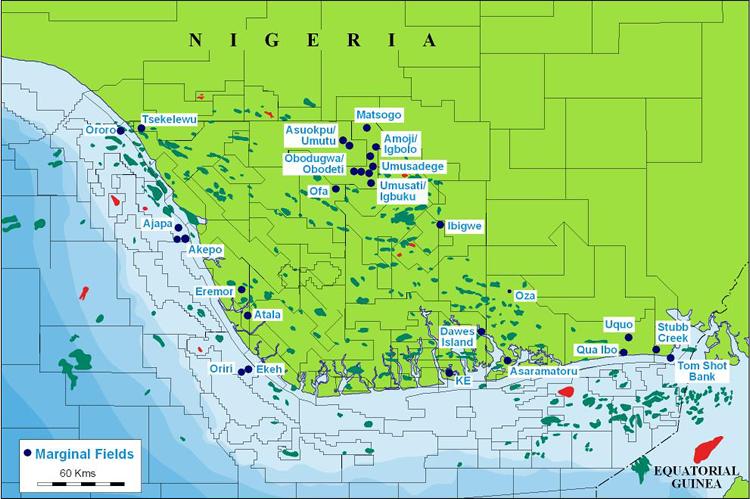
Abuja — A coalition of civil society organizations, yesterday, expressed concerns over the Federal Government’s planned award of 57 marginal oil fields’ licences, stating that the published guidelines for the auction were fraught with provisions that may hamper the interest of genuine bidders in the oil fields and deny the country the benefits of set objectives.
In a statement in Abuja, the CSOs also decried their exclusion by the government from the processes of the bidding, declaring that the published bid guidelines by the Department of Petroleum Resources (DPR) did not involve civil society among agencies that would monitor the exercise.
Emphasizing strict adherence to globally accepted best-practices, the group expressed doubts the current exercise would bring a different result from the past if government does not make the process more transparent.
The group’s protest was contained in a letter to the DPR, signed by National Coordinator, Publish What You Pay (PWYP) Nigeria, Peter Egbule; Executive Director Centre for Transparency Advocacy (CTA), Faith Nwadishi; Executive Director, Civil Society Legislative Advocacy Centre (CISLAC), Rafsanjani Auwal Musa; Chairman, Human and environmental Development Agenda (HEDA), Olanrewaju Suraj and National President, Green Alliance Nigeria (GAN), Chima Williams.
Others include, Chief Executive Connected Development (CODE), Hamzat Lawal; National Coordinator, Media Initiative on Transparency in Extractive Industry (MITEI), Bassey Udo; Programmes Manager, Selemati Foundation, Rita Kigbara; Executive Director, Enough is Enough (EiE) Nigeria, Yemi Ademolokun; Principal Lead, BudgIT Foundation, Gabriel Okeowo, Director Civic Media Lab, Akinfolarin Oluwaseun, and Programmes Officer, West African NGO Network (WANGONeT), Sandra Dike.
They, therefore, advocated the immediate inclusion of about two civil society representatives in the bidders screening team as observers to build public trust and investors’ confidence in the bid process, as a strong legislative oversight by the National Assembly, and involvement of the Nigerian Extractive Industries Transparency Initiative (NEITI) before, during and after the exercise to avoid the experiences of the past.
DPR commences probe into fake diesel complaints
They said, “After reviewing the guidelines, and putting into perspective past experiences and pitfalls of similar processes, we deem it important to draw your attention to some of the points that could hinder the success of the process, or limit Nigeria from deriving optimal financial and socio-economic benefits from the exercise.
“We are prepared to play our roles as civil society in support of this very important national exercise, with the understanding that it is intended and designed to deliver the overriding interest of Nigeria and Nigerians.”
The group identified licensing as one of the weakest links for value realization from Nigeria’s petroleum industry, stating that previous exercises between 2000 and 2007 not only fell below global best practices, it failed to secure maximum value for the country’s assets.
To deliver the expected increase in revenue and proven crude oil reserves as well as increase in daily crude oil production the group said the government must ensure the set goals conformed to the country’s long-term planning objectives in the sector.
According to the CSOs, previous licensing rounds in the country were not tied to any comprehensive asset development strategy or broader economic development plans, adding that each licensing round objectives must align with the country’s strategy for managing natural resource base for current and future generations.
Also, the group called on the government to strengthen the National Data Repository Geological system by making authenticated and certified data easily accessible to bidders to attract capable investors to the oil assets on auction.
On the bidding process, the group urged the DPR to adhere to the published guidelines and criteria on the bid to avoid confusion and ensure due process, noting that the depoliticized criteria must be developed to support local content without compromising the sector’s development potential or returns.
They said, “Nigeria must resist the tendency to extend preferential treatment to companies solely because they are local and well-connected. The DPR should amend the guidelines to accommodate the disclosure by all bidders of ‘sworn declaration, complete, comprehensive and accurate information on their ultimate beneficial owner(s)’.
This would show that Nigeria was fully compliant with her obligations under the EITI and Open Government Partnership (OGP) principles, transparency and a level-playing-field that would not allow ‘business as usual’ by vested interests.