04 January 2015, Lagos – Operators in the maritime sector have called on the Federal Government to appoint relevant professionals to fill the various offices in the sector in the new year if the vast potential of the industry must be explored.
 They are of the opinion that despite the huge potentials of the industry, all their efforts to make past governments pay attention to it in the last twenty years have not produced meaningful result.
They expressed happiness about the fall in the prices of crude oil, noting that it would force the present government to finally pay attention to the sector which is capable of not only funding the budget but providing employment for millions of youths.
GOVERNMENT AGENCIES
Chairman of the Nigeria Shipowners Association, NISA, Capt. Niyi Labinjo, said government through the various ministers responsible for agencies in the maritime industry must ensure that professionals are appointed to man these agencies.
Deputy National President of the National Council of Managing Directors of Licensed Customs Agents, NCMDLCA, Uchu Block, is also of the same view.
The agencies in the sector are Nigerian Ports Authority, NPA, Nigerian Maritime Administration and Safety Agency, NIMASA, Nigerian Shippers Council, NSC, Nigeria Customs Service, NCS and National Inland Waterways Authority, NIWA.
SHIPPING
Labinjo lamented the appointment of neophytes in the past by previous governments as ministers of transport who did not do anything for the industry. He also expressed doubt as to the outcome of the present minister of transportation, Rotimi Amaechi, who he wondered what would be said of him after his time in office.
He said government must focus of the shipping sector of the industry because of the huge potential for the economy. He said that the sector is more than capable of providing the N2 trillion needed to fund the budget. He advised that the smuggling of petroleum products through the off-shore Lome and off-shore-Togo must be stopped because of the effect on the nation’s economy.
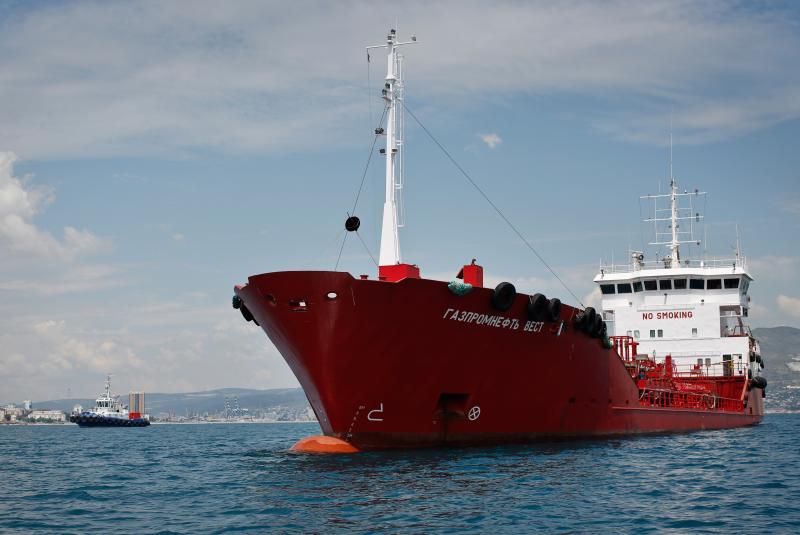
He explained that a 5,000 ton vessel laden with Automated Gas Oil, AGO, cost N600 million. He noted that the nation’s daily fuel consumption need according to the NNPC is about 1.8 million litres and that the government agency is importing half that quantity while the other half is smuggled into the country.
He pointed out that 900,000 litres divided by 5,000 litres comes down to about 180 and should this be multipled by N600 million, it comes down to N108,000,000,000.00. A large chunk of this amount is lost daily through smuggling of the product, he said. This is outside the revenue that should have been collected by the various government agencies like the NPA, NIMASA, NCS etc should these ships had berthed at the nation’s ports.
He said the economic crime against the nation is being committed by foreign vessel that ship in these product informing their countries that they are headed for Nigeria, only for them to stop at the high seas where these products are discharged into smaller vessels and moved into Nigeria.
He noted that 68 percent of these products get into the country unaccounted for and this cost the nation huge revenue loss in terms of capital flight, since the transaction is done in cash, (not captured in the economy), creation of employment for foreign countries, crew of each of the ship and negative effect of balance of trade.
He said the Nigeria presently have no control over about 200 vessels involved in this illegal trade outside the nation’s territorial ways and that alone posses a security risk to the nation, especially with the security situation in the country presently. The retired Navy officer, stressed that government must as a matter of urgency stop the smuggling of petroleum products into the country, as well as ensure that the Cabotage law is enforced fully.
Former Director General of the Nigerian Maritime Administration and Safety Agency, NIMASA, Temisan Omatseye, called on the minister of transportation to focus his action of proper implementation of the Cabotage Act as this will open up development in the industry.
Omatseye stressed that there is a need for the minister to call a meeting of stakeholders to deliberate and chart the way forward for the shipping sub-sector in the industry.
PORT OPERATIONS
The absence of the economic regulator some say has resulted in the country losing over $80 billion annually due to arbitrary charges slammed on consignments by port operatives. Some of the charges are terminal handling ranging from N45,000 to N47,982; import delivery, N1500 to N40,000; customs examination, N2,500 – N11,667; fast track cargo fee, N1,500; documentation, N150-N10,000 and N3,500-N5,500.
Others include transfer of container, N20,000-N31,500; royalty, N5,680-N6,181; release and documentation, N1,443.75-N20,000; shipping agency fee, N15,000 – N37,400; container cleaning, N1,500; service charges N2,500-N5,000; among several others. Uchu Block explained that port operations presently is not efficient and effective because there is no port economic regulator and therefore terminal operators who now manage the terminals after the concessioning of the ports, do whatever they please.
Block noted that the appointment of NSC as the port economic regulator was a welcomed one by most operators but that terminal operators and shipping companies ensure that the government agency could not function by dragging the NSC to court. He noted that there is need for the federal government through the judiciary to ensure speedy completion of the case before it to stop what he termed illegal collection of charges and levies in the sector.
He also complained about the appointment of a non-Customs officer as the Comptroller General of the NCS, noting that the present helmsman of Customs is not knowledgeable about international trade and therefore his action will hinder trade facilitation. He pointed out that the target given to the commands by the Customs boss is making the officers go over board by issuing Debit Note, D/N, on almost all consignments so as to meet their target.
Similarly, he observed that the restriction on foreign currency by the government has affected the volume of imported goods. The restrict he continued, will also make it difficult for the Service to meet the revenue target, stressing the government must decide what it wants to do, either for revenue collection or true trade facilitation that will grow local industries.
He also faulted the annual target given to the Service by the federal government, advising instead that cargo clearance process by made simpler and faster. This he noted will attract more cargoes, including the ones being diverted to neighbouring countries presently.
Apapa Traffic
Most of the stakeholders are in agreement that the minister should liaise with the Ministry of Works to ensure that the chaotic traffic situation along the link roads leading in and out of Apapa is solved as soon as possible because of its effect on the nation’s economy. They opined that Lagos plays host to two key ports in the country – the Lagos Port Complex (LPC) and the Tin Can Island Port (TCIP) – all of which are in Apapa.
As home to the two largest and busiest ports in Nigeria, it also accommodates over 50 private jetties and tank farms. These make the city the busiest in the West African sub- region. Also the Apapa-Oshodi highway links up to the busiest and number one airport in the land, the Murtala Muhammed International Airport. It equally connects the country’s busiest land border, Seme, that links the country to her sub-regional neighbours.
Apapa is also home to the Atlas Cove, the offloading oil facility belonging to the Nigerian National Petroleum Corporation (NNPC). Through the Atlas Cove, petroleum products brought in via oil tankers are pumped to depots like those in Ejigbo, Mosimi and other facilities. They called on the minister to live up to his promise of curbing the chaotic traffic situation along and around the port city of Apapa.
- Vanguard