Close Menu
    Facebook X (Twitter) Instagram
    Facebook X (Twitter) Instagram
    SweetCrudeReportsSweetCrudeReports
    Subscribe
    • Home
    • Oil
    • Gas
    • Power
    • Solid Minerals
    • Labour
    • Financing
    • Freight
    • Environment
    • Community Development
    • Renewable Energy
    • E-Editions
    SweetCrudeReportsSweetCrudeReports
    Home » Methane emissions rising in beef-rich Brazil, climate group 

    Methane emissions rising in beef-rich Brazil, climate group 

    August 28, 2025
    Share
    Facebook Twitter LinkedIn WhatsApp
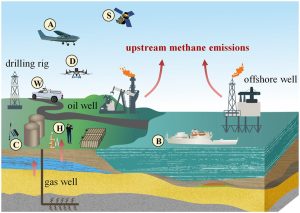
    *Methane Emissions Detection & Measurement.

    Sao Paulo — Brazil’s methane emissions increased 6% between 2020 and 2023, when the world’s largest beef exporter released 21.1 million tons of the potent greenhouse gas, its second-highest level ever.

    According to a study released by the Climate Observatory on Wednesday, three-fourths of Brazil’s methane gas emissions were linked to beef and dairy cattle production, which accounted for 14.5 million tons of total emissions in 2023, the equivalent to 406 million tons of carbon dioxide (CO2) equivalent.

    That figure exceeded all the greenhouse gases emitted by Italy in the same year, the Climate Observatory said.
    “Methane is a greenhouse gas that can warm the planet much more than carbon dioxide,” Climate Observatory, a network of environmental organizations from Brazilian civil society, said in a statement.
    Brazil, home to the world’s second-biggest cattle herd, must develop its own solutions to cut methane emissions, said David Tsai, coordinator of the group’s Greenhouse Gas Emissions and Removals Estimates System. He said fossil fuels are a key driver of methane emissions in other countries, whereas in Brazil the problem regards food production.
    Gabriel Quintana, a specialist in greenhouse gas emissions at Imaflora, a Brazilian non-governmental organization, pointed to New Zealand as an example of a cattle-producing country that had cut its emissions.
    Brazil sells beef and beef byproducts to scores of countries. In November, the nation will host the COP 30 climate conference in Belem, a port city that is the gateway to the country’s lower Amazon region.
    The country is the world’s fifth-largest emitter of methane behind China, the U.S., India and Russia, the Climate Observatory’s statement said.
    Methane gas is mainly a byproduct of cattle belching that results from the animals’ digestive process. Other methane sources include animal waste and irrigated rice production.
    Reporting by Ana Mano; Paul Simao -Reuters
    Related News

    SERAP sues NNPCL over N5.9bn rebranding cost

    APAC to lead global HV switchgear market expansion through 2030

    Nigeria eyes €59m EU Fund to tackle illegal fishing

    Comments are closed.

    E-book
    Resilience Exhibition

    Latest News

    New green building framework aims to reshape Nigeria’s construction sector

    June 15, 2026

    Nigeria’s $11bn coastal highway faces growing environmental backlash

    June 15, 2026

    ECOWAS pushes renewable energy drive to electrify rural communities

    June 15, 2026

    Niger cracks down on illegal mining, shuts six processing sites

    June 15, 2026

    Ogoni leaders block oil restart, demand political justice

    June 15, 2026
    Demo
    Facebook X (Twitter) Instagram
    • Opec Daily Basket
    • Oil
    • Power
    • Gas
    • Freight
    • Financing
    • Labour
    • Technology
    • Solid Mineral
    • Conferences/Seminars
    • Community Development
    • Nigerian Content Initiative
    • Niger-Delta Question
    • Insurance
    • Other News
    • Focus
    • Feedback
    • Hanging Out With Markson

    Subscribe for Updates

    Get the latest energy news from Sweetcrudereports.

    Please wait...
    Please enter all required fields Click to hide
    Correct invalid entries Click to hide
    © 2026 Sweetcrudereports.
    • About Us
    • Advertise with us
    • Privacy Policy

    Type above and press Enter to search. Press Esc to cancel.