Close Menu
    Facebook X (Twitter) Instagram
    Facebook X (Twitter) Instagram
    SweetCrudeReportsSweetCrudeReports
    Subscribe
    • Home
    • Oil
    • Gas
    • Power
    • Solid Minerals
    • Labour
    • Financing
    • Freight
    • Environment
    • Community Development
    • Renewable Energy
    • E-Editions
    SweetCrudeReportsSweetCrudeReports
    Home » Minimum wage earner can only afford 68 litres of petrol monthly

    Minimum wage earner can only afford 68 litres of petrol monthly

    July 4, 2025
    Share
    Facebook Twitter LinkedIn WhatsApp
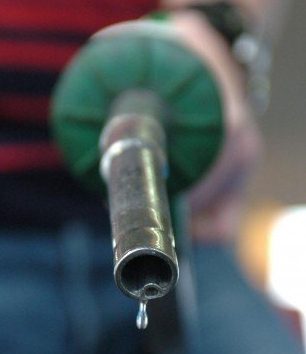
    *Petrol dispenser nozzle.

    Mkpoikana Udoma

    Abuja — Despite the recent approval of a N70,000 national minimum wage, skyrocketing petrol prices have left Nigerian workers with less purchasing power than ever, as a full month’s minimum wage salary now buys only 68 litres of petrol on average.

    According to the National Bureau of Statistics, NBS, the average retail price of Premium Motor Spirit (Petrol) in May 2025 was N1,027.76 per litre, representing a 33.54% increase from N769.62 in May 2024.

    At this rate, N70,000 buys just 68.11 litres of petrol, raising serious concerns about the affordability of daily commuting, especially for workers in urban areas who rely on petrol for transportation and power generation.

    This figure paints a stark picture of the cost-of-living crisis affecting ordinary Nigerians. Analysts note that transportation and energy are core drivers of inflation, and with fuel consuming a large chunk of disposable income, many households are being forced to make tough financial decisions.

    In states like Sokoto, Zamfara, and Anambra, where petrol prices were recorded at N1,100.50, N1,093.21, and N1,084.13 respectively, workers on minimum wage can purchase even less, around 63 to 64 litres.

    Meanwhile, the cheapest prices were found in Yobe (N950.60) and Rivers (N981.67), yet even in these states, N70,000 affords no more than 73 to 74 litres of petrol.

    Zonally, the South East reported the highest average pump price at N1,049.15, while the North Central zone had the lowest at N1,005.42.

    With transportation, food, and rent costs on the rise, labour unions have continued to pressure the federal government for comprehensive palliative measures and energy pricing reforms.

    The current situation underscores a deeper economic imbalance where wage growth is lagging behind inflation, and the gains of a higher minimum wage are being eroded by market realities.


    Related News

    Nigeria, World Bank strengthen partnership to build capacity of institutional workforce

    PTDF, Air Force Institute deepen partnership on energy skills

    TotalEnergies launches 2026 employee share offering

    Comments are closed.

    E-book
    Resilience Exhibition

    Latest News

    AFC backs $7bn Dangote Fertiliser expansion

    June 15, 2026

    Oil falls 5% to three-month low as US, Iran reach peace deal to reopen Strait of Hormuz

    June 15, 2026

    Pipeline vandalism surges as NNPC records fresh attacks in North Central

    June 15, 2026

    Nigeria’s company tax revenue drops 31% despite mining strength

    June 15, 2026

    Ibom FZE supports host community pupils, education

    June 15, 2026
    Demo
    Facebook X (Twitter) Instagram
    • Opec Daily Basket
    • Oil
    • Power
    • Gas
    • Freight
    • Financing
    • Labour
    • Technology
    • Solid Mineral
    • Conferences/Seminars
    • Community Development
    • Nigerian Content Initiative
    • Niger-Delta Question
    • Insurance
    • Other News
    • Focus
    • Feedback
    • Hanging Out With Markson

    Subscribe for Updates

    Get the latest energy news from Sweetcrudereports.

    Please wait...
    Please enter all required fields Click to hide
    Correct invalid entries Click to hide
    © 2026 Sweetcrudereports.
    • About Us
    • Advertise with us
    • Privacy Policy

    Type above and press Enter to search. Press Esc to cancel.