Mkpoikana Udoma
Port Harcourt — The Nigerian Content Development and Monitoring Board, NCDMB, has declared that Nigeria’s local content policy must evolve beyond regulatory compliance to become a strategic tool for building African industrial champions and securing long-term energy sovereignty.
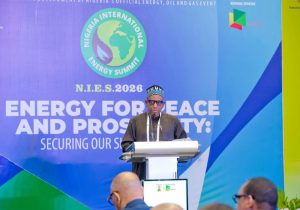
This position was articulated at the ongoing 2026 Nigeria International Energy Summit, NIES, by the Executive Secretary of NCDMB, Engr. Felix Omatsola Ogbe, who was represented by Abdulmalik Halilu, under the summit theme “Energy for Peace and Prosperity: Securing Our Shared Future.”
According to the Board, Africa’s energy future depends on its ability to transition from being a consumer of innovation to a producer of industrial solutions, driven by competence, capacity utilisation and collaboration.
“Local content must move beyond compliance. It must deliberately build African industrial powerhouses that can compete globally,” Ogbe said.
“Africa cannot continue to import innovation. We must create it.”
Ogbe said NCDMB’s interventions had helped deepen Nigerian capabilities across manufacturing, fabrication, marine assets and skills development, noting that over 10,000 Nigerian youths have been trained for high-demand roles in the oil, gas and energy value chain.
He added that Nigerian service companies were no longer operating only within the domestic market, but were increasingly expanding into other African energy markets, exporting skills, assets and technical expertise.
“Today, Nigerian companies are operating across Africa, delivering services, building infrastructure and transferring skills. This is the real impact of local content,” he stated.
In line with the economic reforms of President Bola Ahmed Tinubu and the Nigeria First Policy, Ogbe said the Board was strengthening procurement frameworks to prioritise companies that deliver tangible value, while reducing the influence of cost-adding intermediaries.
“We are aligning procurement priorities to support real value-adding players, not middlemen that increase costs without building capacity,” he said.
On regional integration, the NCDMB reaffirmed Nigeria’s commitment to the Brazzaville Accord, which seeks to harmonise local content policies across Africa, describing it as critical to building a unified and competitive African energy industry.
Ogbe also welcomed the operationalisation of the African Energy Bank, with its handover to the African Petroleum Producers’ Organisation APPO, saying it would unlock competitive financing for African-led energy projects.
“Access to competitive finance is essential. The African Energy Bank is a major step towards funding African energy projects with African capital,” he noted.
He stressed that Local Content Beyond Compliance is not only an energy policy, but a development, industrialisation and sovereignty agenda, urging stronger partnerships between governments, industry players and financiers.
“Africa’s industrial future will be built through capability, partnership and leadership. Local content is the pathway,” Ogbe concluded.