Precious Anga
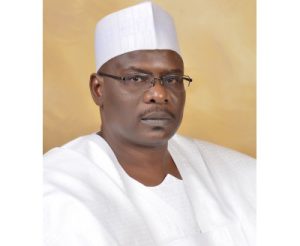
Lagos — Chairman of the ECOWAS Parliament Committee on Agriculture, Senator Ali Ndume, has called on West African governments to allocate at least five per cent of their annual budgets to rural development and renewable energy projects, arguing that access to electricity remains a critical driver of economic growth and social development.
Speaking during a joint committee meeting of the ECOWAS Parliament in Dakar, Senegal, Ndume said renewable energy projects are affordable and capable of transforming rural communities through improved livelihoods, security and agricultural productivity.
Citing figures presented at the meeting, the Borno South senator noted that a $7.6 million solar photovoltaic project could electrify 50 communities, translating to less than $1 million per community.
“For less than one million dollars, you can modernise a rural area,” Ndume said.
He stressed that access to reliable electricity would stimulate local businesses, improve agricultural activities and reduce rural-urban migration.
“Once you do this, you are bringing rural development, security and agriculture. People will have no reason to leave their communities because development will come to them,” he added.
The call came as the ECOWAS Bank for Investment and Development (EBID) disclosed that renewable energy currently accounts for only four per cent of its energy financing portfolio despite growing demand across the region.
Representing EBID, Maimouna Sidibe identified weak project preparation, poor bankability, regulatory challenges and limited access to guarantees as key barriers to investment in rural renewable energy projects.
“The challenge is not the absence of opportunities but making projects financeable and bankable,” she said.
Sidibe disclosed that under its 2026-2030 strategy, EBID plans to increase support for solar mini-grids, off-grid systems, hybrid plants and other projects aimed at expanding electricity access in underserved communities.
Also speaking, Director-General of Senegal’s National Agency for Renewable Energy (ANER), Prof. Diouma Kobor, urged ECOWAS countries to adopt innovative financing models that combine grants, concessional loans, commercial debt and private equity to attract investment and lower project risks.
Participants at the meeting agreed that stronger political commitment, regional cooperation and innovative financing mechanisms will be crucial to bridging West Africa’s electricity access gap and accelerating economic development across the sub-region.