Mkpoikana Udoma
Port Harcourt — Nigeria has issued a bold call to global energy investors, urging them to take advantage of recent regulatory reforms and a fast-expanding regional market, as it positions itself as the anchor of Africa’s energy future.
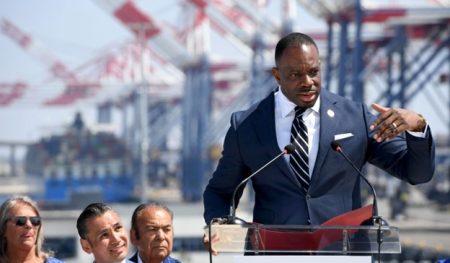
Speaking at the Invest in Nigeria session on the sidelines of Africa Energy Week 2025 in Cape Town, Senator Heineken Lokpobiri, Minister of State for Petroleum Resources (Oil), declared that Nigeria is no longer just open for business, it is structured for profitable, secure, and scalable energy investment.
“The time to invest in Nigeria is now,” Lokpobiri told a room of regional and international financiers, IOCs, and service providers.
“With the Petroleum Industry Act, PIA, in place, our legal and regulatory framework guarantees that you can bring your capital into Nigeria, and take it out freely. This isn’t theory, it’s already happening.”
He pointed to recent asset divestments by global oil majors as evidence of the system’s maturity.
“Shell, ExxonMobil, Eni, and TotalEnergies have divested their onshore assets. Our indigenous companies are now operating these assets successfully. That’s investor confidence in action.”
Beyond legal certainty, Lokpobiri emphasized Nigeria’s regional advantage, framing its energy market as one that transcends borders.
“Nigeria’s energy market is far bigger than its borders. We are servicing the West African region and expanding beyond,” he said.
Central to this strategy is the West African Reference Market, WARM, developed in collaboration with S&P Global, which provides market transparency and pricing benchmarks to boost trade flows and investor confidence across the region.
“In 2024 alone, Africa imported $120 billion in refined petroleum products. If Nigeria captures just 20% of that, the returns are massive, and we are ready for it,” Lokpobiri stated.
Since President Bola Ahmed Tinubu assumed office, Nigeria has enacted a series of reforms and executive orders aimed at improving upstream investment incentives, particularly in deepwater and frontier basins, and resolving legacy regulatory bottlenecks.
“We’ve issued strategic executive orders, streamlined regulatory processes, and incentivized both offshore and onshore investment,” the minister said.
“The results? Rising production, new Final Investment Decisions, FIDs, and fresh capital inflows.”
Indeed, industry data confirms growing investor activity in Nigeria’s energy sector. Several indigenous companies like Renaissance Africa Energy Company, have ramped up production, while international oilfield service providers have reopened regional offices or announced capacity expansions.
With global energy demand in flux and African countries racing to localize refining capacity and monetize gas assets, Nigeria is working to convert its first-mover advantages into long-term leadership.
“We are not just leading Nigeria, we are driving Africa’s energy future. Invest now, act fast, and grow with us ,” Lokpobiri declared.