Ike Amos
Dublin, Ireland — Experts in the energy and financial sectors have warned that Nigeria and the rest of Africa risk losing $415 billion annually to climate change and other environmental issues by 2030.
The experts who were speaking at the African Refiners and Distributors Association’s (ARDA) Virtual Sustainable Financing Workshop, disclosed that the loss would rise from the current $300 billion if efforts are not directed towards improving critical infrastructure in the continent.
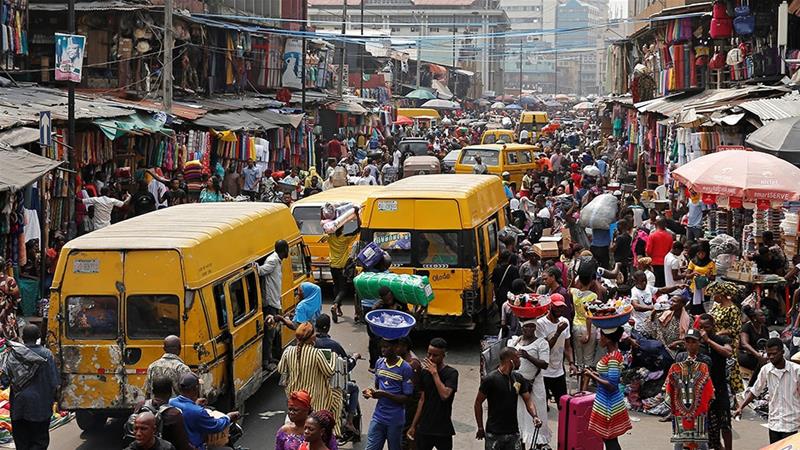
According to them, without significant improvements in infrastructure resilience, annual economic losses from natural disasters’ damage to urban infrastructure alone would increase from $300 billion currently to $415 billion by 2030.
Speaking at the workshop, Executive Secretary of ARDA, Mr. Anibor Kragha, stated that strategic options were needed for financing energy transition in the African downstream petroleum sector, noting that sub-Saharan Africa’s import needs for transport fuels will continue to grow in the foreseeable future, making the region the world’s largest importer by 2030.
He bemoaned the fact that the implementation of cost-effective clean energy solutions in Africa is impeded by complex, inefficient supply chains and intra-African trade challenges.
However, he noted that the African Continental Free Trade Act (AfCFTA) presents an opportunity for the continent to address these issues and deploy an inclusive, equitable energy transition roadmap that captures the priorities, challenges and perspectives of Africa’s low-carbon emitting countries.
Furthermore, Kragha and other stakeholders insisted that Africa’s share of global emission remained low, therefore, the roadmap for energy transition must not prioritize near-term emissions reductions (with relatively little climate benefits) over support for economic development and energy transformation.
Also speaking, Global Head, Client Relations at Afreximbank, Rene Awambeng, noted that energy demand in Africa grows twice as fast as the global average, and Africa’s vast renewables resources and falling technology costs can drive double-digit growth in deployment of utility-scale and distributed solar photovoltaics (PV), and other renewables, across the continent.
He explained that although clean energy and decarbonizing international investment and finance seem to be dominating the development discourse, Africa could leverage on its vast base of existing solid minerals, including rare-earth minerals and metals, that would fuel clean energy.
While making a joint presentation, experts at Vitol, Michael Curran, Global Head of Carbon Trading, and Maryro Mendez, Refineries Research Team Lead, noted that technologies already exist to develop refineries that produce net zero carbon emissions.
However, they observed that environment, social and governance (ESG) investment mandates and capital reallocation away from hydrocarbons into renewables/energy transition, amongst other issues have resulted in reduction in financing options and increased debt service costs for carbon -intensive sectors.
“Most companies already have plans for reducing emissions. These include measurement and reporting, operational improvement, and incorporating carbon-abatement objectives in investment proposals. Implementation, however, is in an initial stage and faces several barriers: resources are scarce, in terms of both capital and technical capabilities, and CO2 reduction is not always a top priority,” the experts said.
They stressed that while the refining sector contributes only three per cent to global energy sector emissions, there are significant opportunities for reducing these emissions especially in regions like Africa where demand for refined products will grow and emissions will grow accordingly.
Follow us on twitter