Mkpoikana Udoma
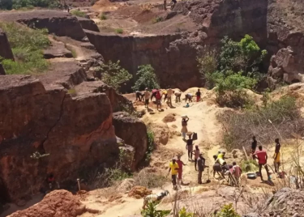
Port Harcourt — As Nigeria celebrates the rising contribution of solid minerals to its Gross Domestic Product, the Corporate Accountability and Public Participation Africa, CAPPA, has warned that the country risks repeating the tragedy of the Niger Delta in its emerging mining boom if strong governance, environmental safeguards, and community rights are not enforced.
The warning came as CAPPA announced the appointment of Auwal Musa Rafsanjani, a prominent civil rights advocate and Executive Director of the Civil Society Legislative Advocacy Centre, CISLAC, as the new Chairman of its Advisory Board, following an election held over the weekend.
Rafsanjani, who also heads Transparency International Nigeria and chairs the Board of Trustees of Amnesty International Nigeria, is expected to strengthen CAPPA’s advocacy on extractive justice, public finance accountability, and civic protection across Africa.
In a statement signed by Akinbode Oluwafemi, Executive Director of CAPPA, the organisation raised concern that the ongoing scramble for lithium and other “green minerals” essential for global energy transition technologies could push communities into new waves of displacement and ecological destruction.
“Nigeria risks repeating the tragedy of the Niger Delta all over again, where oil wealth produced national revenue but destroyed entire ecosystems and livelihoods,” CAPPA warned.
“Unless government enforces strong regulation, guarantees community consent, and ensures transparent governance, the country will simply replace one resource curse with another.”
CAPPA noted that while the Federal Government recently celebrated the mining sector’s contribution of 4.6 percent to national GDP, up from less than half a percent a decade ago, the growth has come at serious social and environmental cost.
“This growth is unfolding alongside land grabs, forced displacement, environmental degradation, and the return of concession-style politics in host communities,” the group stated.
The board stressed that Nigeria’s aggressive push to attract foreign and local investment in lithium, cobalt, and rare earth minerals, all critical for electric vehicle batteries and renewable technologies, must not sideline human rights and environmental protection.
“There is no just transition if communities do not share in its gains,” CAPPA said. “The global energy shift must not become another avenue for exploitation under a different name.”
Rafsanjani, in his remarks, said his priority as chairman would be to reinforce CAPPA’s role as a “fearless watchdog for public good,” particularly in areas where public resources and community livelihoods are threatened by extractive projects.
“Our focus will be to deepen public accountability and ensure that the governance of Nigeria’s natural resources, including the new mineral frontiers, truly serves the people,” Rafsanjani said.
“CAPPA will continue to insist that every mining licence, every land acquisition, and every investment must reflect the consent and well-being of host communities.”
Under Rafsanjani’s leadership, CAPPA said it will expand its alliances with labour unions, grassroots groups, women’s movements, and community defenders to strengthen people-centred governance frameworks across Africa.
“The fight for public accountability and participation cannot be won by scattered voices,” CAPPA stated. “We must build collective power to defend civic space and ensure that natural wealth benefits all, not a few.”
The organisation noted that its new advisory board brings together respected policy experts and rights advocates, including Evelyn Nkanga Bassey, Scott Pegg, Kayode Ogunbunmi, Betty Abah, and Doifie Buokoribo, among others.
Rafsanjani’s decades-long record in transparency, anti-corruption reform, and extractive governance, CAPPA said, will provide strategic direction at a time when “state resources are being commercialised and communities face the double risk of economic exclusion and environmental harm.”
Reaffirming its stance, the group urged Nigerian policymakers to adopt a people-centred resource framework that treats land, water, culture, and livelihoods as more than collateral for investment.
“We urge Nigerians to question any development model that enriches a few while displacing many and devastating the environment,” CAPPA declared.
It further called for transparent implementation of the Minerals and Mining Act, effective enforcement of environmental standards, and genuine participation of host communities in the emerging mineral economy.
“People must come before profit. Sustainable development is impossible without social justice, environmental protection, and transparent governance,” Rafsanjani added.