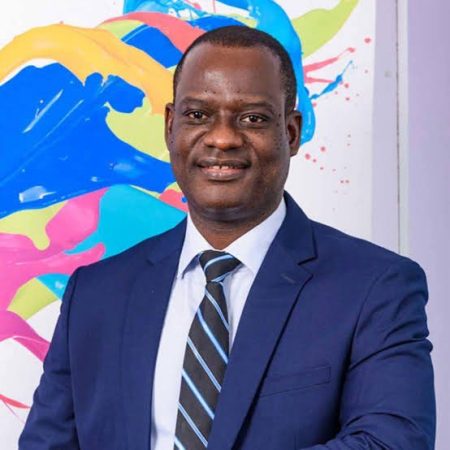
Mkpoikana Udoma
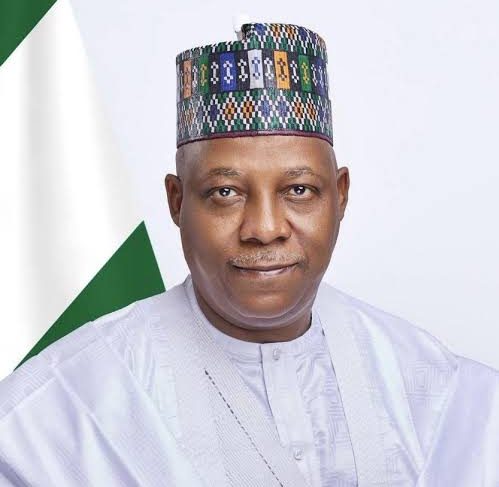
Port Harcourt — Nigeria is moving decisively to phase out diesel dependency and cut carbon emissions through a hybrid energy revolution that will deliver 24/7 power to infrastructure hubs such as ports, Vice President Senator Kashim Shettima has announced.
Speaking at the Decarbonising Infrastructure in Nigeria Summit in Abuja, Shettima also announced a landmark plan to transform Onne Port in Rivers State into Nigeria’s first fully green port through a $60 million private investment deal already under discussion.
“Through an integrated hybrid energy system, we will phase out diesel dependency, slash carbon emissions, and provide 24/7 sustainable and affordable power to terminal operators and port users,” Shettima stated.
Calling the Onne project a “strategic leap,” the Vice President underscored that Nigeria’s future infrastructure must be powered by sustainability, not outdated systems.
“The Nigeria we want cannot be realised on diesel generators and fragile grids. It will not emerge from a model that chokes our lungs while draining our treasury. We must build a Nigeria whose infrastructure heals rather than harms,” he declared.
Shettima warned that 75% of Nigeria’s greenhouse gas emissions stem from infrastructure sectors, energy, transport, agriculture, and urban development, and that the country’s development dreams would remain elusive unless those sectors are decarbonised.
“If we do this right, we stand to generate over 1.5 million green jobs by 2035, and we can cultivate new export markets in clean energy and climate-smart agriculture. This is how we alter our trajectory.”
The summit, themed “Unlocking Climate Finance for Sustainable Development,” brought together government officials, investors, and climate stakeholders to craft Nigeria’s roadmap to net-zero emissions by 2060.
Shettima noted that Nigeria’s Energy Transition Plan and Climate Change Act provide a pragmatic framework, but that financing, coordination, and subnational involvement are essential to actual delivery.
“We are not here to fantasise. We are here to finance. To mobilise. To de-risk. To build. Decarbonisation must not stop at Abuja’s gates. It must reach every local government, every community, every home.”
Also speaking, Director General of the National Council on Climate Change, NCCC, Dr. Nkiruka Maduekwe, stressed that although Nigeria contributes minimally to global emissions, it remains among the most vulnerable to climate impacts due to weak adaptive capacity.
“We need smart agriculture, renewable energy, and land-use transformation. Our survival depends on it,” she said.
She called for urgent private sector investment in sustainable infrastructure, especially energy and transport.
Musaddiq Mustapha Adamu, Personal Assistant to the President on Subnational Infrastructure, emphasised the need for climate equity.
“Today’s summit is not just about emissions. It’s about building a future where infrastructure restores hope, especially for the young, the poor and the marginalised,” he said.
Nigeria’s emerging green economy, anchored on integrated power solutions like the proposed Onne Port project, is now seen as a catalyst for sustainable industrialisation, energy independence, and export-led growth in a decarbonised world.