Precious Anga
Lagos — Nigeria’s vast lithium deposits are emerging as a critical test of whether the country can finally build a domestic clean energy manufacturing industry or remain trapped in the cycle of exporting raw minerals and importing finished technology at high cost.
As global demand for batteries, electric vehicles and renewable energy storage systems accelerates, industry experts, energy developers and mining stakeholders are intensifying calls for Nigeria to localise the production of solar panels, lithium batteries and other clean energy hardware.
The push is anchored on the country’s growing lithium prospects, estimated by industry operators to hold a potential market value of about $34 billion, although comprehensive reserve certification is still ongoing.
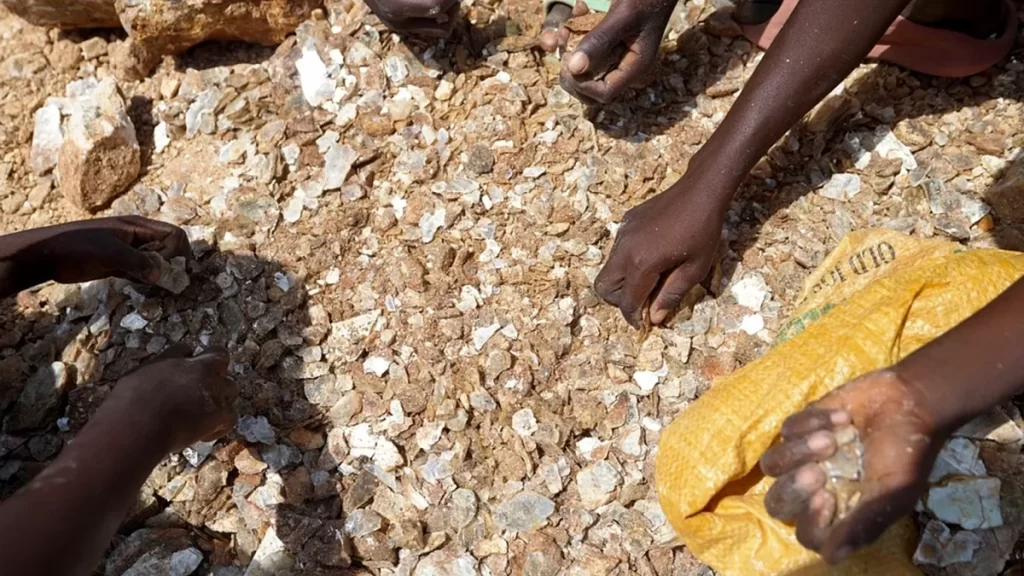
Commercial lithium deposits have been identified in parts of Nasarawa, Kogi, Kwara, Kaduna, Ekiti and Plateau states, drawing increasing attention from foreign investors and mining companies seeking access to critical minerals needed for the global energy transition.
However, experts warn that the real economic prize lies not beneath the ground but in what Nigeria chooses to do with the minerals after extraction.
For decades, Nigeria has exported crude resources while spending heavily on imported refined products and industrial equipment. Stakeholders fear the country risks repeating the same pattern with lithium if policies fail to prioritise local processing, battery manufacturing and renewable energy component assembly.
The concern is particularly significant for a country battling deep electricity shortages.
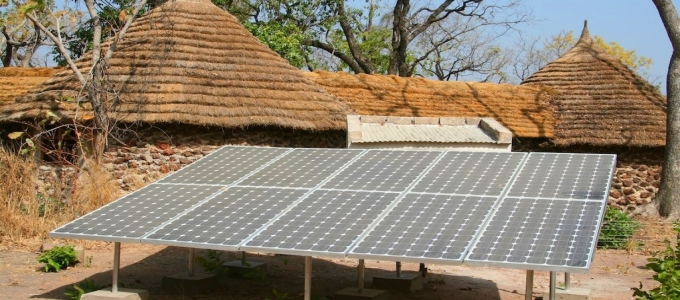
According to World Bank data, more than 85 million Nigerians still lack reliable access to electricity, making Nigeria home to one of the largest energy access deficits globally. Unstable grid supply, rising diesel prices and escalating operating costs have already pushed businesses, households and institutions toward solar energy alternatives.
Yet Nigeria remains heavily dependent on imported solar panels, batteries, inverters and storage systems.
Energy analysts say this import dependence inflates renewable energy costs, weakens local industrial capacity and exposes the sector to exchange rate volatility.
“Without domestic manufacturing, Nigeria risks becoming a major consumer market in a global clean energy economy controlled by foreign producers,” industry stakeholders have repeatedly warned at recent renewable energy and mining forums.
The global market trajectory strengthens the case for urgency.
Demand for lithium continues to rise sharply as countries expand electric vehicle production, grid-scale battery storage and renewable energy deployment. Across major mineral-producing economies, governments are increasingly shifting policy attention from raw exports to refining, processing and advanced manufacturing.
Nigeria is attempting to position itself within that value chain.
The Federal Government has recently intensified efforts to promote mineral beneficiation and discourage the export of raw solid minerals without domestic value addition. Authorities within the solid minerals sector argue that local processing and industrial manufacturing must become central pillars of Nigeria’s resource strategy.
Beyond lithium extraction, the country is also moving to strengthen technical capacity for renewable energy development.
In partnership with the United Nations Industrial Development Organization, the Federal Government recently launched a Small Hydropower Centre of Excellence in Abuja to expand technical education, specialised training and regional knowledge transfer in renewable energy systems.
The facility, hosted at the University of Abuja, is expected to serve as a regional training and research hub supporting small hydropower development, hybrid renewable systems and technical skills advancement across West Africa.
UNIDO officials note that Nigeria has developed only a fraction of its small hydropower potential despite possessing substantial untapped renewable energy resources.
The centre’s broader significance extends beyond hydropower.
Energy specialists say Nigeria’s renewable energy transition will depend not only on capital and infrastructure but also on the availability of engineers, technicians, installers, battery specialists, manufacturers and energy system designers capable of supporting a modern clean energy economy.
Without strong technical manpower, they argue, investments in renewable energy infrastructure and local manufacturing could struggle to gain scale.
The industrial opportunity is substantial.
Analysts believe a domestic lithium-to-battery manufacturing chain could generate thousands of jobs across mining, refining, engineering, logistics, research, equipment assembly and technology services while reducing import dependence and strengthening Nigeria’s manufacturing base.
For an economy grappling with unemployment, foreign exchange pressures and weak industrial output, the clean energy value chain presents more than an environmental agenda it represents a potential industrial reset.
The challenge facing policymakers is whether Nigeria can turn its lithium reserves into factories, technical expertise and globally competitive energy industries or continue exporting raw minerals while importing the technologies that power the future.