Abuja – Nigeria’s energy sector is facing a pivotal moment as a historic opportunity to unlock the long-dormant oil and gas fields of Ogoniland is being directly threatened by a sudden and severe labour crisis at the Dangote Refinery, the nation’s primary fuel supplier.
This much is contained in the 4th quarter Outlook of Nigeria’s Energy Sector by the Society of Energy Editors. According to the Outlook, the Tinubu administration’s landmark decision to confer posthumous reprieve and honours on the “Ogoni 9” and “Ogoni 4” has paved the way for a potential energy renaissance in the Niger Delta. This diplomatic victory, coupled with the recent expiration of the state of emergency in Rivers State, has created the most favourable political and social conditions for investment in decades.
A concrete roadmap for resumption, developed by a team led by former MOSOP President Ledum Mitee, is now in play, focusing on community equity, environmental cleanup, and local jobs. “Major IOCs and indigenous firms are already in high-level talks. The gate to Ogoniland, closed for a generation, is finally creaking open,” stated a senior NNPC official who requested anonymity.
Refinery Crisis Threatens National Stability
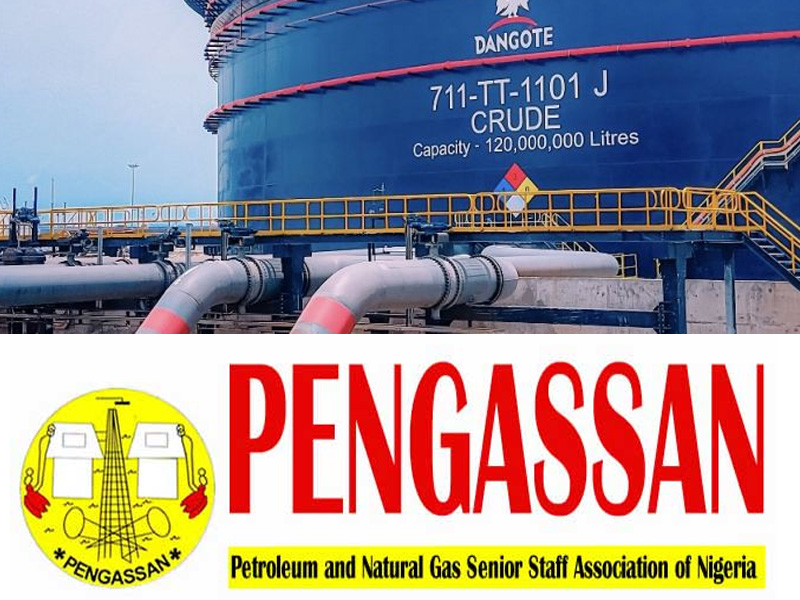
This promise of long-term growth has been abruptly overshadowed by an immediate crisis at the Dangote Refinery in Lekki. The facility, which had been meeting 60% of Nigeria’s domestic fuel demand, is now at a standstill. The crisis erupted after management sacked a large segment of its Nigerian workforce, prompting an immediate strike from the Petroleum and Natural Gas Senior Staff Association of Nigeria (PENGASSAN).
“This action is not only illegal but a direct assault on local content and workers’ rights,” declared a PENGASSAN representative at a press briefing outside the facility. “Operations cease until our members are reinstated.”
The implications are dire. Energy analysts project that if the strike persists for more than a week, Nigeria will face severe fuel shortages, forcing a return to costly imports and shattering the recent period of pump price stability.
“The math is simple and brutal,” explained Kemi Adeyemi, an analyst at Lagos-based Energy Analytics Africa. “The government’s partial subsidy, which caps prices at ₦1,150 per litre, is predicated on Dangote’s output. If we have to import, that price is untenable. Nigerians could be paying between ₦1,300 and ₦1,500 at the pump within weeks, triggering a inflationary spiral.”
Knock-on Effects Across the Economy
The crisis threatens to unravel recent macroeconomic gains. The Dangote Refinery was saving the country an estimated $5-$7 billion annually in foreign exchange previously spent on fuel imports. A prolonged shutdown would reverse these savings, putting intense pressure on the Naira, which has recently stabilized.
Furthermore, the power sector, already plagued by unreliable generation of around 4,300 MW, faces increased strain. A shortage of diesel and petrol will force businesses and households to rely more on the unstable national grid, heightening the risk of widespread blackouts.
A Race Against Time
As government officials scramble to mediate between Dangote and PENGASSAN, the sector finds itself at a cliff’s edge. The promising dawn in the Niger Delta, offering a future of increased production and national revenue, is now competing for attention with a man-made disaster that threatens immediate economic pain.
The Tinubu administration, having successfully navigated complex community diplomacy, now faces its most urgent test in the boardrooms and picket lines of Lekki. The outcome will determine whether Q4 2025 is remembered as the quarter Nigeria turned a corner, or the one it stumbled back into a fuel crisis.