Mkpoikana Udoma
Port Harcourt — Despite two decades of regulatory evolution under the Nigerian Electricity Regulatory Commission, NERC, the country’s power sector remains shackled by distortions in gas pricing and supply, a challenge that continues to frustrate generation targets and deter investment.
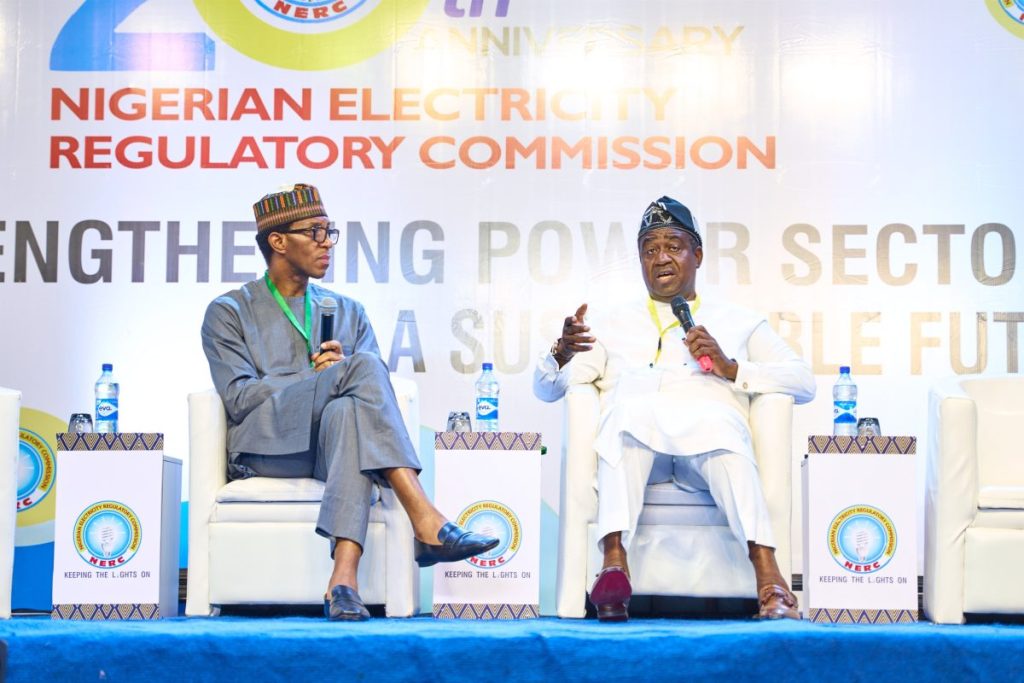
Speaking at NERC’s 20th Anniversary celebration, former Chairman of the Senate Committee on Power, Senator Gabriel Suswam, warned that Nigeria’s erratic gas pricing framework remains one of the biggest barriers to stable electricity generation.
“The same gas pipeline that takes power to plants in Ogun also extends to Ghana; yet Ghana enjoys more stable pricing because its citizens are willing to pay the right price,” Suswam said.
“We must ask ourselves whether Nigeria is paying the right price for gas. Our approach remains uncoordinated and lacks proper alignment between the gas and power sectors.”
He described the current disconnect between gas producers and electricity generators as a policy bottleneck that undermines efficiency and market confidence.
“We cannot sustain power generation when the fuel that drives it, gas, is treated in isolation. There must be inter-ministerial synergy between the Ministries of Power and Petroleum Resources to ensure coherent energy policy,” he added.
Suswam further stressed that broader macroeconomic factors such as exchange rate volatility, forex scarcity, and subsidy management also shape the cost of energy production. “Until we align fiscal, monetary, and energy policies, we will keep repeating the same cycle of inefficiency,” he noted.
Former NERC Chairman, Dr. Sam Amadi, echoed similar sentiments, pointing out that Nigeria’s power challenges are deeply rooted in weak coordination and institutional gaps.
“Let me commend NERC. Arguably, NERC is the most educated and competent regulator in the country. But without alignment across agencies and ministries, regulation alone cannot fix the energy market,” he said.
Amadi praised NERC’s capacity development efforts, saying: “From Owan till now, one thing is clear, NERC is exporting human capital, and that is a success.”
Pioneer Chairman of NERC, Dr. Ransome Owan, also highlighted the issue of transparency within the electricity value chain.
“I’m extra proud of NERC not only for their achievements but for their transparency. On their website there is a lot of information. But for utilities, there’s opacity. This asymmetry of what utilities have and what NERC has needs to be dissolved,” Owan stated.
Gas pricing reforms are critical to stabilizing Nigeria’s electricity supply. With over 80 percent of the country’s generation capacity reliant on thermal plants, inconsistent gas pricing has led to frequent generation drops, stranded capacity, and mounting debts across the sector.
Without addressing gas supply security and pricing alignment, Nigeria’s power market will continue to struggle with liquidity challenges and poor reliability, a reality that undermines both industrial growth and investor confidence.
As NERC marks 20 years of regulation, stakeholders agree that the next phase must prioritize a unified gas-to-power framework, balancing economic realities with social impact; a task many describe as central to unlocking Nigeria’s energy future.