*Admits error in $1.5bn rehabilitation work *Says project remains incomplete *Confirms SweetcrudeReports’ December 2024 story *Operating refinery prior to full rehabilitation ill-informed – Ojulari
Mkpoikana Udoma
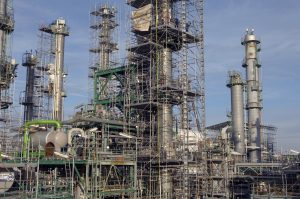
Port Harcourt — Seven months after SweetCrude Reports first raised the alarm over exaggerated claims about the operational status of the Port Harcourt Refinery, the Nigerian National Petroleum Company Limited, NNPC Ltd, has confirmed that resuming operations at the plant prior to full rehabilitation was “ill-advised and sub-commercial.”
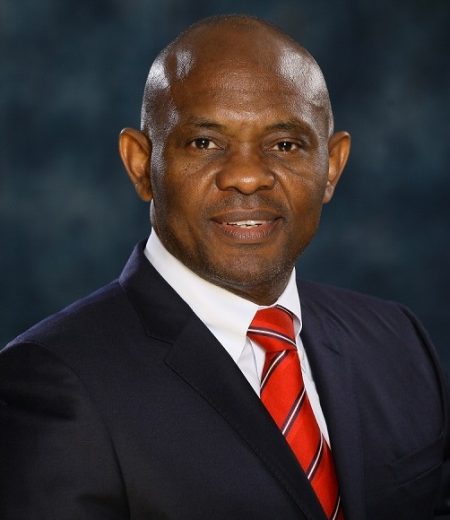
The Group Chief Executive Officer, GCEO, of NNPC Ltd, Bayo Ojulari, made this admission during a company-wide town hall, effectively validating concerns raised in SweetcrudeReports’ December 2024 investigative report, which disputed official claims that the 60,000 barrels-per-day refinery had come on stream at 70 percent capacity.
“The decision to operate the Port Harcourt refinery prior to full completion of its rehabilitation was ill-informed,” Ojulari said, acknowledging what analysts now consider a costly misstep in the government’s push for political optics over operational realities.
This marks a significant policy recalibration for the national oil company, which had previously, in November last year, celebrated the refinery’s supposed return to operation following a multi-year, $1.5 billion rehabilitation project awarded in 2021 to Italian engineering firm, Maire Tecnimont.
A flashback: SweetcrudeReports’ December 2024 warning
On November 26, 2024, NNPC Ltd announced with fanfare that the refinery had resumed production at 70 percent capacity, claiming the loading of 200 trucks daily. Top government officials, including President Bola Tinubu and the Minister of State for Petroleum Resources (Oil), Heineken Lokpobiri, lauded the “achievement” as a major step toward energy independence for the country.
However, a SweetcrudeReports investigation published on December 13, 2024 with the headline, “Port Harcourt Refinery not working”, told a drastically different story. The report, backed by first hand assessment, on-the-ground sources, technical experts, and refinery insiders, revealed that only the Crude Distillation Unit, CDU, was running, processing a paltry 6,500 barrels of crude oil per day, bpd – roughly 10 percent of the 60,000bpd refinery’s stated capacity.
The revelation sparked widespread public concern, especially after experts like Engr. Alex Ogedegbe, a former Managing Director of both the Port Harcourt and Warri refineries, and Mr. Timothy Mgbere, a community leader and former refinery worker, accused the NNPC of inflating performance figures and misleading Nigerians.
“This is not the full refinery that is functioning,” Ogedegbe had told SweetcrudeReports. “You cannot be operating a 60,000 bpd refinery and producing 6,500 barrels, and then announce to the world that the refinery has come on stream.”
Backtracking with implications
Ojulari’s town hall comments validate these early warnings. He admitted that the decision to resume partial operations was made without sufficient technical or financial justification and confirmed that the plant’s full rehabilitation remains incomplete.
Contrary to earlier information by the GCEO at the 2025 OPEC Seminar in Vienna, where he hinted that “all options are on the table” regarding the future of the refinery, Ojulari clarified in the early week of this month that the NNPC will not sell the Port Harcourt Refining Company, instead reaffirming the commitment to its full rehabilitation.
“The decision is not a reversal, but a recognition of the strategic value of the refinery and the need for high-grade technical partnerships to complete its rehabilitation,” he said.

According to Ojulari, continued operations under a partial rehabilitation risked “further value erosion,” a sobering assessment that casts a shadow over the initial November 2024 relaunch.
The fallout of premature declarations
The reversal highlights a pattern of governance issues in Nigeria’s energy sector, particularly around transparency, performance measurement, and project management.
Experts say the government’s desire to score political points ahead of milestones often leads to inflated claims that do not withstand scrutiny.
“The November announcement was more theatre than technical reality,” said a downstream industry analyst, who asked not to be named. “And now the cost of that premature declaration is becoming clear, not just in monetary terms but in public trust.”
The discrepancy between NNPC’s claims and the actual truck-out data from late November to early December, ranging between 4 to 19 trucks per day, suggests a gap not only in communication but also in operational readiness.
Further complicating the narrative were revelations that the refinery was loading old stock from previous years, with no proper connectivity yet established between the old and new Port Harcourt refineries. Mgbere alleged that product truck-out figures were stage-managed for media optics.
A pattern of missteps?
This is not the first time the NNPC has been accused of prematurely declaring refinery functionality. Similar claims were made in 2023 when flaring activities were staged to give the impression of the refinery’s readiness, only for the flares to disappear days later.
Experts and retired professionals like Ogedegbe continue to voice frustrations about the gap between policy and performance.
“The government is not being sincere with Nigerians,” Ogedegbe said. “What is happening at Port Harcourt is akin to a modular refinery, not a national facility meant to service millions of citizens.”
SweetcrudeReports’ investigative report in December had warned of these very inconsistencies, yet at the time, it was dismissed by an official press release signed by then NNPC Chief Communications Officer, Olufemi Soneye, who claimed the report was a “figment of the imagination of those who wants to create artificial (fuel) scarcity.”
Now, with the GCEO’s admission, SweetcrudeReports is vindicated in its cautious and evidence-driven reporting.
The bigger picture: Energy security and public confidence
The fallout from the premature declaration of the refinery functionality raises broader questions about energy planning and governance in Nigeria. Despite billions of dollars spent, Nigeria had been importing almost 100 percent of its refined petroleum products requirement. The arrival of the 650,000 barrels per day Dangote Reinery in Lagos has helped to remedy the situation.
The GCEO’s remarks about seeking more “advanced technical partnerships” could indicate a shift towards deeper collaboration with international technology providers or potential joint venture arrangements, though these are yet to be confirmed.
At stake is not just the success of one refinery but the credibility of Nigeria’s entire domestic refining strategy. As global energy markets evolve and international scrutiny on governance in oil-producing nations intensifies, restoring public confidence will be as crucial as completing the technical work.
Accountability, not optics
The NNPC Ltd’s latest statement may be seen as a step toward accountability, but industry stakeholders insist that it must be followed by real transparency, timelines and performance metrics.
For now, SweetcrudeReports stands vindicated in its commitment to rigorous journalism and fact-based reporting. As the rehabilitation continues, Nigerians will be watching not just for flaring towers or photo ops, but for verifiable and sustained refining output that delivers value to the economy and consumers.