Mkpoikana Udoma
Port Harcourt — Fresh concerns have again trailed ongoing consultations on the proposed resumption of oil production in Ogoniland, as community leaders, environmental advocates and civil society actors insist that no extraction can take place without environmental justice, full remediation, and respect for the Ogoni Bill of Rights.
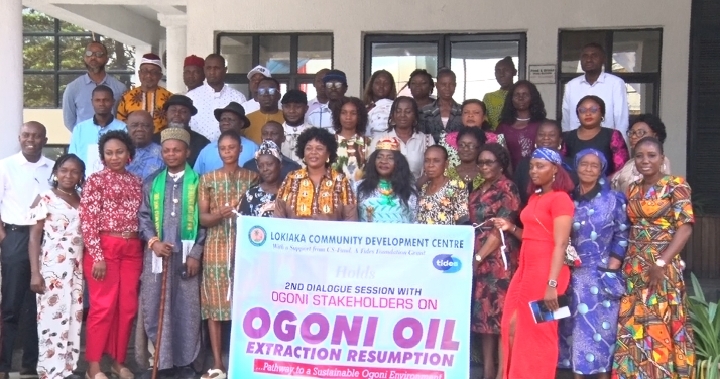
Speaking at a one-day stakeholders’ dialogue on oil resumption in Ogoni, held in Port Harcourt, Executive Director of Lokiaka Community Development Centre, Martha Agbani, said the process must be rooted in transparency, consent and the protection of community rights.
She explained that the second dialogue became necessary to assess feedback from the Federal Government’s consultation visits across Ogoni communities, following the submission of reports without proper communication to the people.
“We are here gathered as Ogoni people to look at the issue of oil extraction resumption in Ogoni land,” Agbani said. “Participants told us that the first dialogue helped them know what to contribute during the consultation. But they also expressed dissatisfaction with how the communication went and how the report was submitted without coming back to the people.”
Agbani maintained that after three decades without oil production, many residents do not fully understand the health, environmental and social implications of renewed extraction.
“It’s been about 30 years since they stopped oil extraction in Ogoni land. Most of the persons here do not even understand what it means to go into oil extraction, the challenges and health effects,” she warned.
“If they want to go into this, even with what HYPREP is doing, they will not be able to manage the environment to where it ought to be.”
She stressed that oil resumption must follow due process and address outstanding issues raised in the Ogoni Bill of Rights, including justice for victims of past abuses.
“The people demanded free, prior and informed consent. They demanded a social licence. They also said: exonerate our people that you judicially murdered. That has not been done,” she stated.
“Resumption of oil extraction undergoes several processes. The government needs to respect the people’s rights.”
Also speaking, an environmental management consultant, Mr. Erabanabari Kobah, said discussions about restarting oil operations are premature given the current state of the environment.
“The environment has been sufficiently destroyed. It has not been remediated, it has not been restored, and it has not been handed over to the people,” he said.
“Oil operation without environmental impact assessment is unacceptable. Can the Ogoni environment still carry another round of oil operation?”
Kobah lamented the loss of biodiversity and the declining quality of life in Ogoni communities.
“I grew up drinking water from the stream. Today, you cannot drink water from the stream,” he said. “If this generation can no longer benefit from the environment, generations to come will have nothing to inherit. That will be tragic.”
He called for a comprehensive Environmental Impact Assessment to determine whether the area can sustain any new extraction activities.
Also speaking, Barbra Sam-Nordum from Korokoro community said communities are not rejecting oil resumption but want investments that prepare young people for opportunities.
“Oil extraction resumption is a welcome development, but before that takes place, we need empowerment,” she said. “Our youths need skills so they can take good positions in the companies, not serve as labourers. We need human capital development and infrastructure first.”
Stakeholders at the meeting agreed that while conversations on oil production may continue, the Ogoni environment, already severely degraded after decades of spills and pollution, cannot absorb new operations without remediation, justice and meaningful community participation.