 Precious Anga
Lagos — Environmental experts have warned that persistent oil pollution, flooding, gas flaring and weak public engagement are undermining Nigeria’s sustainability ambitions, urging oil companies, policymakers and communities to adopt a more proactive approach to environmental protection.
The warning was issued at the second NNPC Foundation Symposium on Energy and Environmental Communication, organised by the Centre for Media and Communication Research at Pan-Atlantic University in partnership with the NNPC Foundation.
Speaking at the event, Professor Angela Nwammuo of Southern Delta University, Ozoro, Delta State, said Nigeria’s environmental crisis extends beyond policy and technology, stressing that effective communication and public participation are essential to achieving long-term sustainability.
“Nigeria is not left out of this global challenge. The country faces significant environmental problems that continue to undermine sustainability,” she said.
Nwammuo identified oil pollution, gas flaring, flooding, erosion, deforestation, poor waste management and climate-related disasters as major threats confronting the country.
She said the Niger Delta remains one of the worst-hit regions due to decades of oil exploration and exploitation.
“The Niger Delta region of Nigeria is plagued by severe environmental degradation and pollution due to years of oil exploration and exploitation,” she said.
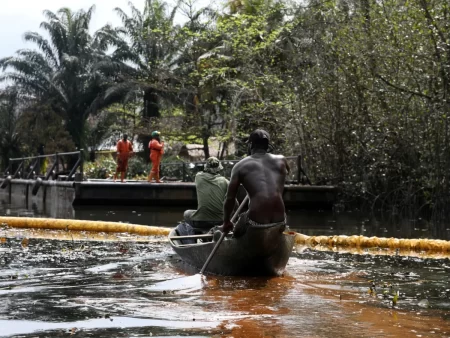
“Oil spills, gas flaring and pipeline leakages have contaminated water bodies, destroyed farmlands and endangered public health.”
According to her, environmental degradation has also fuelled social unrest, weakened livelihoods and contributed to economic instability in many communities.
She warned that climate change is worsening the situation, with flooding, drought, desertification and irregular rainfall patterns already affecting food security, agricultural productivity and livelihoods across the country.
Nwammuo further blamed low environmental awareness for slowing progress towards sustainability.
“Low levels of environmental awareness and ecological literacy among Nigerians, both in urban and rural areas, contribute significantly to the challenges facing sustainability,” she said.
She called for a shift towards strategic environmental communication, describing it as a research-driven approach that can influence public behaviour, strengthen environmental governance and improve corporate accountability.
The professor urged government agencies, oil companies and community leaders to institutionalise environmental communication and intensify grassroots engagement.
“Environmental challenges are not merely scientific or technological problems; they are fundamentally communication and behavioural issues requiring collective action and societal transformation,” she added.
Delivering a keynote address, Professor Abdullahi Bashir of the University of Abuja said Nigeria faces multiple environmental threats, including pollution, desertification, flooding, bush burning, deforestation and improper waste disposal.
He described climate change as one of the country’s most pressing challenges and called for urgent investments in resilience-building measures.
Quoting the International Monetary Fund’s definition, Bashir said climate resilience is “the capacity of social, economic and natural ecosystems to anticipate, prepare for, absorb and recover from climate-related hazards and long-term stresses.”
He identified ecosystem restoration, resilient infrastructure, early warning systems and community empowerment as key pillars for tackling climate risks.
Bashir also emphasised the importance of communication in building resilience.
“Communication is an important enabler of climate resilience. Society must fully harness its potential to promote climate resilience,” he said.
However, he warned that misinformation, political polarisation, communication overload and public apathy continue to hinder effective climate action.
To bridge the gap, he advocated greater investment in environmental communication, specialised training for journalists and social media influencers, increased research funding and stronger collaboration between governments, media organisations and local communities.
Speaking at the event, Acting Managing Director of the NNPC Foundation, Eugenia Dominion, described the symposium as a timely intervention as climate change, environmental degradation and energy transition increasingly shape global development priorities.
She said sustained dialogue and collaboration among stakeholders would be critical to building a more resilient and sustainable future for Nigeria.
Experts at the symposium agreed that while environmental threats continue to intensify, stronger communication, corporate accountability and coordinated action could help Nigeria protect its ecosystems and advance its sustainability goals.