– Oil prices rise on fears over Middle East supply disruptions
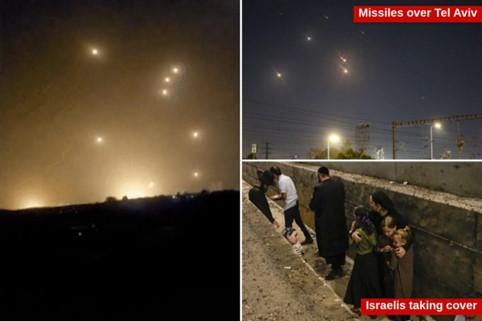
– Iran fires over 180 missiles on Israel, says attack is over
– Israel and the U.S. vow retaliation against Tehran
– OPEC+ panel meets later on Wednesday
London — Oil prices climbed more than 2% on Wednesday on rising concerns that Middle East tensions could escalate, potentially disrupting crude output from the region, following Iran’s biggest ever military blow against Israel.
Brent futures leapt $1.63, or 2.2%, to $75.19 a barrel, while U.S. West Texas Intermediate (WTI) crude spiked $1.70, or 2.4%, to $71.53 at 0755 GMT. WTI had earlier risen more than $2.
Both crude benchmarks on Tuesday surged more than 5% before closing around 2.5% higher.
Iran said early on Wednesday that its missile attack on Israel was over barring further provocation, while Israel and the U.S. promised to strike back against Tehran as fears of a wider war intensified.
“This could include damaging or obliterating Iran’s oil facilities,” said Tamas Varga of oil broker PVM.
Tehran said any Israeli response to the attack, which Israel said involved more than 180 ballistic missiles, would be met with “vast destruction”.
Varga noted Iran’s or its allies’ retaliation could strike Saudi oil facilities like in 2019 or see the closure of the Strait of Hormuz. “Any of these events would irretrievably send oil prices considerably higher,” he said.
In another escalation of the conflict, the Israeli military on Wednesday sent regular infantry and armoured units to join ground operations in southern Lebanon against Iran-backed Hezbollah.
The United Nations Security Council scheduled a meeting about the Middle East for Wednesday, and the European Union called for an immediate ceasefire.
Iran’s oil output rose to a six-year high of 3.7 million barrels per day (bpd) in August, ANZ analysts said.
“A major escalation by Iran risks bringing the U.S. into the war,” Capital Economics said in a note. “Iran accounts for about 4% of global oil output, but an important consideration will be whether Saudi Arabia increases production if Iranian supplies were disrupted.”
A panel of ministers from OPEC+, which includes Russia, meets later on Wednesday to review the market, with no policy change expected. The group is set to raise output from December by 180,000 bpd monthly.
“Any suggestion that production hikes will proceed could offset concerns of supply disruptions in the Middle East,” ANZ analysts said.
However, Saudi Arabia’s oil minister said that oil prices could drop to as low as $50 per barrel if OPEC+ members do not stick to agreed-upon production limits, the Wall Street Journal reported on Wednesday citing delegates from the oil producers’ group.
*Paul Carsten, Gabrielle Ng & Katya Golubkova; editing: Jacqueline Wong & Jason Neely – Reuters