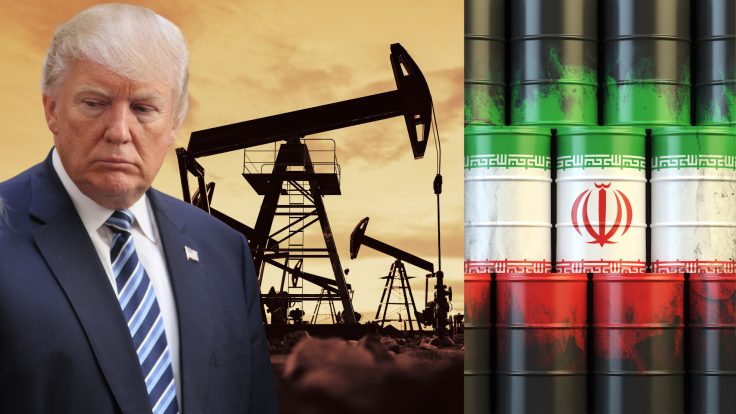
London — Oil prices plunged sharply in early trade on Wednesday after U.S. President Donald Trump announced a two‑week ceasefire with Iran, easing fears of prolonged supply disruptions in the Middle East. U.S. crude fell more than 14 per cent to USD 96.96 a barrel, while Brent dropped below USD 95, sliding to USD 94.66, as markets reacted to the halt in hostilities and Tehran’s conditional agreement to reopen the Strait of Hormuz.
The ceasefire pauses a six‑week conflict triggered by joint U.S.‑Israeli airstrikes on Iran, with traders reassessing geopolitical risk premiums that had driven oil prices higher amid threats to key shipping routes.
President Donald Trump said Washington had “agreed to suspend the bombing and attack on Iran for two weeks,” describing the move as a “double‑sided ceasefire.” Iran’s Foreign Affairs Minister Seyed Abbas Araghchi confirmed Tehran’s stance, saying Iran’s armed forces would halt defensive operations if attacks against the country were stopped, raising hopes of a broader diplomatic breakthrough.
Markets reacted swiftly to the ceasefire announcement, with oil prices posting their steepest intraday decline in months. Oil prices plunged as traders unwound geopolitical risk premiums that had built up amid threats to shipping lanes and energy infrastructure.
The easing of geopolitical tensions also triggered a broader risk‑on move across global markets. U.S. equity futures surged, with the S&P 500 up more than 2 per cent, the Dow futures jumping roughly 940 points, and Nasdaq futures climbing 3 per cent.
The dollar weakened, with the Dollar Index slipping to 98.7, while precious metals rallied, with gold up 2.3 per cent at USD 4,840 an ounce and silver rising more than 6 per cent to USD 76.8, reflecting shifting portfolio positioning in the aftermath of the ceasefire.
Notably, the move marks a sudden pause in a six‑week war sparked by joint U.S.‑Israeli airstrikes on February 28, and follows stark warnings from Trump earlier in the day that Iran faced catastrophic consequences if negotiations failed.
On March 9, Brent crude surged over 27 per cent to trade at a multi-year high of USD 119 a barrel amid escalating Middle East tensions. The prices later dropped significantly after the announcement of coordinated oil reserve release by major G7 economies.
The oil price, although at a multi-year high, were still lower than its all time high of USD 147 per barrel seen in July, 2008. The recent hike was also lower than USD 130 per barrel price that was hit in 2022 during the Russia-Ukraine crisis.
*RT Now