Mkpoikana Udoma
Port Harcourt — The Group Chief Executive Officer of the Nigerian National Petroleum Company Limited, NNPCL, Mr. Bashir Bayo Ojulari, has outlined an ambitious roadmap to ramp up Nigeria’s crude oil production to three million barrels per day, bpd, by 2030, describing it as part of a long-term vision to restore national energy dominance and economic resilience.
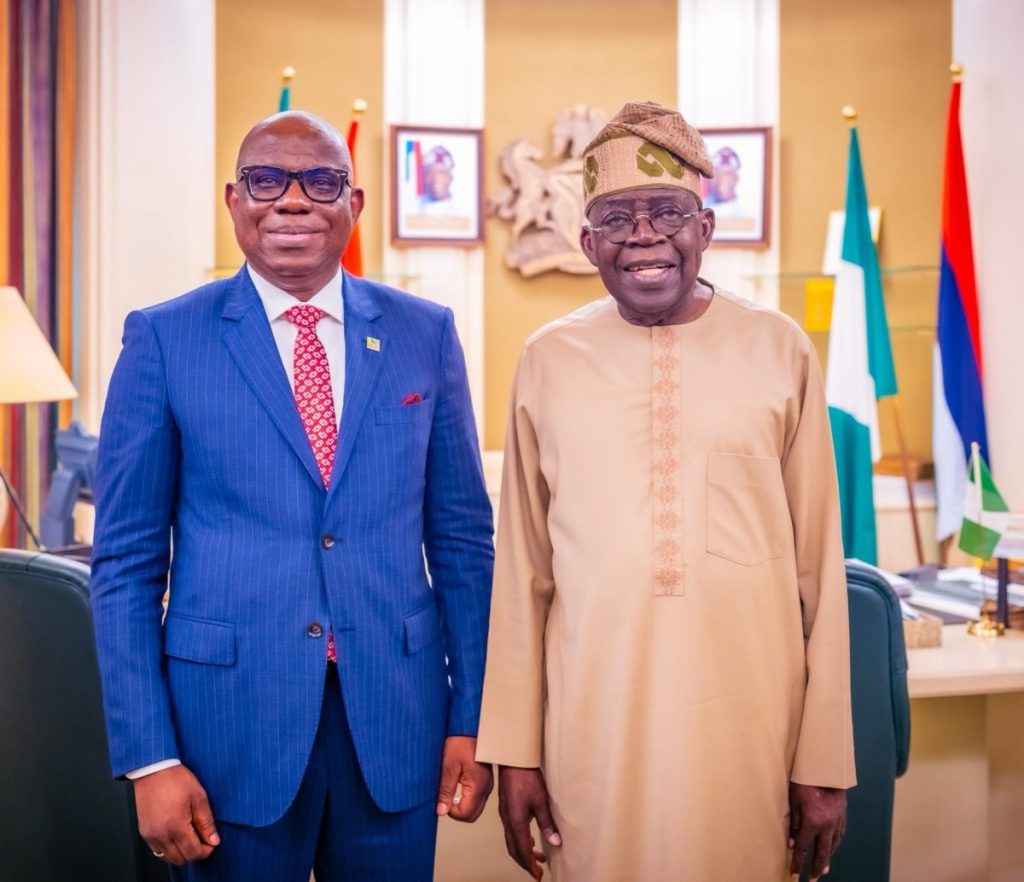
Ojulari revealed this after meeting President Bola Ahmed Tinubu in Abuja recently, where he briefed the Commander-in-Chief on the company’s latest production figures and ongoing reforms aimed at operational excellence and investment growth.
He confirmed that Nigeria had recently hit 1.68 million barrels per day, the highest level in nearly five years, a milestone he attributed to improved security, operational efficiency, and enhanced collaboration across the oil and gas value chain.
“Our goal is clear, we must reach a minimum of two million barrels per day by 2027 and build steadily to three million by 2030,” Ojulari said.
“This is not just an aspiration; it is a structured, achievable plan anchored on transparency, efficiency, and strong partnerships.”
He emphasized that NNPCL’s transformation from a government corporation into a commercially driven energy company has been pivotal in restoring investor confidence and operational discipline.
“We are operating with the mindset of a world-class company, one that competes globally but serves Nigeria first,” he noted.
Ojulari added that under President Tinubu’s administration, the company has accelerated project execution timelines, improved cash flow management, and restructured joint venture obligations to attract new upstream investments.
“The President’s leadership has given us the stability and support we need to focus on performance,” Ojulari stated. “Our 1.68 million barrels achievement is proof that reforms are working and our energy sector is turning a corner.”
He further highlighted ongoing efforts to expand deepwater exploration, boost local content participation, and integrate technology-driven monitoring to curb crude theft and leakages.
“Our vision is long-term, to make Nigeria not just an oil-producing nation but an energy powerhouse that sets the pace for Africa,” he concluded.