Esther Oritse
Lagos — Ahead of the forthcoming International Maritime Organization (IMO) Council under Category C for the 2026–2027 biennium elections, Nigeria yesterday formally launched its campaign for election to the Council at London Headquarters of the IMO.
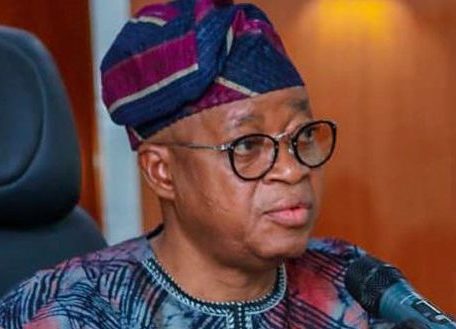
Speaking on the sideline of the just concluded the 110th Session of the Maritime Safety Committee (MSC 110) of the IMO, Nigeria’s Minister of Marine and Blue Economy, His Excellency Adegboyega Oyetola said that a vote for Nigeria would be a vote for balanced decision-making in global maritime governance.
The event drew a distinguished audience, including the Secretary-General of the IMO, Mr. Arsenio Dominguez, as well as Permanent Representatives, Alternate Permanent Representatives, diplomats, and maritime delegates from over 120 IMO Member States which served as a platform for Nigeria to underscore its strategic maritime relevance and renew its commitment to global shipping governance.
In his keynote address, Oyetola disclosed that Nigeria has ratified and domesticated numerous IMO instruments and is currently in the process of adopting additional conventions on greenhouse gas emissions, biofouling, and maritime labour protections — reinforcing its commitment to both environmental protection and the welfare of seafarers.
“Today, we formally declare Nigeria’s candidacy for re-election to the IMO Council under Category C for the 2026–2027 biennium,” he announced.
“As a responsible maritime nation strategically located on the Gulf of Guinea — one of the most commercially significant and security-sensitive shipping routes in the world — Nigeria remains resolute in supporting the IMO’s mandate to promote safe, secure, environmentally sound, efficient and sustainable shipping,” he stated.
Oyetola also spotlighted Nigeria’s acclaimed Deep Blue Project as a model of maritime security innovation. Coordinated by the Nigerian Maritime Administration and Safety Agency (NIMASA), the multi-layered initiative integrates air, land, and sea assets to protect Nigeria’s maritime domain.
On the implementation of the Deep Blue Project, Oyetola noted, has resulted in zero piracy incidents in Nigeria’s territorial waters over the past three years, a milestone that has drawn global commendation, including from the International Maritime Bureau (IMB).
Highlighting Nigeria’s demographic advantage and human capital potential, Oyetola noted that with a population exceeding 240 million — 60% of whom are under the age of 19 — Nigeria is not only a regional maritime leader, but a future-ready partner.
“We are investing in maritime education and capacity development, with the potential to contribute over two million skilled seafarers to the global labour pool in the coming decade,” he said.
He further stated that gender equity remains a priority for Nigeria: “We are also making deliberate efforts to empower women in maritime, supporting initiatives that encourage female seafarers, port professionals, and maritime leaders, because progress in partnership must be inclusive.”
He said Nigeria’s record of constructive engagement within the IMO speaks for itself as the country continues to offer technical support and share best practices with fellow developing countries, particularly within Africa, the Small Island Developing States (SIDS), and Least Developed Countries (LDCs).
“A vote for Nigeria is a vote for representation, collaboration, and balanced decision-making in global maritime governance,” he stated. “We stand ready to work with all Member States to build a safer, greener, and more inclusive maritime future.”
Also speaking at the event, the Director-General of NIMASA, Dr. Dayo Mobereola, reaffirmed Nigeria’s enduring role in the international maritime community.
“Nigeria is proud to be a committed and reliable global partner in advancing maritime security, promoting environmental responsibility, and ensuring fair and equitable participation in the governance of international shipping,” he said.
He added that if elected to the IMO Council, Nigeria will lead, partner, and deliver on a transformative maritime agenda that benefits the entire global community.