Goli Innocent
Lagos — The global energy mix is undergoing a quiet but decisive transformation, as renewable sources edge ever closer to becoming the dominant force in electricity generation. Fresh figures indicate that by the close of 2025, renewables accounted for 49 per cent of installed power capacity worldwide, a remarkable stride that reflects years of steady investment and policy backing.
What is particularly striking is the pace of growth. The year delivered a record-breaking expansion, with 692 gigawatts of new renewable capacity added representing a 15.5 per cent increase. Such acceleration is no accident; rather, it is the result of maturing technologies, falling costs, and a growing recognition that clean energy offers both economic and strategic advantages.
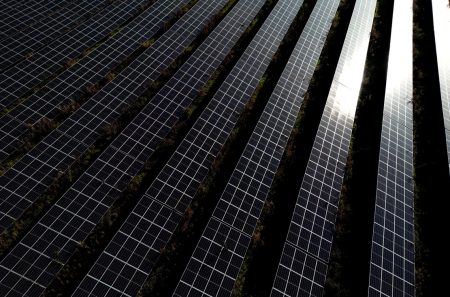
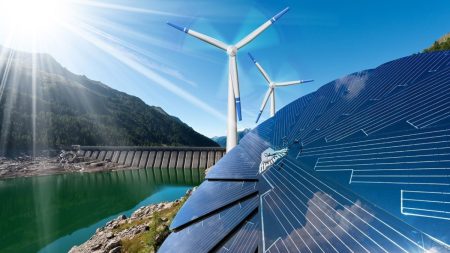
Solar power, once considered a niche solution, has now assumed a commanding position. It accounted for nearly three-quarters of all renewable additions in 2025, contributing an unprecedented 510 gigawatts. Wind energy followed at a distance, yet still posted a solid 159 gigawatts, reinforcing its role as a dependable pillar of the energy transition.
Even so, this global progress is far from evenly distributed. China continues to set the pace, expanding its renewable capacity at a rate that leaves most regions trailing. Together with the United States and the European Union, it accounted for nearly four-fifths of all new installations. This concentration of growth speaks volumes about where capital, policy clarity, and industrial capacity are most firmly aligned.
Elsewhere, the picture is more restrained. Africa, despite recording its own modest gains, contributed only a small fraction 1.6 per cent of global additions. Countries such as Ethiopia, South Africa, and Egypt are making commendable efforts, yet the broader continent remains constrained by financing gaps and infrastructural limitations that continue to slow the march towards energy sufficiency.
It is also worth noting that installed capacity does not tell the whole story. Renewables, for all their progress, accounted for roughly 32 per cent of actual electricity generation in 2024. Fossil fuels still hold sway in sectors that demand consistent, high-density energy, particularly heavy industry and long-haul transport, where alternatives remain either costly or technically unproven at scale.
Recent geopolitical tensions have, however, cast the advantages of renewables into sharper relief. Disruptions to oil supply chains have unsettled global markets, yet nations with a strong base of solar and wind capacity have found themselves comparatively shielded. Energy drawn from the sun and wind, after all, is not subject to the whims of distant conflicts or maritime chokepoints.
Taken together, the trajectory is unmistakable. While the age of fossil fuels is not yet at an end, its dominance is being steadily eroded. The real question now is not whether renewables will take centre stage, but how swiftly nations particularly those in the developing world can position themselves to partake fully in what is fast becoming the defining energy shift of our time.