
Close Menu
    Facebook X (Twitter) Instagram
    Facebook X (Twitter) Instagram
    SweetCrudeReportsSweetCrudeReports
    Subscribe
    • Home
    • Oil
    • Gas
    • Power
    • Solid Minerals
    • Labour
    • Financing
    • Freight
    • Environment
    • Community Development
    • Renewable Energy
    • E-Editions
    SweetCrudeReportsSweetCrudeReports
    Home » South Africa: Mining production declines in May

    South Africa: Mining production declines in May

    July 13, 2014
    Share
    Facebook Twitter LinkedIn WhatsApp

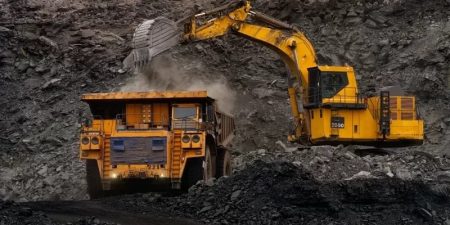
    Mine worker13 July 2014, Tshwane – Mining production decreased by 6.5% year-on-year in May, Statistics South Africa (Stats SA) said on Thursday.

    The largest negative growth rates were recorded for Platinum Group Metals (PGMs) at (48.5%), other non-metallic minerals at (13.3%) and building material at (11.7%).

    “The main contributor to the 6.5% decrease was PGMs (contributing 10.4%),” said Stats SA.

    The crippling strike action, which began on 23 January 2014 in the platinum sector, had a negative impact on total mining production.

    Mineral Resources Minister Ngoako Ramatlhodi had previously intervened in the five-month long strike before announcing his withdrawal from the matter.

    Mining companies Lonmin, Anglo Platinum (Amplats) and Impala Platinum (Implats) reached a wage agreement with mining union, Association of Mining and Construction Union (Amcu). The strike action ended on 23 June.

    According to Stats SA, for the first five months of the year, total mining output contracted by 1.9%, compared with the first five months of 2013.

    On a seasonally adjusted basis, mining production dropped 3.1% month-on-month from a downwardly revised 6.3% (7.9 % previously) in April and was down 5.6% quarter-on-quarter.

    Nedbank economists said the performance of the mining sector is likely to be volatile in the months ahead, pressured by labour unrest and infrastructure constraints.

    “Mining figures are volatile and have little influence on policy decisions in the short term, but the persistent weakness will have a negative impact on second quarter gross domestic product (GDP) growth.

    “Despite generally weak economic conditions, the Reserve Bank may still tighten policy later in the year in response to the effects of the weak rand on inflation,” it said.
    *SAnews.gov.za
    Related News

    FG commends progress on $400m rare earth processing plant in Nasarawa

    Nigeria secures $3bn mining investments, signals sector growth

    ‘Steel, power sectors must align to drive industrial growth’

    E-book
    Resilience Exhibition

    Latest News

    The risk problem with investors treating African energy as one market

    June 20, 2026

    NNPC pushes regional energy integration, technology for Africa’s growth

    June 20, 2026

    China sets new solar efficiency record with Perovskite breakthrough

    June 20, 2026

    Nigeria must act faster on environmental challenges

    June 20, 2026

    UNDP urges Nigeria to pursue future beyond plastic dependence

    June 20, 2026
    Demo
    Facebook X (Twitter) Instagram
    • Opec Daily Basket
    • Oil
    • Power
    • Gas
    • Freight
    • Financing
    • Labour
    • Technology
    • Solid Mineral
    • Conferences/Seminars
    • Community Development
    • Nigerian Content Initiative
    • Niger-Delta Question
    • Insurance
    • Other News
    • Focus
    • Feedback
    • Hanging Out With Markson

    Subscribe for Updates

    Get the latest energy news from Sweetcrudereports.

    Please wait...
    Please enter all required fields Click to hide
    Correct invalid entries Click to hide
    © 2026 Sweetcrudereports.
    • About Us
    • Advertise with us
    • Privacy Policy

    Type above and press Enter to search. Press Esc to cancel.